Pappedeckel: The End of Plastic Lids and the Hidden Problems of Packaging Waste in 2026
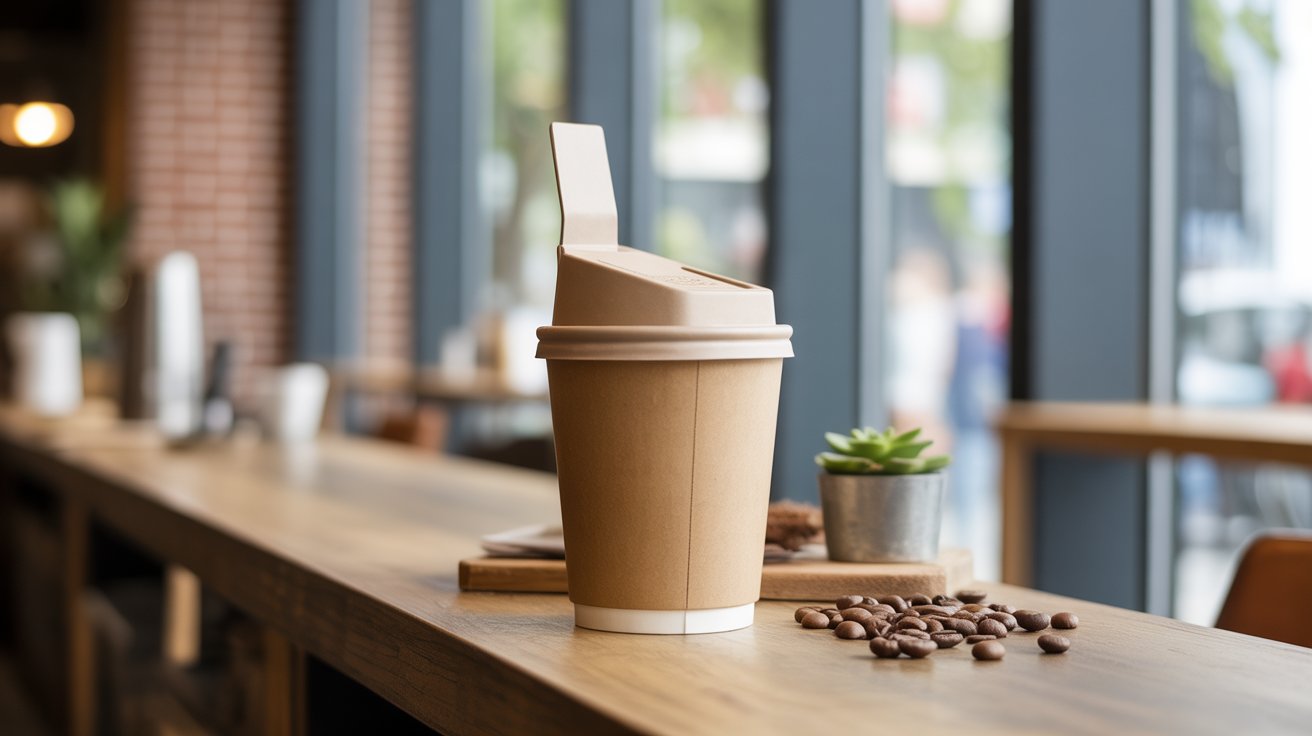
Pappedeckel is the German term for a cardboard or paperboard lid. In food service, it refers to lids made primarily from paper-based materials designed as alternatives to traditional plastic lids for takeaway beverage cups and similar containers.
These lids aim to provide basic spill protection and a functional drinking experience while being more compatible with paper recycling streams. As the EU continues implementing the Single-Use Plastics Directive (SUPD), paperboard lids have become a practical option for many operators seeking to reduce plastic content in on-the-go packaging.
Written by a packaging materials analyst specializing in EU food service packaging systems, referencing regulatory documentation and manufacturer technical data (2026).
What Pappedeckel Actually Is
The word pappedeckel translates directly to “cardboard lid” or “paperboard cover.” In commercial packaging, it describes a one-piece lid formed from coated paperboard that snaps onto standard takeaway cups.
Modern versions use dispersion barrier coatings or similar food-safe treatments. These coatings help resist liquid penetration while allowing the lid to remain recyclable in standard paper streams alongside the cup. Common applications include hot and cold beverage service in cafés, quick-service restaurants, and delivery.
Two notable commercial examples illustrate the current state:
- The Paper Lid Company, in partnership with Metsä Board, developed a 100% recyclable paperboard lid using dispersion barrier board. Suitable for both hot and cold beverages, the lid is designed to click firmly onto the cup. Metsä Board reports it delivers more than 50% lower carbon footprint compared to a typical plastic lid.
- Seda International Packaging Group offers the Eco Fit Lid, a paperboard solution for hot and cold drinks. Made from 100% PEFC-certified renewable fibres, it features an audible snap for secure fit and is promoted as fully recyclable in the paper stream with the cup. Seda states that every 100 million of these lids can help avoid approximately 400 tons of plastic.
These products show that pappedeckel-style lids have reached commercial readiness for everyday takeaway use.
Regulatory Push Behind Paper Lids
The EU Single-Use Plastics Directive (SUPD), formally Directive (EU) 2019/904, drives much of the current interest. It targets commonly littered plastic items and requires measurable consumption reductions for single-use beverage cups and food containers.
Member states must achieve ambitious collection and reduction targets. In this environment, paperboard lids offer a way for businesses to lower plastic usage while aligning with existing paper recycling infrastructure. The directive encourages both material substitution and reusable systems. Paper lids fit the substitution route particularly well in markets with strong paper collection rates.
How These Cardboard Lids Are Made and How They Perform
Production begins with certified paperboard (often FSC or PEFC). A barrier coating—typically water-based dispersion—is applied to control liquid absorption. The coated board is then formed into a lid with a crimped or rolled edge that creates a snap fit on common cup sizes.
In daily use, the lid provides a physical cover with sip or vent openings. Manufacturers emphasize the “click” or audible snap as a sign of secure attachment, aiming to replicate user confidence associated with plastic lids.
Performance observations from supplier data show these lids handle standard café beverages (hot coffee, cold drinks) reasonably well when the lid and cup are properly matched. Leak and spill resistance is generally adequate for short takeaway or in-store use.
Real-world judgment: These lids work best in controlled café and quick-service environments with short transit times and attentive staff application. They are less reliable in long delivery chains or with very hot/greasy contents, where plastic lids often provide more forgiveness and consistent performance.
Independent life-cycle assessments of single-use packaging vary depending on system boundaries, particularly regarding end-of-life recycling rates and local waste infrastructure.
Current Adoption and Real-World Examples
Paperboard lids see the strongest uptake in European markets with advanced recycling systems and SUPD compliance pressure. Some independent cafés and smaller chains in Germany have switched on beverage lines to reduce visible plastic and simplify waste sorting, reporting positive customer feedback on brand perception.
Larger operators test them as part of broader sustainability programs, often combining paper lids with reusable cup incentives. Success depends on staff training for correct lid placement and confirmation that local recycling facilities accept the coated paperboard. Adoption remains selective rather than universal.
Benefits and Clear Limitations
Key advantages in practice:
- High compatibility with paper recycling streams when coatings are designed for it.
- Use of renewable, certified fibres (FSC/PEFC).
- Reduced plastic volume, with Seda’s estimate of 400 tons plastic saved per 100 million lids providing a tangible reference.
- Lower reported carbon footprint in some supplier comparisons (e.g., >50% vs plastic according to Metsä Board data).
Where they fall short:
- Spill protection and durability can be lower than plastic during extended handling or delivery.
- More sensitive to moisture and mechanical damage.
- Potentially higher unit cost, though disposal savings and regulatory alignment may offset this in some markets.
- Performance depends heavily on precise fit—mismatched cups increase leak complaints.
Industry conclusion: Paperboard lids deliver meaningful plastic reduction in well-managed, short-cycle beverage service. They struggle more in high-volume delivery or demanding food applications where leak-proof reliability is critical. Operators should run targeted trials measuring actual leak rates and customer feedback.
Practical Comparison Table
| Aspect | Paperboard Lids (Pappedeckel-style) | Conventional Plastic Lids |
|---|---|---|
| Recyclability | Often high in paper streams with compatible coatings | Limited; frequently contaminates streams |
| Plastic content | None or minimal | High |
| Spill resistance | Adequate for many short-use cases | Generally higher, more forgiving |
| Durability / handling | More sensitive to crushing and moisture | More robust |
| Carbon footprint (supplier data) | Often reported 50%+ lower | Higher baseline |
| Best suited for | Controlled café / quick-service environments | Long transport, rough handling |
Note: Figures reflect supplier-reported data and general industry feedback. Actual outcomes depend on specific products and local conditions.
Who Should Consider Switching?
Paperboard lids make most sense for cafés and quick-service outlets in EU-regulated markets with reliable paper recycling. They suit businesses prioritizing visible plastic reduction and certified renewable materials, especially those with short takeaway cycles.
They are less suitable for long-distance delivery fleets or menus with oily/greasy items. Smaller businesses can begin with supplier samples on high-volume coffee lines. Larger chains benefit from technical support for consistent performance.
Safety, Disposal, and End-of-Life
Reputable suppliers provide food-contact compliance documentation (e.g., EU Regulation 10/2011 equivalents). Request migration test results for the specific coating.
For disposal, many lids are promoted as recyclable with the cup in standard paper streams. Some versions also offer compostable certifications. Actual outcomes depend on local infrastructure—always verify with your waste handler and provide clear consumer instructions.
Outlook for Paperboard Lids in 2026 and Beyond
Developments focus on incremental improvements in barrier performance, tighter fits, and manufacturing consistency while preserving recyclability. The Paper Lid Company / Metsä Board and Seda examples represent the current benchmark. Broader impact will depend on expanding paper collection systems and realistic performance expectations.
Reusable programs complement these lids by addressing overall single-use volume. Paper lids serve as one practical tool—not a universal solution. Where conditions align (regulated markets, good infrastructure, controlled service), they support measurable plastic reduction. In other scenarios, plastic or hybrid approaches may still perform better on reliability.
Frequently Asked Questions
What does pappedeckel mean? It is the German word for cardboard lid or paperboard cover, now used to describe paper-based lids as alternatives to plastic in takeaway packaging.
How do paperboard lids perform compared to plastic? They offer adequate spill protection for standard short-cycle beverage service when fitted correctly. Plastic lids generally provide better durability and leak resistance during rough handling or longer transport.
Are pappedeckel lids recyclable? Many commercial versions (such as those from Metsä Board and Seda) are designed to be recycled in standard paper streams together with the cup, provided the coating is compatible. Confirm with local facilities.
Is pappedeckel safe for food contact? Yes, when sourced from suppliers meeting EU food-contact regulations. Always request compliance documentation for the specific product and coating.
Where do paperboard lids work best? They perform most reliably in café and quick-service settings with short transit times and trained staff. They are less suitable for long delivery chains or greasy food applications.
What are the biggest challenges? Achieving consistent leak prevention across different cup brands, sensitivity to handling, and dependence on effective local recycling infrastructure. Supplier quality and proper trialing matter greatly.
How should a business evaluate these lids? Conduct a practical trial focused on your specific cups, menu items, staff processes, leak incidents, and end-of-life handling. Compare total costs including disposal and potential regulatory benefits.
Final Assessment
Pappedeckel-style paperboard lids represent a grounded, commercially available step toward lowering plastic in takeaway beverage packaging. Real solutions from The Paper Lid Company with Metsä Board and Seda’s Eco Fit Lid demonstrate functional viability, particularly in regulated European markets with strong paper recycling.
They deliver clear benefits in plastic reduction and fibre sourcing where applied correctly, but they are not a drop-in replacement for plastic in every scenario. Businesses achieve the best results by matching the technology to their operational reality—testing fit and performance, training staff, and aligning with local waste systems.
For food service operators reviewing options in 2026, paperboard lids deserve evaluation on high-volume beverage lines, especially under SUPD pressure. Combine them with reusable initiatives for stronger overall impact. Decisions should rest on supplier data, internal trials, and verifiable local conditions.
AUTHOR BIO:
Packaging materials analyst specializing in EU food service systems, with a focus on sustainable materials, regulatory compliance, and real-world packaging performance.
Share this content:




Post Comment