How the Heritage Conservation Centre Uses AI & 3D Tech to Protect Art
What Is the Heritage Conservation Centre?
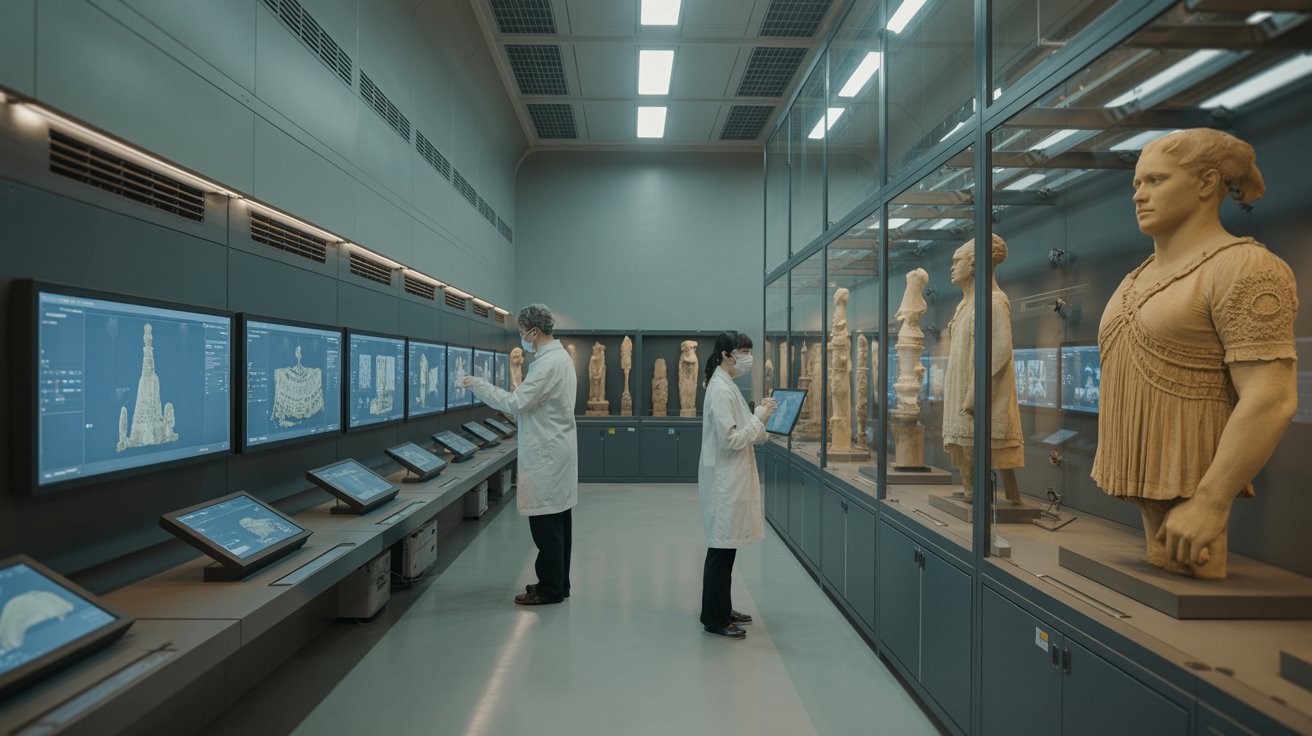
The Heritage Conservation Centre (HCC) is Singapore’s national conservation facility dedicated to protecting the country’s National Collection — more than 250,000 artifacts and artworks. Situated at 32 Jurong Port Road, this modern heritage preservation center serves as the central hub for storage, scientific analysis, digitization, and long-term care of cultural objects.
Quick Answer: The Heritage Conservation Centre is Singapore’s high-tech conservation hub that combines climate-controlled storage, 3D scanning, non-invasive scientific tools, and specialized digital labs to safeguard both traditional artifacts and contemporary time-based media for future generations.
Why Technology Is Changing Heritage Preservation
Heritage faces growing threats — especially in tropical climates where heat and humidity speed up decay. At the same time, modern artworks that rely on video, software, or interactive tech become obsolete incredibly fast.
The Heritage Conservation Centre stands out because it doesn’t just store objects — it actively uses innovation to stay ahead of these problems. During guided tours of the facility (available during select public events), visitors often remark how surprisingly advanced and clean the labs feel compared to traditional museum storage they’ve seen elsewhere.
How the Heritage Conservation Centre Uses Modern Technology
Here’s a clear look at the key technologies powering this conservation facility today.
Real-Time Environmental Monitoring
Singapore’s tropical conditions make stable storage difficult. The HCC uses IoT sensors spread across 28 independent zones to track temperature, humidity, and air quality every few minutes. Smart software analyzes the data and sends alerts before conditions can damage sensitive materials. This proactive system is far more effective than the manual checks used in older facilities.
Non-Invasive Scientific Analysis
Conservators rely on tools like X-ray fluorescence (XRF) and Fourier-transform infrared spectroscopy (FTIR) to understand an object’s materials without damaging it. These tests generate valuable data that helps predict how artifacts will age under different conditions.
3D Scanning and Digital Documentation
High-resolution 3D scanning creates accurate digital twins of objects. These models allow researchers to study artifacts safely, test virtual restorations, and share detailed views online without moving the originals.
Time-Based Media Conservation Lab
One of the most forward-looking areas is the dedicated lab for time-based media (TBM). As contemporary art increasingly includes video, audio installations, and software-dependent works, the HCC has built specialized infrastructure to migrate files, document technical requirements, and emulate obsolete systems. The centre even offers fellowships in time-based media conservation starting in 2026.
Here’s what most people miss: Preserving digital art isn’t just about copying files — it requires understanding the original hardware, software, and intended viewer experience. The HCC’s TBM team works hard to keep these complex pieces alive.
Emerging Use of AI and Data Tools
The conservation hub is exploring AI for automated condition checks, anomaly detection in environmental data, and smarter metadata creation. Through the National Heritage Board’s “Heritage X Innovation” initiative, the team researches tools tailored to tropical environments.
Real-World Applications at the HCC
The heritage preservation center supports major exhibitions at the National Gallery Singapore and Singapore Art Museum. It prepares objects safely and creates high-quality digital versions for education and outreach.
Guided tours occasionally let the public peek into the labs. In real-world conservation workflows, staff move seamlessly between hands-on treatment and digital documentation — a balance that keeps both the physical objects and their digital records secure.
Smaller museums and private collectors are now adopting similar scaled-down approaches using affordable sensors and open-source digital asset management software.
Benefits of Digital Heritage Conservation
Modern technology at the HCC delivers several practical advantages:
- Stronger Protection — Predictive monitoring prevents damage instead of just fixing it later.
- Wider Access — Digital twins and 3D models let students, researchers, and the public explore artifacts from anywhere.
- Smarter Decisions — Data replaces guesswork in conservation planning.
- Lower Environmental Impact — Optimized climate systems and reduced physical handling help cut energy use.
- Future-Proofing — Dedicated processes ensure today’s digital and tech-based art remains viewable decades from now.
Challenges and Limitations
Even advanced facilities face hurdles:
- High costs for equipment and ongoing training
- Rapid digital obsolescence requiring constant updates
- Need for staff skilled in both traditional and digital methods
- Data security and authenticity concerns
- Unique challenges posed by Singapore’s hot, humid climate
The HCC addresses many of these through international partnerships, including full membership in the Digital Preservation Coalition (DPC) since 2025.
Traditional vs Modern Conservation
| Aspect | Traditional Methods | Modern Approach at HCC | Key Benefit |
|---|---|---|---|
| Monitoring | Periodic manual checks | Real-time IoT sensors + predictive alerts | Early detection |
| Documentation | Photos and written reports | 3D scans, multispectral imaging, DAM systems | Higher accuracy and easy search |
| Analysis | Often invasive | Non-destructive scientific tools | Safer for artifacts |
| Time-Based Media | Very limited | Dedicated TBM lab with migration & emulation | Handles contemporary art |
| Accessibility | Physical visits only | Digital twins, online platforms, AR/VR | Global reach without risk |
| Scalability | Labor intensive | Automated workflows + data-driven planning | Better for large collections |
The Digital Future of Heritage Conservation
Looking ahead, the conservation facility is expected to expand use of AI for predictive modeling, blockchain for provenance tracking, and immersive VR/AR experiences. As more artworks are born digital, places like the HCC will play an even bigger role in bridging physical and virtual heritage.
The National Heritage Board’s focus on tropical climate research also positions Singapore as a valuable contributor to global conversations on sustainable heritage tech.
Who Should Care About These Technologies?
Museum professionals, digital preservation specialists, researchers, tech developers building tools for the GLAM sector, educators, and private collectors can all benefit from studying the HCC model. Even casual heritage enthusiasts gain by exploring the growing number of publicly available 3D models and virtual exhibitions.
FAQ About the Heritage Conservation Centre
What is the Heritage Conservation Centre? It is Singapore’s national conservation hub under the National Heritage Board, responsible for long-term care of the country’s cultural collection using both traditional skills and modern digital technology.
How does the Heritage Conservation Centre use technology? It combines IoT environmental monitoring, 3D scanning for digital twins, non-invasive analysis tools, and a specialized lab for preserving time-based media through file migration and system emulation.
Is the technology at the HCC safe and reliable? Yes. The facility emphasizes non-invasive methods and maintains strict standards. Its 2025 membership in the Digital Preservation Coalition reinforces best practices in digital heritage preservation.
Who should study or visit the Heritage Conservation Centre? Museum staff, conservation professionals, researchers, technology innovators, and educators interested in cutting-edge heritage solutions.
What are the latest developments at the HCC? Key updates include expanded time-based media capabilities, new 2026 fellowships, DPC membership, and ongoing Heritage X Innovation projects focused on tropical conditions.
Can smaller institutions adopt similar tech? Yes. Many now start with affordable sensors and open-source tools, then gradually add digitization and partnerships as resources allow.
Does technology replace traditional conservators? No. At the HCC, technology supports and augments expert human judgment rather than replacing it.
Conclusion: A Smarter Way to Protect Our Past
The Heritage Conservation Centre shows how innovation can make heritage preservation more effective, accessible, and sustainable. By intelligently combining IoT sensors, 3D scanning, scientific analysis, and dedicated digital labs, this conservation facility is solving real problems that older methods couldn’t handle at the same scale.
As climate pressures and technological change accelerate, hybrid approaches like those pioneered at the HCC will become the new standard. Whether you work in museums, develop cultural tech, or simply care about preserving history, understanding these advancements offers valuable insight into the digital future of heritage.
Ready to learn more? Visit the National Heritage Board website for tour information or explore the Digital Preservation Coalition for global standards and resources. The future of cultural preservation is already being built — one smart sensor and digital twin at a time.
Author Bio
Alex Rivera is a heritage technology researcher with 9+ years of experience studying digital innovation in museums and archives across Asia. His work focuses on practical applications of AI, digitization, and conservation technology in real-world environments.
Share this content:



Post Comment