Osnovno Uciliste 2026: How Digital Learning Is Positively Transforming Schools
What Is Osnovno Uciliste?
Osnovno uciliste is North Macedonia’s compulsory nine-year primary education system for children aged roughly 6 to 15. It combines elementary and lower secondary education into one continuous structure instead of splitting them artificially.
This model supports consistent student development over nearly a decade. In today’s digital context, it also makes it easier to track progress longitudinally and introduce adaptive tools that respond to each child’s pace.
Key Fact: At the start of the 2024/2025 school year, around 180,627 students were enrolled in regular primary and lower secondary schools (osnovno uciliste institutions) across the country.
Digital Education Push in North Macedonia
North Macedonia has been steadily integrating technology into its education system. The 2018–2025 Education Strategy emphasized ICT integration, teacher training, and creation of e-learning portals. A new Education Strategy 2026–2032 is now in development, with continued focus on digital and green transitions.
The standout initiative is the EDUINO platform, launched with UNICEF and local partners. Originally for early childhood, it expanded during the COVID-19 pandemic into a national digital learning resource covering pre-primary through secondary levels. It offers digital content, gamified elements, and resources aligned with the curriculum.
Other efforts include the National ICT Strategy 2023–2027 and broader digital transformation plans under the new Ministry of Digital Transformation (established 2024).
How Technology Is Changing Classrooms in the Nine-Year System
The nine-year model creates a stable environment for gradual digital adoption. Here’s what’s happening on the ground:
- Digital Content Delivery: Many primary schools now supplement printed materials with e-textbooks and resources from national platforms.
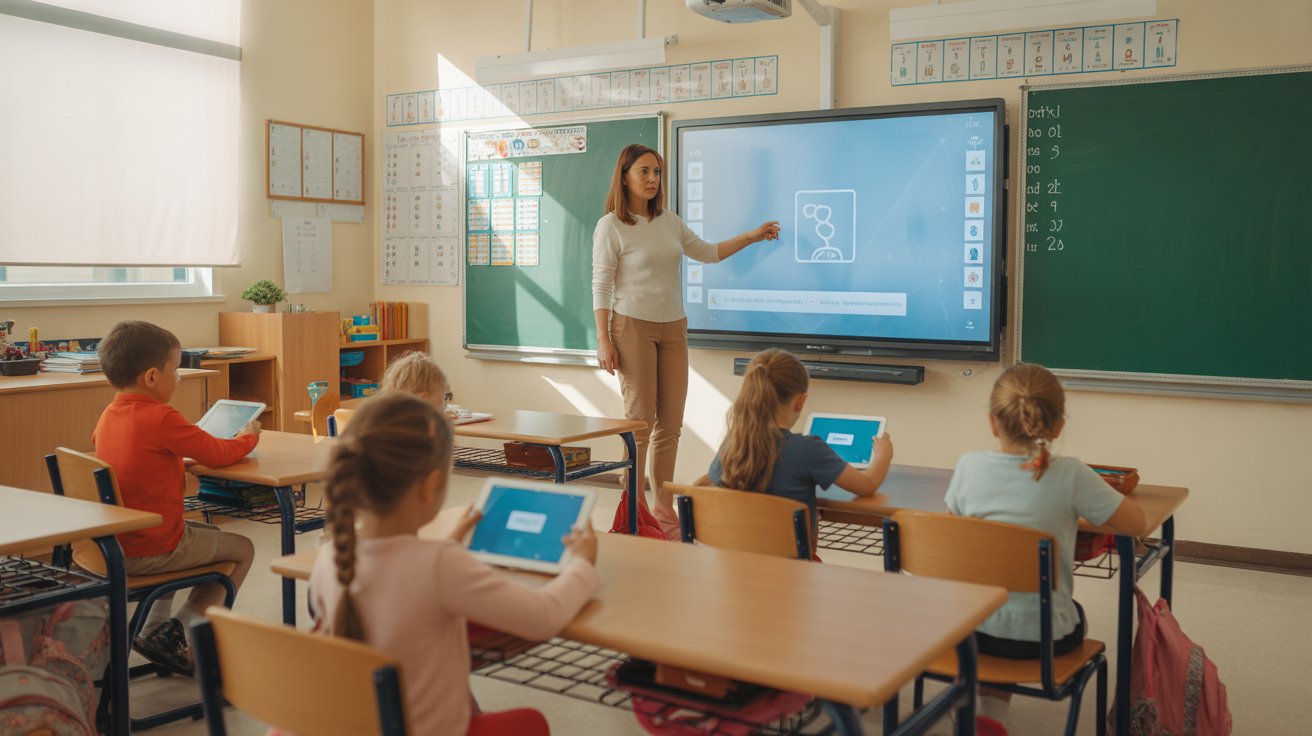
- Interactive Tools: Urban schools in Skopje, Bitola, and other centers have received smart boards, projectors, and tablets through government pilots and donor support.
- Informatics and Coding: Students encounter basic digital skills and computational thinking from early grades, often using block-based programming.
- Hybrid and Offline Solutions: Rural and smaller branch schools use offline-capable apps and mobile digital labs to overcome connectivity issues.
Real example: During school closures, EDUINO helped maintain learning continuity by providing accessible content for primary-level students. Teachers and parents could access materials without advanced equipment.
The continuous structure helps because teachers can build on digital skills year after year rather than restarting with new student cohorts every few grades.
Key Features of Modern Primary Education in This Model
Current technology elements gaining traction include:
- Localized e-learning portals with Macedonian and Albanian content
- Simple adaptive exercises that adjust based on student responses
- Basic robotics or sensor-based projects in upper grades
- Text-to-speech and other assistive features for inclusive learning
- Teacher dashboards for monitoring class progress
These tools aim to address common classroom realities: large groups, different learning speeds, and resource limitations in some municipalities.
Key Takeaway: Technology here is not about replacing teachers. It handles repetitive tasks so educators can focus on mentoring and project-based activities.
Benefits for Students, Teachers, and Families
Practical gains reported so far:
- Students often stay more engaged with interactive and visual content.
- Faster feedback through digital quizzes helps identify gaps early.
- Early exposure to digital tools builds foundational skills needed for secondary education and future jobs.
- Parents get better visibility when platforms offer progress updates.
- In theory, quality digital resources can help smaller or rural schools access materials comparable to urban ones.
One teacher in a pilot school noted that visual simulations made explaining science topics quicker and clearer than traditional methods alone.
Challenges Facing Digital Adoption
Progress remains uneven. Important realities include:
- Infrastructure differences: High-speed internet and device availability are stronger in cities than in remote areas.
- Teacher training needs: Many educators require ongoing support to integrate tools effectively rather than using them superficially.
- Digital divide: Not every family has devices or reliable internet at home, which can widen inequalities.
- Learning outcomes context: According to analyses, a significant portion of students still struggle with foundational proficiency in reading, math, and science — technology alone cannot solve deeper systemic issues.
The 2024 UNESCO IIEP Education Sector Analysis highlights these gaps while noting the system’s alignment with EU cooperation goals on digital and green transitions.
Comparison Table: Traditional vs Technology-Supported Approach
| Aspect | Traditional Model | Digital-Enhanced Model |
|---|---|---|
| Content Delivery | Mostly printed textbooks and blackboard | Mix of print, e-resources, and interactive tools |
| Student Progress | Same pace for the whole class | Greater potential for personalization |
| Feedback Speed | Periodic tests | Quicker insights via digital activities |
| Skill Focus | Heavy on memorization | More room for digital literacy and problem-solving |
| Teacher Role | Main knowledge source | Facilitator using data and varied methods |
What Most Articles Miss About Digitalization in This System
Here’s a candid observation from following regional edtech developments: many discussions treat digital transformation as a simple hardware upgrade. In reality, the biggest barrier in the nine-year primary system is not lack of fancy apps — it’s aligning technology with actual teaching realities and low foundational proficiency levels.
Another overlooked point: the continuous nine-year structure is a strength for longitudinal data, but only if privacy safeguards and teacher data literacy are strong. Without that, analytics can become burdensome rather than helpful.
Success stories often come from blended approaches — using digital tools for what they do best (repetition, visualization, accessibility) while keeping hands-on projects, physical activity, and human relationships at the center.
Future Outlook for 2026 and Beyond
With the new Education Strategy 2026–2032 taking shape, expect:
- Wider rollout of hybrid platforms that function reliably offline
- Growing emphasis on responsible AI use and digital citizenship
- More integration of sustainability topics through simple tech projects
- Strengthened teacher professional development programs
The broader national digital transformation agenda (including SMART/MK 2030) supports these education goals. Steady investment in infrastructure and thoughtful implementation will determine how effectively the primary system prepares young people for a technology-driven economy.
Practical Tips for Schools and Parents
For teachers and school leaders working in the system:
- Begin with one or two well-tested tools per subject.
- Combine digital activities with unplugged lessons.
- Involve parents through simple workshops or platform access.
- Prioritize digital safety lessons from early grades.
- Regularly review what actually improves learning in your local context.
Parents can help by talking with children about their digital activities and maintaining balanced routines.
FAQ
What is osnovno uciliste? It is North Macedonia’s unified nine-year primary education system covering children aged approximately 6–15 and combining what other countries often split into separate elementary and lower secondary stages.
How does technology support the nine-year primary system? Through platforms like EDUINO, e-textbooks, interactive displays in some schools, and informatics classes that introduce digital skills gradually across the curriculum.
Is digital transformation in Macedonian primary schools reliable? It varies by location. Urban pilots show good results, but rural areas face connectivity challenges. Blended models that mix digital and traditional methods tend to be most practical.
Who benefits most? Students gain engagement and early skills; teachers receive better insights; families get more transparency when platforms are accessible.
What are the biggest challenges? Uneven infrastructure, teacher training demands, risk of widening the digital divide, and ensuring technology actually improves foundational learning outcomes.
Are there specific examples of digital projects? Yes — the EDUINO national platform, smart classroom pilots in larger towns, and various UNICEF-supported initiatives providing content and training.
What should parents expect moving forward? Gradual increase in digital resources, more project-based work, and stronger focus on safe and critical use of technology within the primary years.
Conclusion
Osnovno uciliste forms the foundation of education in North Macedonia. As digital tools become more integrated, the nine-year system has real potential to offer more engaging, inclusive, and relevant learning experiences.
The path forward is practical rather than flashy: consistent infrastructure improvements, quality localized content, and strong support for teachers. When technology serves clear educational goals — and stays balanced with human interaction — it can genuinely help prepare children for the future.
Educators, parents, and policymakers should keep the focus on thoughtful integration that enhances curiosity and real skill development.
Author: Aleksandar Petrov, EdTech analyst with over 8 years tracking digital education trends in Southeast Europe. Background in instructional design and collaboration with regional education projects. Reviewed by: Dr. Elena Stojanova, Education Policy Specialist.
Share this content:




Post Comment