Business Technology
AI rail analytics, AI railway systems, digital rail systems, ETCS signaling system, FRMCS railway communication, future of rail technology, intelligent rail infrastructure, intelligent train control systems, IoT rail monitoring systems, rail capacity optimization, rail digital twins, rail infrastructure management, rail network optimization, rail predictive maintenance, railway automation systems, railway digital transformation, railway modernization technology, smart rail technology, smart transportation technology, total rail solutions
novabiztech
0 Comments
Total Rail Solutions Explained: How AI Is Transforming Rail Networks in 2026 (Complete Guide)
The Current State of Rail Technology in 2026
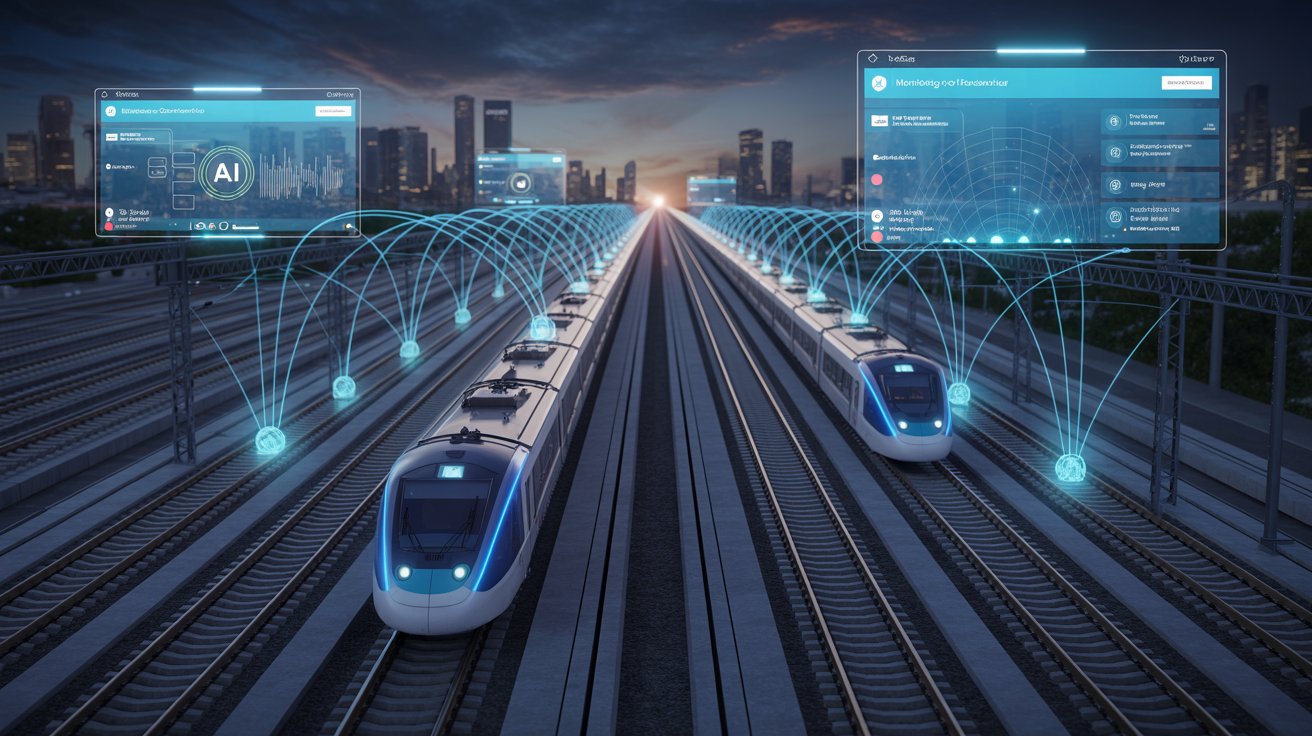
Rail networks worldwide face growing pressure. Passenger and freight demand continues to rise, infrastructure in many regions shows its age, and expectations for punctuality, safety, and environmental performance have never been higher. Total rail solutions offer a practical response by integrating physical assets with intelligent digital layers into unified, responsive systems.
These platforms combine IoT sensors, advanced signaling, AI analytics, high-speed connectivity, and digital twins. The outcome is networks that can anticipate issues, optimize flows in real time, and deliver more consistent performance with fewer surprises.
In my 12+ years tracking rail modernization, I’ve seen the shift from reactive fixes to proactive management accelerate dramatically. Operators no longer wait for breakdowns or widespread delays—they use data to prevent many of them. Commuters experience more reliable journeys, freight customers gain predictability, and infrastructure managers stretch existing assets further. This evolution draws on standards like ETCS and emerging FRMCS while incorporating AI tools that were largely experimental just a few years ago.
Why Integrated Rail Ecosystems Matter Today
Older rail systems relied on fixed safety buffers, manual inspections, and calendar-based maintenance. These approaches worked for lower traffic volumes but struggle with today’s demands. A minor fault or weather event can cascade into hours of disruption.
Modern rail ecosystems address this through continuous monitoring and intelligent automation. Sensors track track condition, rolling stock health, and environmental factors. AI processes the data to forecast wear or failures days or weeks ahead. Real-time connectivity allows dynamic adjustments to schedules and routing.
In Europe, for instance, only about 20% of key TEN-T corridors currently feature full ETCS deployment, highlighting the modernization gap. Total rail solutions help close that gap by layering digital intelligence onto both new and existing infrastructure, improving capacity and reliability without always requiring entirely new tracks.
Core Technologies Behind Total Rail Solutions
Several layers work together in these systems:
Sensing and Edge Computing Rugged IoT devices monitor vibration, temperature, wheel-rail interaction, and track geometry. Edge processing delivers immediate alerts while sending richer data to central analytics.
Connectivity The Future Railway Mobile Communication System (FRMCS), based on 5G principles, is replacing GSM-R. Migration planning is active in 2026, with large-scale validation tests scheduled for later this year. FRMCS supports lower latency, higher bandwidth, and better performance for automation and video feeds.
AI and Predictive Analytics Machine learning models analyze patterns to predict maintenance needs. Industry estimates suggest predictive approaches can reduce unplanned maintenance events by up to 30% and improve asset availability. Alstom’s HealthHub platform and Siemens Mobility’s Railigent are prominent examples extending condition-based monitoring across fleets.
Digital Twins Virtual replicas of networks or assets let teams simulate changes—such as maintenance windows or timetable adjustments—before implementing them physically.
Automation and Signaling Systems like ETCS Level 2 or Hybrid Level 3 enable moving-block operations, allowing trains to run closer together safely. This can deliver meaningful capacity gains on existing lines. ETCS Level 3 concepts further reduce reliance on some trackside equipment.
A typical flow: sensors detect an early anomaly (e.g., unusual vibration indicating a potential wheel issue) → AI evaluates risk and network impact → the digital twin tests rerouting options → automated systems adjust the schedule or prioritize maintenance. This closed loop minimizes downtime.
Benefits of Total Rail Solutions for Operators
Deployments show several tangible advantages:
- Capacity gains: Moving-block signaling can support 20–40% more traffic on existing infrastructure in suitable conditions, according to ERTMS advantage analyses.
- Maintenance efficiency: Predictive programs often achieve 25–30% reductions in unplanned costs while extending component life.
- Energy savings: Optimized speed profiles and regenerative braking, guided by AI, contribute to lower consumption.
- Safety and reliability: Multiple redundant layers and continuous monitoring strengthen protection. Automated systems reduce human-error risks in routine operations.
- Sustainability: Better asset utilization and efficient operations support lower emissions per passenger or tonne-kilometer.
These benefits appear across urban metros, high-speed lines, and freight corridors when implementations match local needs.
Real-World Examples in 2026
Europe: Deutsche Bahn continues its Digital Rail initiatives, including automated S-Bahn operations in Hamburg that have shown potential for higher frequencies and energy savings on existing tracks. Broader ETCS rollout remains a priority, though challenges with legacy infrastructure persist.
Freight and Mainlines: North American operators apply AI vision systems and predictive tools for track and rolling stock inspection. In Europe and Asia, turnkey projects from Alstom and Siemens bundle signaling, rolling stock, and digital services for smoother project delivery and long-term performance.
Predictive Maintenance: Alstom extended its HealthHub platform in 2025 to additional European fleets, supporting condition-based monitoring and improved reliability under service contracts.
Phased rollouts—starting with signaling upgrades or targeted predictive maintenance—prove most successful. They deliver early wins that build momentum for fuller integration.
Challenges of Implementing Total Rail Solutions
Adoption isn’t without hurdles. Upfront costs for sensors, connectivity, and integration can be substantial, especially on large legacy networks. Retrofitting older assets requires careful planning and testing.
The workforce is shifting too: mechanical and signaling expertise must combine with data analytics and cybersecurity skills. FRMCS migration, planned between roughly 2028–2035 in many countries, adds another layer of coordination.
Cybersecurity grows more critical with increased connectivity; standards like IEC 62443 provide a foundation, but ongoing vigilance is essential. Regulatory certification for higher automation levels still demands time.
Many operators mitigate these issues through modular, standards-based designs and public-private partnerships that share expertise and funding.
Total Rail Solutions vs. Traditional Rail Approaches
Traditional systems use fixed blocks, physical signals, and scheduled maintenance with limited real-time insight. Modern integrated platforms shift toward software-defined capacity, condition-based interventions, and data-driven decisions.
| Aspect | Traditional Rail | Total Rail Solutions (Integrated Ecosystems) | Typical Advantage |
|---|---|---|---|
| Signaling | Fixed-block, lineside signals | Moving-block via ETCS/CBTC | Higher capacity on existing tracks |
| Maintenance | Time-based, manual inspections | AI predictive + digital twins | 25–30% lower unplanned costs |
| Operations | Static timetables, human dispatch | Real-time AI optimization | Improved punctuality and flexibility |
| Connectivity | GSM-R (aging) | FRMCS / 5G-based | Better support for automation |
| Energy Efficiency | Standard profiles | AI-optimized with regenerative braking | Notable savings |
| Scalability | Constrained by physical infrastructure | Software-enhanced utilization | Future-ready expansion |
The comparison highlights how digital layers unlock performance without proportional new builds.
Who Should Consider Total Rail Solutions?
Urban transit agencies benefit from higher frequencies and automation in dense corridors. National infrastructure managers gain capacity releases on mainlines. Freight operators competing with road transport appreciate improved reliability and asset uptime.
Governments focused on decarbonization and efficient mobility also find value, as optimized rail directly supports emission reductions. Public-private models often accelerate projects by combining operator needs with supplier expertise.
If your network contends with congestion, rising maintenance budgets, or sustainability targets, these integrated platforms warrant evaluation.
Looking Ahead: The Road to 2030 and Beyond
In the coming years, expect wider adoption of Level 3/4 automation where conditions allow, deeper integration of alternative propulsion (hydrogen, battery) with digital optimization, and cross-border coordination via standardized systems.
FRMCS validation and early deployments will strengthen connectivity foundations. Digital twins may evolve to support more autonomous minor interventions. Europe’s Rail Joint Undertaking continues shaping research and deployment alignment through 2026 work programmes.
Rail’s role in sustainable transport will expand. Total rail solutions position operators to handle growing volumes efficiently while meeting stricter performance and environmental standards.
FAQ About Total Rail Solutions
What are total rail solutions? They are comprehensive platforms that unify advanced signaling, IoT sensors, AI analytics, connectivity (such as FRMCS), and digital twins to operate entire rail networks as intelligent, adaptive systems.
How do total rail solutions work? Sensors collect real-time data → high-speed networks transmit it → AI and digital twins analyze patterns and simulate options → automated controls optimize routing, maintenance, and energy use in a continuous feedback loop.
Are total rail solutions safe and reliable? Yes. They build on proven standards like ETCS with multiple redundancy layers and continuous monitoring. Live deployments demonstrate strong safety records and high availability when properly implemented.
What benefits do total rail solutions deliver? Key gains include increased capacity on existing infrastructure, reduced unplanned maintenance costs (industry pilots often cite 25–30% improvements), better energy efficiency, and enhanced overall reliability.
What are the main challenges of implementation? High initial investment, integration with legacy assets, workforce upskilling, and coordinated migration (e.g., to FRMCS). Phased approaches help manage these effectively.
Who is using total rail solutions today? Major operators and suppliers including Deutsche Bahn (digital initiatives), Alstom (HealthHub and turnkey projects), Siemens Mobility, and various North American freight railroads apply elements or full ecosystems.
What developments are expected soon? Accelerated FRMCS testing and migration planning in 2026–2028, broader predictive maintenance adoption, and continued progress toward higher automation levels aligned with European and global standards.
Final Thoughts on Total Rail Solutions in 2026
Total rail solutions have matured into practical tools that help operators run safer, more efficient, and more sustainable networks today while preparing for tomorrow’s demands. They don’t replace the physical railway—they amplify what existing and new infrastructure can achieve through intelligent digital integration.
Success depends on thoughtful implementation: starting with high-impact areas like predictive maintenance or signaling upgrades, measuring results, and scaling based on real outcomes. The technology is ready, standards are evolving, and the pressure to modernize continues to grow.
If you manage rail operations or infrastructure, assessing how these integrated platforms align with your specific challenges and goals is a worthwhile step. The physical rails have carried transport for generations; the intelligence now layered on top is redefining their potential.
About the Author Written by Alex Rivera, rail technology analyst with over 12 years of experience covering signaling systems, digital transformation projects, and sustainable transport. Alex has contributed to industry discussions and draws on insights from operator deployments and supplier developments to deliver grounded perspectives.
Further Reading & References
- Siemens Mobility Rail Solutions
- Alstom Turnkey and Digital Rail Systems
- European Union Agency for Railways (ERA) ETCS documentation
- Europe’s Rail Joint Undertaking resources on FRMCS and deployment
Share this content:




Post Comment