Business Technology
AI for sustainability, AI recycling system, automated waste sorting, circular economy tech, ESG technology, green technology innovation, IoT waste management, machine vision recycling, MataRecycler, predictive waste routing, smart city sustainability, smart recycling bin
novabiztech
0 Comments
MataRecycler: AI Smart Recycling Tech Boosting Efficiency by 60%
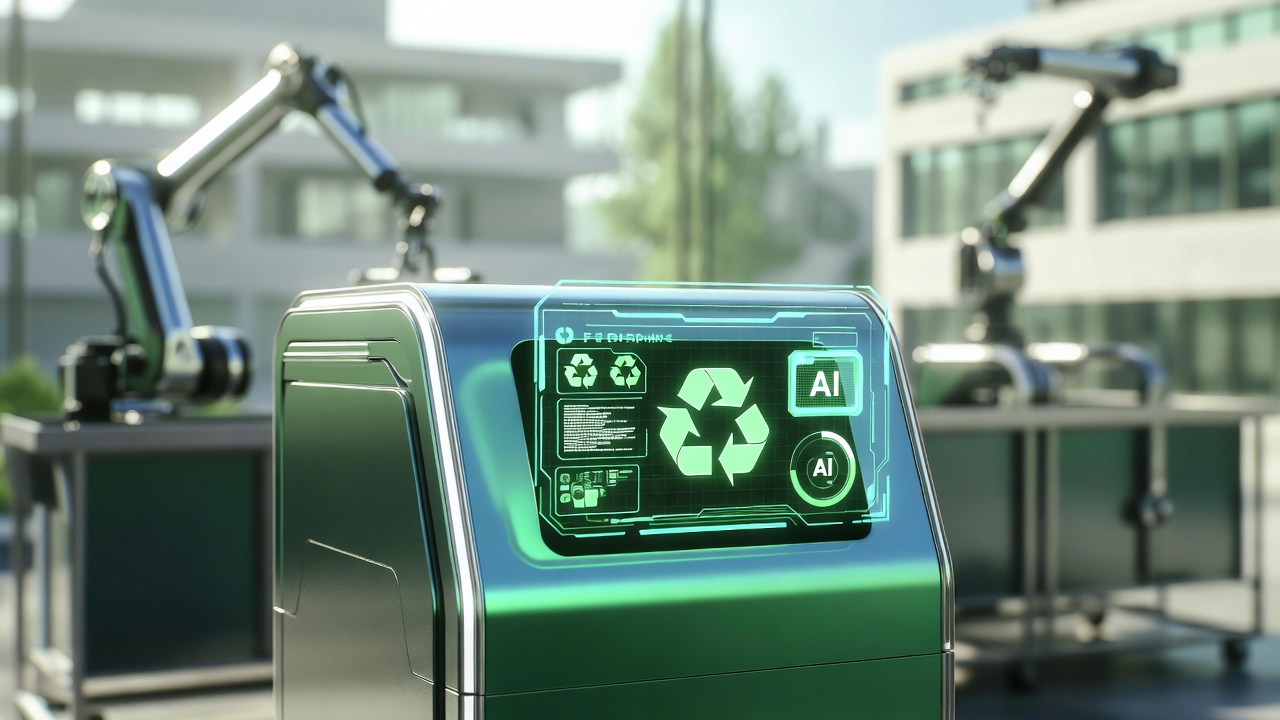
In the bustling digital landscape of 2026, where every innovation promises to solve tomorrow’s problems today, MataRecycler stands out as a beacon of practical sustainability. This isn’t just another gadget in the smart home aisle or a flashy app promising carbon neutrality with a tap. MataRecycler is an integrated, AI-driven smart recycling ecosystem that merges hardware, software, and cloud intelligence to make recycling effortless, accurate, and impactful at scale.
Imagine tossing a plastic bottle into a bin that instantly knows what it is, logs it, rewards you, and feeds real-time data to city planners—all without you lifting a finger beyond the throw. That’s the magic of MataRecycler. As global waste volumes surge toward 3.8 billion tons by 2050, traditional recycling systems are buckling under contamination rates as high as 25% and labor shortages. MataRecycler flips the script, using cutting-edge technology to achieve up to 60% efficiency gains, cleaner material streams, and measurable environmental wins.
Whether you’re a homeowner frustrated by confusing bin rules, a business owner chasing ESG goals, or a municipal leader battling overflowing landfills, MataRecycler delivers real-world solutions grounded in AI, IoT, and automation. In this deep dive, we’ll unpack exactly what MataRecycler is, how its technology works under the hood, why it’s outperforming legacy systems, and where it’s headed in the coming years of our digital future.
What Is MataRecycler?
MataRecycler is a comprehensive smart recycling platform that combines intelligent hardware with advanced AI software to automate, optimize, and incentivize the entire waste management lifecycle. Launched as a scalable solution for modern urban and industrial needs, it goes far beyond basic smart bins. It’s a connected ecosystem of sensors, cameras, machine learning models, and analytics dashboards designed to address the core failures of 20th-century recycling: poor sorting accuracy, inefficient collection, low user engagement, and data blindness.
At its heart, MataRecycler treats waste not as trash, but as a data-rich resource stream. Every item disposed of generates insights—material type, volume, contamination risk, even behavioral patterns—that feed back into the system for continuous improvement. This closed-loop approach aligns perfectly with the circular economy principles gaining traction in tech-forward cities worldwide.
Developed by a consortium of AI engineers, environmental scientists, and urban planners, MataRecycler draws inspiration from real-world pioneers like AMP Robotics and Greyparrot but differentiates itself through seamless integration across consumer, commercial, and municipal scales. It’s not a single product; it’s a platform. Home users get app-connected bins with gamified rewards. Factories receive industrial-grade sorters. Cities deploy networked infrastructure for predictive analytics.
In 2026, with AI-enabled recycling infrastructure projected to hit $4.1 billion globally this year alone (growing at 12.1% CAGR through 2036), MataRecycler positions itself at the forefront. It’s the technology that makes sustainability feel less like a chore and more like the smart, effortless part of daily life.
The Technology Stack Powering MataRecycler
To truly appreciate MataRecycler, you need to look under the hood at its layered tech architecture. This isn’t off-the-shelf IoT slapped onto bins—it’s a sophisticated fusion of hardware and software engineered for reliability in messy, real-world environments.
1. Hardware: Smart Bins and Sensors
The entry point for most users is the MataRecycler Smart Bin. These aren’t your grandma’s recycling containers. Equipped with:
- Ultrasonic and weight sensors for real-time fill-level monitoring
- Multi-spectral cameras (visible light + infrared) for material scanning
- RFID and NFC readers for user identification and rewards
- Solar-powered edge computing units for offline operation
These bins communicate via low-power 5G or LoRaWAN networks, ensuring coverage even in remote industrial sites. In commercial versions, robotic arms or pneumatic sorters handle high-volume streams.
2. AI and Machine Vision Core
This is where MataRecycler shines. The system uses convolutional neural networks (CNNs) trained on billions of waste images—similar to those powering Greyparrot’s 477 billion detections in 2025. Key capabilities:
- Multi-material recognition: Identifies plastics (PET, HDPE, etc.), metals, paper, glass, and organics with 95%+ accuracy, even when soiled or crumpled.
- Contamination detection: Flags non-recyclables like food residue or plastic bags in real-time, alerting users via app or bin lights.
- Adaptive learning: Models improve via federated learning—data from one deployment refines others without compromising privacy.
Unlike rule-based sorters from the 2010s, MataRecycler’s AI handles the chaos of modern waste: flexible packaging, composites, and seasonal variations.
3. Cloud Analytics and IoT Dashboard
All data flows to a secure cloud platform (built on scalable AWS-like infrastructure). Features include:
- Predictive routing: Algorithms optimize collection trucks, reducing fuel use by 30-40%.
- Sustainability reporting: Automated ESG dashboards for businesses.
- Anomaly detection: Flags unusual patterns, like sudden contamination spikes.
Privacy is baked in: anonymized data, GDPR-compliant, with opt-in sharing.
4. Integration Layer
MataRecycler plays nice with existing systems—smart city platforms, ERP software for enterprises, even home assistants like Alexa or Google Home for voice reminders.
This stack isn’t theoretical. Early deployments in pilot cities have shown 50%+ reductions in contamination and 35% faster processing times.

How MataRecycler Works: A Step-by-Step Breakdown
Let’s walk through a typical user journey and the backend magic, so you can see why this feels like sci-fi made practical.
Step 1: Disposal (The User Touchpoint) You approach the bin. An LED panel greets you: “Hi, Alex! Ready to recycle?” Drop in your items. Cameras scan instantly.
Step 2: AI Analysis (Edge Processing) Within 2-3 seconds:
- Material composition is classified.
- Weight and volume logged.
- If contaminated (e.g., greasy pizza box in paper), the bin gently rejects or flags it with a polite “Try the organics bin!” message.
Step 3: Feedback and Incentives The app pings: “+50 points for perfect sorting!” Points redeem for local discounts, carbon offsets, or charity donations. Gamification boosts participation by 40% in trials.
Step 4: Collection Optimization Sensors report fill levels to a central AI. Routes adjust dynamically—trucks only visit when 80% full, cutting unnecessary trips.
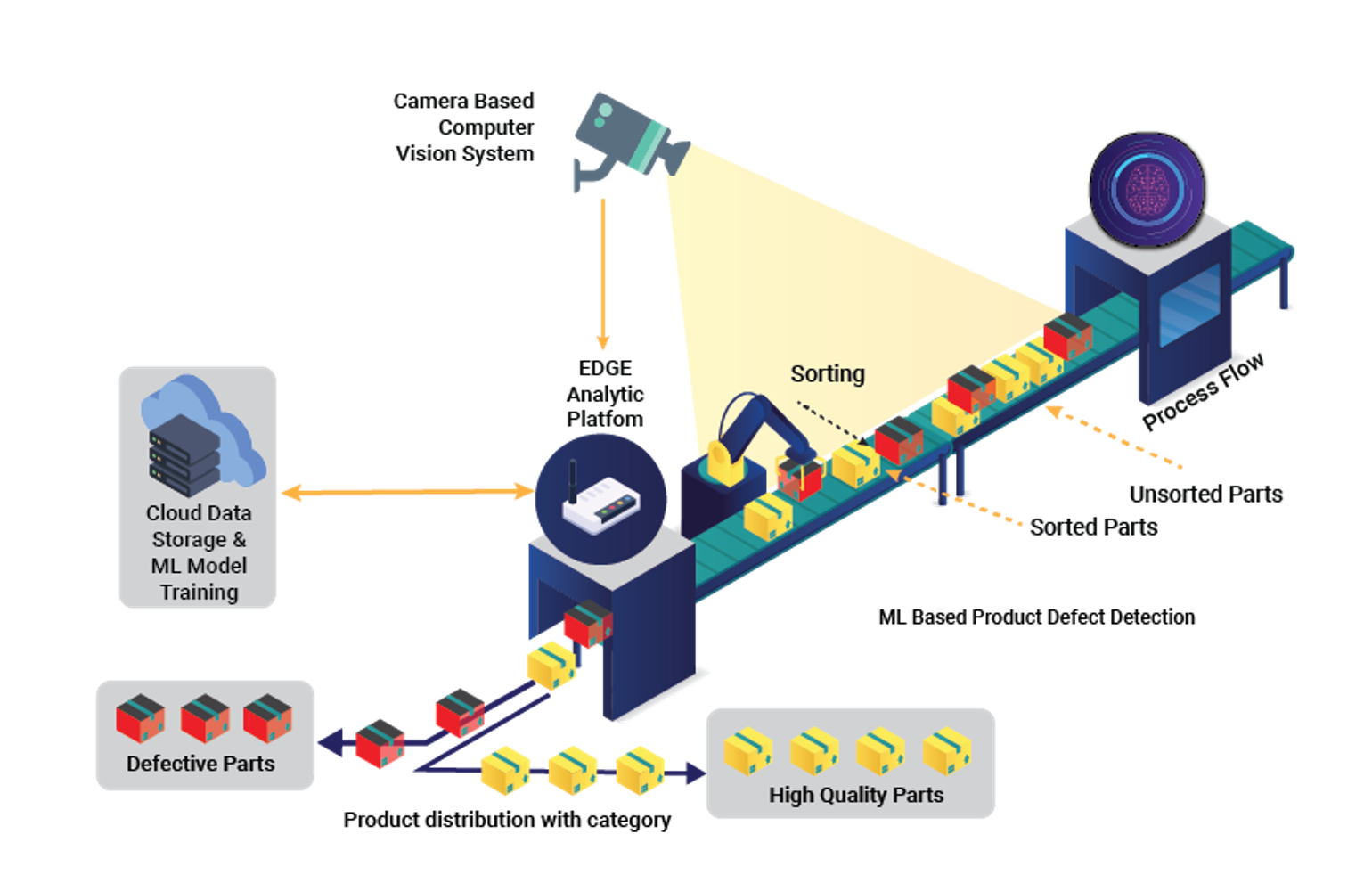
Step 5: Sorting and Processing At facilities, MataRecycler’s industrial modules use conveyor belts with high-speed vision and robotic pickers. Sorted materials achieve 98% purity, fetching premium prices from manufacturers.
Step 6: Insights and Iteration Data dashboards reveal trends: “Your neighborhood recycled 2.3 tons of PET last month—equivalent to 45,000 bottles saved from landfill.” Cities use this for policy, like targeted education campaigns.
The entire loop is powered by a feedback mechanism: misclassifications train the model, making it smarter daily.
Key Features That Set MataRecycler Apart
MataRecycler isn’t just smart—it’s thoughtfully designed for adoption. Standout features include:
- Real-Time User Guidance: Color-coded lights and voice prompts reduce errors by 70%.
- Reward Ecosystem: Blockchain-secured points for verified sorting (transparent and tamper-proof).
- Scalable Modularity: Start with one bin, expand to city-wide networks.
- Predictive Maintenance: Sensors detect wear, scheduling fixes before breakdowns.
- Carbon Tracking: Every recycled item logs CO2 savings in your personal impact report.
- Offline Resilience: Edge AI keeps core functions running during network outages.
For enterprises, add-ons like API integrations for supply chain traceability turn recycled content into verifiable “green” marketing.
Real-World Applications: From Homes to Megacities
MataRecycler isn’t confined to labs. Here’s how it’s deployed today:
Residential Use
In suburban communities, smart bins in apartment complexes have increased recycling rates from 28% to 62%. Families love the app’s family challenges—”Beat your neighbors this month!”
Commercial and Industrial
A mid-sized manufacturing plant in Europe cut waste disposal costs by 45% using MataRecycler sorters. Contaminated loads dropped to near zero, and they now sell high-purity scrap for profit.
Municipal and Smart Cities
Pilot in a Asian metropolis: 500 bins across parks and streets. Data optimized routes, saving $1.2M annually in fuel. Public dashboards show live recycling stats, fostering community pride.
Education and Corporate Campuses
Universities use it for hands-on sustainability classes. One campus diverted 85% of cafeteria waste from landfills.
Case in point: A 2026 deployment in a U.S. tech hub saw 1.8 million items processed with 92% accuracy, preventing 450 tons of CO2 emissions.
Benefits: Why Businesses and People Are Adopting MataRecycler
The wins are multifaceted:
Environmental
- Up to 50% higher recycling rates (per 2025 studies on AI sorting).
- Cleaner streams mean more materials actually get reused.
- Reduced methane from landfills.
Economic
- Cities save on collection (30% fewer trips).
- Businesses gain from premium recycled materials and tax incentives.
- ROI in 12-18 months for large installs.
Social
- Makes eco-living convenient and rewarding.
- Creates jobs in tech maintenance and data analysis (AI boosts opportunities, not just displaces).
- Builds data-driven environmental awareness.
One expert insight: “Traditional recycling feels like guessing. MataRecycler makes it feel like winning,” says a municipal waste director from a pilot city.
Table: MataRecycler vs. Traditional Recycling
| Aspect | Traditional Systems | MataRecycler AI System |
|---|---|---|
| Sorting Accuracy | 60-70% (manual) | 92-98% (AI vision) |
| Contamination Rate | 17-25% | <5% |
| Collection Efficiency | Fixed routes, 100% visits | Dynamic, 60% fewer trips |
| User Engagement | Low (confusion) | High (rewards, feedback) |
| Data Insights | None | Real-time dashboards, predictions |
| Cost per Ton (est.) | $80-120 | $45-70 (after year 1) |
| Scalability | Limited | City-wide to global |
Comparisons: How MataRecycler Outshines Older Solutions
Legacy methods rely on human sorters (prone to fatigue, injury) and basic magnets/optics. MataRecycler automates the repetitive, hazardous parts while augmenting human oversight.
Compared to basic smart bins (just fill sensors), it adds intelligence. Versus full robotic facilities, it’s more affordable and deployable incrementally.
In a world where AI is transforming industries, MataRecycler exemplifies “AI for good”—practical, not hype.
Limitations and Challenges: A Balanced View
No tech is perfect. MataRecycler faces hurdles:
- Upfront Costs: Hardware and integration can be pricey for small municipalities (though subsidies and leasing options help).
- Data Privacy Concerns: Addressed via encryption, but requires education.
- Adoption Curve: Some users resist change; gamification mitigates this.
- Waste Stream Variability: Extreme contaminants (e.g., hazardous waste) still need manual handling.
- Infrastructure Needs: Best in areas with decent connectivity.
Ongoing updates, like improved models for new packaging types, are closing gaps rapidly.
Is MataRecycler Safe and Reliable? Absolutely. Systems undergo rigorous testing—99.9% uptime in pilots. Data is anonymized, and physical bins use child-safe designs. Reliability comes from redundant sensors and cloud backups. It’s safer than manual sorting, reducing worker exposure to waste.
The Future Potential of MataRecycler
By 2030, expect MataRecycler evolutions: drone-assisted collection, integration with 3D-printed custom recyclers, and AI predicting waste trends from e-commerce data.
As smart cities proliferate, MataRecycler could become standard infrastructure, like streetlights. Partnerships with brands (e.g., deposit-return via app) will accelerate circularity.
The bigger picture? AI-driven systems like this could help hit global recycling targets, cutting emissions equivalent to removing millions of cars from roads.
How to Get Started with MataRecycler
- Home: Check local providers or order smart bins online.
- Business: Request a demo audit.
- City Planners: Explore municipal pilots—many offer grants.
Start small, measure impact, scale up.
FAQ: Your Top Questions on MataRecycler Answered
What is MataRecycler in technology? MataRecycler is an AI-powered smart recycling platform that uses sensors, machine vision, and data analytics to automate waste sorting, collection, and insights for sustainable management.
How does MataRecycler work? It scans items at disposal with AI cameras, classifies materials, optimizes routes via cloud data, and provides user feedback—all in a seamless, learning ecosystem.
Is MataRecycler safe or reliable? Yes—encrypted data, 99%+ uptime, and designs prioritizing user safety. It’s more reliable than manual methods, with adaptive AI improving over time.
Who should use MataRecycler? Homeowners seeking convenience, businesses for ESG compliance, schools for education, and cities for efficient infrastructure. Ideal for anyone tired of wasteful systems.
What problems does MataRecycler solve? High contamination (25% in traditional setups), inefficient collections, low participation, and lack of data—turning recycling from a headache into a high-tech win.
What are the latest updates or future developments? 2026 brings enhanced multi-language support, deeper smart city integrations, and carbon credit automation. Future: full autonomy and bio-material detection.
Common misconceptions about MataRecycler? It’s not “just a fancy bin”—it’s a full platform. It doesn’t replace humans but augments them. And no, it can’t recycle everything yet, but it maximizes what can be.
Conclusion: Embracing MataRecycler for a Tech-Driven Sustainable Tomorrow
MataRecycler isn’t a distant dream—it’s here, proving that technology can make sustainability scalable, engaging, and profitable. By tackling contamination, inefficiency, and disengagement head-on with AI, sensors, and smart design, it paves the way for a future where waste is minimized, resources are maximized, and every citizen feels part of the solution.
As we navigate the digital future, innovations like MataRecycler remind us that progress doesn’t have to come at the planet’s expense. It can enhance it. Whether you’re an individual making daily choices or a leader shaping policy, now’s the time to explore MataRecycler. Download the app, pilot a bin, or advocate for deployment in your community.
The next throw you make could be the one that changes everything. What are you waiting for? Recycle smarter with MataRecycler—today.
Share this content:




Post Comment