Video Interview Software: AI Tools Transforming Hiring 2026
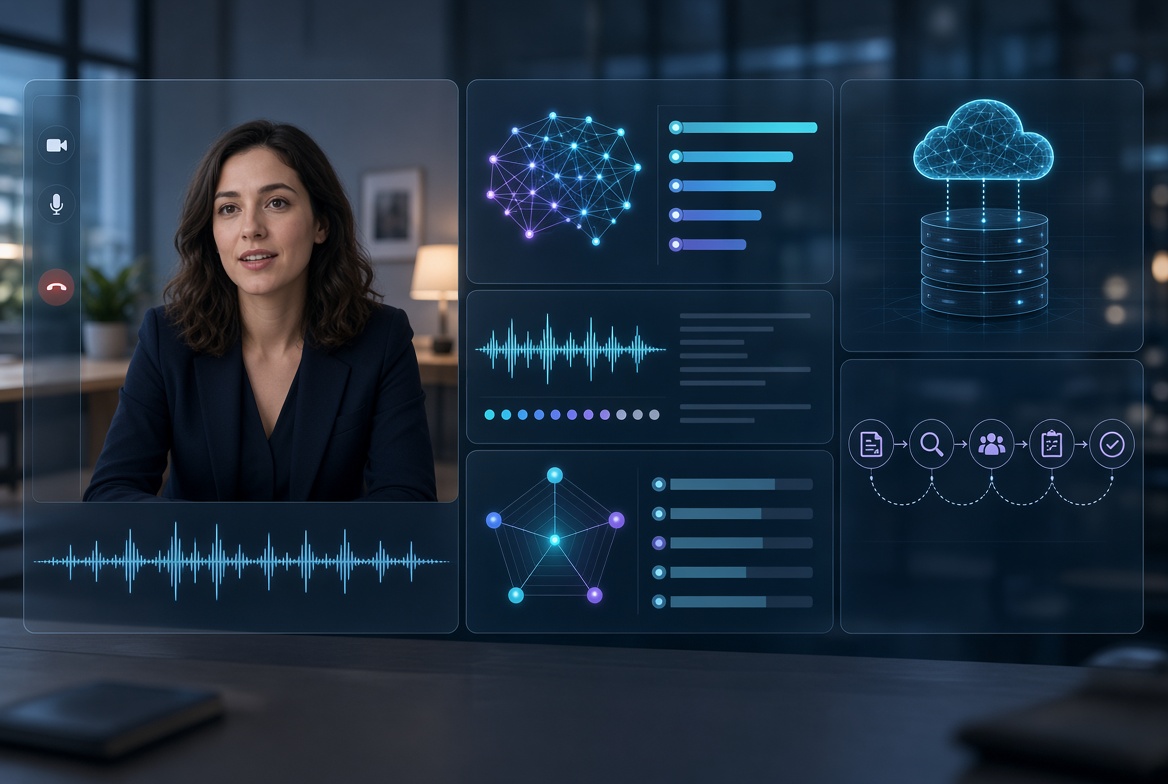
Video interview software has become one of the defining technologies of modern talent acquisition. In a world of remote work, global talent pools, and high application volumes, this category of tools lets recruiters screen candidates through recorded or live video responses, often enhanced by artificial intelligence that analyzes speech, content, and behavioral signals. What began as a simple way to reduce travel and scheduling friction has evolved into sophisticated platforms that combine video capture, natural language processing, automated scoring, proctoring, and seamless ATS integration.
Today these systems sit at the intersection of video technology, cloud infrastructure, machine learning, and recruitment automation. They solve practical problems—time-to-hire, consistency across interviewers, geographic reach—while raising important questions about fairness, privacy, and the human element in hiring. This article explores the technology from first principles: what it is, how the underlying systems work, the features that matter, real-world applications, limitations, comparisons with traditional methods, and where the field is headed.
In enterprise hiring projects, recruiters often discover that candidate completion rates improve noticeably when interview instructions include a short practice recording and clear guidance on lighting and background. Small process details like these frequently matter as much as the underlying AI.
What Exactly Is Video Interview Software?
At its core, video interview software is a digital platform that enables structured candidate evaluation through video. There are two primary modes.
Asynchronous (one-way) interviews let candidates record answers to preset questions on their own schedule using a webcam and microphone. Recruiters or AI later review the recordings.
Synchronous (live or two-way) interviews support real-time video conversations, often with shared tools for coding, whiteboarding, or collaborative note-taking.
Modern platforms frequently blend both. Many add AI layers that transcribe responses, score them against competency frameworks, detect potential integrity issues, and generate structured reports. The software typically lives in the cloud, integrates with applicant tracking systems (ATS), and provides candidate-facing interfaces optimized for mobile and desktop.
The technology exists because traditional hiring does not scale. Phone screens are time-intensive and lose visual cues. In-person interviews create logistics costs and geographic limits. Email-based screening fails to capture communication style or presence. Video interview software addresses these gaps by standardizing the early funnel while preserving richer signal than text alone.
SHRM has highlighted the value of structured video tools for consistency and reduced logistics friction in talent selection processes.
How Video Interview Software Works: The Technical Pipeline
Understanding the mechanics reveals why these tools feel both powerful and, at times, controversial.
Invitation and Access
A recruiter or automated workflow generates a unique link or email invitation. The candidate authenticates (often via email or single sign-on) and lands in a browser-based or lightweight app environment. No specialized hardware beyond a standard webcam and stable internet is usually required.
Question Delivery and Recording
In async mode the system presents questions one at a time, often with a preparation countdown and a recording limit. Candidates can sometimes re-record. In live mode the platform hosts a real-time WebRTC or similar video session. Advanced systems embed an AI avatar or conversational agent that asks questions and generates contextual follow-ups.
Capture Layer
Video and audio streams are encoded, often with adaptive bitrate to handle varying connection quality. Some platforms also capture screen activity (for technical roles) or run concurrent proctoring checks: tab-switch detection, multiple-face detection, eye-gaze estimation, and background analysis.
Processing and Analysis
Once recording ends (or in real time for live AI interviews), the pipeline typically includes:
- Automatic speech recognition (ASR) for accurate transcripts.
- Natural language processing to extract keywords, sentiment, structure, and relevance to the role.
- Optional multimodal analysis of pace, filler words, energy, and (in some systems) facial or vocal features.
- Scoring against predefined rubrics or models trained on high-performing employee data or validated competency frameworks.
- Generation of summaries, highlight reels, and ranked shortlists.
Review, Collaboration, and Decision Support
Hiring teams access a dashboard with side-by-side candidate comparisons, collaborative scorecards, searchable transcripts, and AI-generated insights. Data flows back into the ATS so status updates, notes, and next-step triggers remain centralized.
Security and Compliance Layer
Encryption in transit and at rest, access controls, audit logs, data retention policies, and consent management are standard. Many platforms support GDPR, CCPA, and emerging AI-specific regulations such as elements of the EU AI Act that classify certain employment AI systems as high-risk.
The shift from pure recording tools to AI-augmented systems has been rapid. Early platforms focused on convenience. Current ones emphasize consistency, speed, and signal extraction. Agentic approaches—where an AI conducts a dynamic conversation rather than reading a static script—represent the latest evolution.
Core Features That Define Modern Platforms
Not every tool offers the same depth. High-value capabilities include:
- Flexible interview modes: Unlimited or high-volume async interviews plus live options with recording and transcription.
- AI evaluation: Content-based scoring (preferred for fairness) versus multimodal models. Transparent explanations of scores matter.
- Structured question banks and templates: Role-specific libraries, the ability to generate questions from job descriptions or resumes, and branching logic.
- Proctoring and integrity tools: Liveness detection, environment monitoring, and increasingly, defenses against deepfakes or proxy interviewing.
- Collaboration features: Shared scorecards, timestamped comments, team ranking, and highlight clips.
- ATS and HRIS integrations: Native connections to Greenhouse, Workday, SAP SuccessFactors, Lever, and others so data does not live in silos.
- Candidate experience elements: Mobile optimization, practice questions, branded interfaces, instant feedback or transcripts, and multi-language support.
- Analytics and reporting: Time-to-complete metrics, drop-off analysis, diversity dashboards (carefully designed), and predictive signals.
- Compliance and accessibility: Captions, screen-reader compatibility, data subject access request handling, and bias audit support.
Enterprise platforms often add game-based assessments, coding environments, or conversational AI agents that handle initial outreach and scheduling.
Benefits: Why Organizations Adopt Video Interview Software
The practical advantages are measurable.
Speed and scale. Recruiters can invite hundreds of candidates simultaneously. Async completion rates often reach high levels within 48 hours. Time-to-first-interview shrinks dramatically. Organizations frequently report meaningful reductions in overall hiring time in high-volume scenarios.
Consistency. Every candidate answers the same core questions under similar conditions. Structured rubrics and AI scoring reduce interviewer variance.
Geographic reach and candidate convenience. Global talent becomes accessible without travel. Candidates record when it suits them, which improves participation from people with caregiving responsibilities, different time zones, or current employment.
Richer early signal. Video reveals communication style, presence, and thought process more effectively than resumes or phone screens. Transcripts and AI summaries make review efficient.
Cost efficiency. Reduced travel, fewer no-shows for early rounds, and lower recruiter hours per hire translate into tangible savings.
Data-driven decisions. Aggregated insights help refine job requirements, identify strong predictors of success, and improve process design over time.
From a technology perspective, these tools exemplify how software can compress previously labor-intensive workflows while preserving (and sometimes enhancing) human judgment at the decision stage.
Real-World Applications and Industry Examples
High-volume retail, hospitality, and customer service roles were early adopters for screening large applicant pools quickly. Campus recruiting programs use async video to evaluate thousands of students efficiently. Tech companies combine video with integrated coding environments. Professional services and regulated industries lean on structured, auditable processes for compliance.
Startups and mid-market firms often choose lighter platforms focused on async simplicity and transparent pricing. Enterprises favor suites that include assessments, deep analytics, and governance features. Global organizations value multi-language support and consistent evaluation across regions.
A growing use case is internal mobility and promotion assessments, where the same structured approach applied to external candidates can reduce bias in advancement decisions. Another is high-stakes technical hiring, where AI conversational agents probe depth while capturing the interaction for later human review.
Competitor Landscape: Leading Platforms
The market includes a range of options tailored to different scales.
HireVue remains a prominent enterprise choice, known for combining video with assessments and AI evaluation at high volume. Spark Hire is frequently selected by mid-market teams for its mix of one-way and live interviews with relatively transparent pricing. Willo focuses on streamlined asynchronous screening, while VidCruiter emphasizes structured workflows and compliance features useful in regulated settings. Other tools such as Hireflix target simpler, cost-effective async needs.
These platforms differ in depth of AI scoring, integration breadth, and pricing approach. The right fit depends on hiring volume, compliance requirements, and whether teams prioritize pure screening speed or deeper assessment capabilities.
Pricing Models and ROI Considerations
Pricing varies widely. Many mid-market tools use subscription models based on company size, number of active jobs, or seats (for example, plans starting in the low hundreds of dollars per month). Enterprise solutions such as HireVue typically involve custom annual contracts that can begin in the tens of thousands of dollars and scale with volume and modules. Some platforms offer usage-based or credit models.
Common ROI metrics teams track include:
- Reduction in time-to-hire
- Interview completion rates
- Candidate drop-off percentages
- Recruiter hours saved on early screening
- Cost-per-hire improvements
Organizations that measure these before and after implementation can more clearly quantify value. In practice, the largest gains appear when video interview software replaces high volumes of phone screens rather than later-stage human interviews.
Implementation Challenges
Rolling out video interview software is rarely just a technology switch. Common hurdles include change management for recruiters accustomed to traditional methods, the need for clear candidate instructions and practice opportunities, ATS data mapping, and training on interpreting AI outputs without over-relying on them.
Accessibility considerations matter: not every candidate has ideal internet, a quiet space, or comfort with video. Providing alternatives (phone or in-person options) and testing the candidate experience thoroughly reduces friction. Security reviews and legal sign-off on data handling can extend timelines for larger organizations.
Limitations, Risks, and Common Misconceptions
No technology is neutral or perfect.
Candidate experience friction. Some applicants dislike recording themselves or find AI-led interviews uncanny. Drop-off can occur if the process feels impersonal or overly long.
Bias and fairness concerns. Models trained on historical data can perpetuate past patterns. Facial or emotional analysis has documented higher error rates across demographic groups and faces regulatory scrutiny. Content-based scoring is generally preferred. Transparent audits and human oversight remain essential. The NIST AI Risk Management Framework provides useful guidance for mapping and managing such risks in AI systems.
Privacy and biometric issues. Video contains sensitive data. Laws such as Illinois BIPA impose strict consent and retention requirements for biometric identifiers. Candidates must understand what is collected and how it is used. GDPR and CCPA also apply depending on jurisdiction.
Technical and integrity challenges. Poor internet, lighting, or equipment can disadvantage candidates. Deepfakes, proxy interviewing, and AI-assisted answer tools create new arms races in proctoring.
Over-reliance risk. Treating AI scores as definitive rather than decision-support can lead to missed talent or legal exposure. Best practice keeps humans in the loop for final judgments. Federal guidance from agencies including the EEOC and Department of Labor has underscored the need to monitor automated employment tools for adverse impact under existing civil rights laws.
Misconceptions. Video software does not replace human interviews for most senior or complex roles; it optimizes the early funnel. It is not inherently “bias-free”—it shifts the locus of potential bias and requires active management. Not every platform uses facial analysis; many have moved toward language-and-content focus.
Comparison: Video Interview Software vs. Traditional Approaches
| Aspect | Traditional (Phone/In-Person) | Video Interview Software |
|---|---|---|
| Scheduling | High friction | Low (especially async) |
| Geographic reach | Limited | Global |
| Consistency | Variable by interviewer | High with structure + AI |
| Early signal richness | Moderate (phone) / High (live) | High |
| Scalability | Low | High |
| Cost per screen | Higher | Lower at volume |
| Auditability | Manual notes | Transcripts, recordings, scores |
| Candidate convenience | Variable | High for async |
| Risk of bias | Human unconscious bias | Algorithmic + residual human |
| Setup complexity | Low | Moderate to high (enterprise) |
Video tools excel at volume and standardization. Traditional methods retain advantages for chemistry assessment, complex negotiation, or roles where physical presence matters. Hybrid approaches—video for screening, live human for later rounds—are common and often optimal.
Privacy, Security, and Ethical Design
Responsible platforms emphasize:
- Explicit, informed consent before recording or analysis.
- Clear data retention and deletion policies.
- Encryption and access controls.
- Preference for content analysis over opaque biometric scoring.
- Regular third-party bias audits.
- Human review pathways and candidate rights to explanation or appeal.
Organizations deploying these tools share responsibility: train users, set fair thresholds, monitor outcomes for disparate impact, and maintain alternative processes for candidates who cannot or prefer not to use video. Aligning with frameworks such as the NIST AI RMF and monitoring evolving rules under the EU AI Act helps build durable trust.
The Future of Video Interview Software
Several trajectories are already visible.
Agentic and conversational AI. Static question lists give way to dynamic dialogues in which an AI agent follows up, probes inconsistencies, and adapts difficulty—while remaining transparent about its nature.
Deeper integration across the talent funnel. Video insights will feed predictive models that also incorporate skills assessments, work samples, and performance data, creating tighter feedback loops between hiring and onboarding.
Improved integrity and accessibility. Better deepfake detection, adaptive interfaces for neurodiversity and disability, and lower-bandwidth modes will expand fair access.
Regulatory maturation. Clearer rules around high-risk AI in employment will push vendors toward greater transparency and auditability.
Hybrid human-AI models. The most durable systems will position AI as a consistent first-pass evaluator and insight generator, with humans handling nuance, culture fit, and final decisions.
Market growth projections and adoption rates suggest video interview software will become infrastructure rather than a specialized tool—much like email or video conferencing before it.
FAQ: Common Questions About Video Interview Software
What is video interview software in technology terms? It is cloud-based software that captures, stores, analyzes, and shares candidate video responses for hiring decisions. Modern versions incorporate AI for transcription, scoring, and conversational interaction.
How does video interview software work? Candidates receive a link, answer questions via webcam (async or live), and the platform processes the media into transcripts, scores, and reports that hiring teams review collaboratively, often with ATS synchronization.
Is video interview software safe or reliable? Reputable platforms use strong encryption, access controls, and compliance frameworks. Reliability depends on internet quality, clear instructions, and human oversight of AI outputs. Bias and privacy risks require active management.
Who should use video interview software? Organizations facing high application volume, distributed teams, or the need for consistent early screening. It is especially valuable for recruiters, talent acquisition teams, and hiring managers in growth-stage and enterprise companies.
What are the latest updates or future developments? Conversational AI agents that conduct adaptive interviews, stronger proctoring against synthetic media, explainable AI scoring, and tighter integration with skills-based hiring platforms.
What problems does it solve compared with older methods? It reduces scheduling overhead, expands geographic reach, standardizes evaluation, accelerates time-to-hire, and provides richer, reviewable signal than phone screens or unstructured conversations.
Are there common misconceptions? That AI eliminates all bias (it can introduce new forms), that every platform analyzes faces (many focus on content), or that video interviews fully replace human judgment (they optimize the funnel).
Conclusion and Next Steps
Video interview software represents a practical, evolving application of digital systems, AI, and cloud technology to one of the most human of business processes: choosing who joins a team. It exists to solve real constraints of time, distance, and consistency. When designed and used thoughtfully—with transparency, human oversight, and attention to candidate experience—it can expand opportunity and improve decision quality.
The technology will continue to advance toward more natural interaction, better fairness tooling, and deeper workflow integration. For technology and business leaders, the opportunity is to treat these platforms as infrastructure that supports, rather than supplants, good hiring judgment.
If you are evaluating options, start by mapping your highest-volume or highest-friction hiring workflows. Pilot one or two platforms against clear success metrics such as time-to-hire, completion rates, and recruiter hours saved. Involve both recruiters and recent candidates in the feedback loop. Prioritize vendors that publish bias audits, explain their models, and make data rights straightforward.
Consider related topics such as AI recruiting tools, ATS selection, remote hiring best practices, and recruitment analytics when building a full technology stack. The future of hiring will not be fully automated or fully traditional. It will be hybrid, data-informed, and designed around both efficiency and dignity. Video interview software is already a central piece of that emerging system. Understanding how it works today prepares organizations to shape how it works tomorrow.
Share this content:


Post Comment