Wollmatten: Practical Guide to Sheep Wool Insulation Mats for Thermal Performance, Acoustic Control, and Sustainable Retrofits 2026
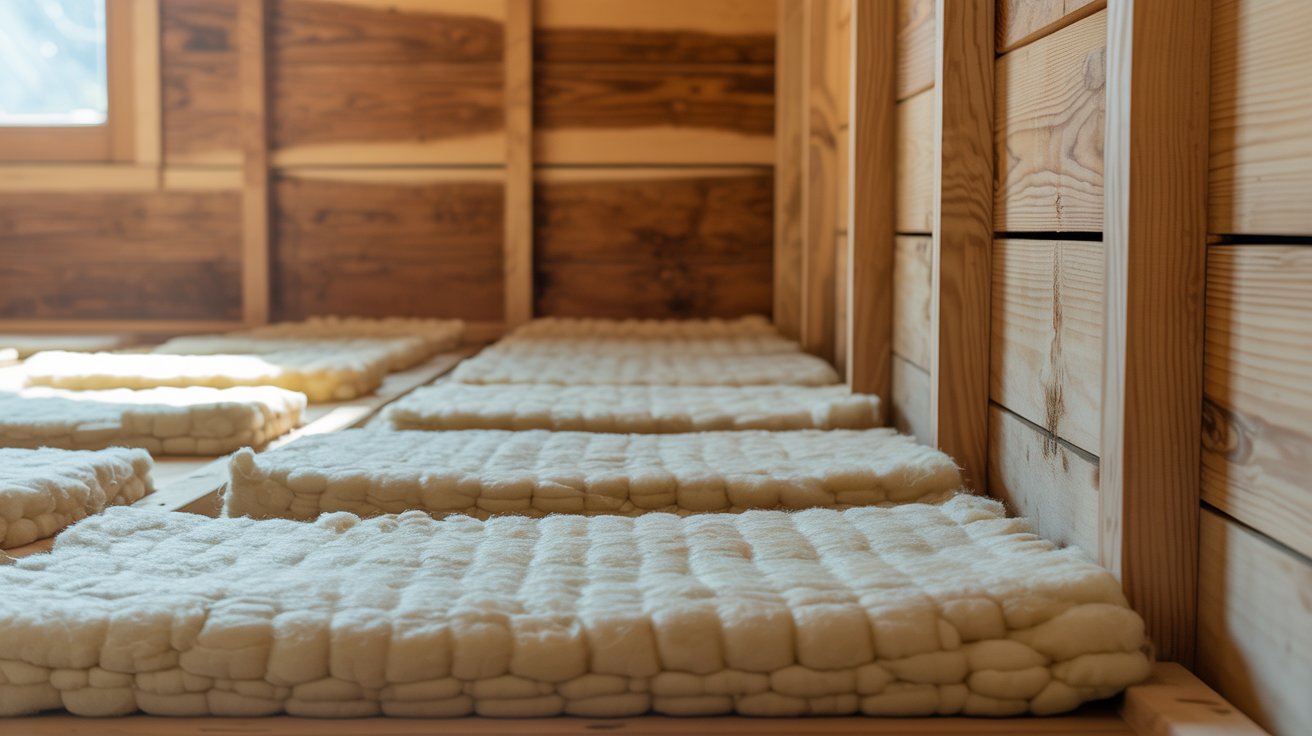
Wollmatten, commonly referred to as sheep wool insulation mats or wool batts, are natural products made from sheep fleece. They serve as thermal insulation in walls, roofs, and floors, as well as acoustic panels or comfortable floor underlays. Builders and homeowners increasingly select them for breathable performance that supports energy-efficient retrofits and healthier indoor air without relying on synthetic materials.
This guide explains what wollmatten are, their tested properties according to European standards, real-world applications with documented examples, and practical advice for decision-making. It draws from manufacturer technical data sheets, Environmental Product Declarations (EPDs), and peer-reviewed studies on sheep wool as a building material.
What Are Wollmatten and Sheep Wool Insulation Mats?
Wollmatten are mats, rolls, or panels produced from cleaned, carded, and often felted sheep wool. Manufacturers like ISOLENA (Austria) and Thermafleece (UK) create them using primarily 100% sheep wool or low-grade fleece with minimal or no synthetic additives. Products come in various densities (e.g., 14–30 kg/m³ or higher for acoustic use) and thicknesses from a few millimeters up to 300 mm for different applications.
These wool insulation mats emphasize vapor permeability (μ-value often around 1 according to EN ISO 12572), making them suitable for timber-frame, historic, or moisture-sensitive constructions where trapped damp can cause issues with impermeable foams or mineral wools. Many carry European Technical Approval (ETA), natureplus certification, or CE marking.
How Sheep Wool Insulation Works: Verified Properties from Standards and Tests
Sheep wool fibers have a crimped structure with microscopic air pockets and a scaly surface that naturally manages moisture and sound.
- Thermal Insulation: Commercial products from ISOLENA typically achieve declared thermal conductivity (λ) values of 0.033–0.038 W/mK, tested per EN 12667. For example, ISOLENA Optimal lists λ90/90 at 0.03567 W/mK and λD at 0.037 W/mK. ISOLENA Premium reaches even lower values around 0.03397 W/mK. These figures are competitive with mineral wool in many assemblies and support effective heat flow resistance.
- Moisture Regulation: Wool can absorb and release up to 30–35% of its weight in water vapor without feeling damp or losing insulating capacity. This helps maintain indoor relative humidity in the comfortable 40–60% range and reduces condensation risks in breathable building envelopes.
- Acoustic Performance: Dense wool felts and panels provide strong sound absorption. Weighted absorption coefficients (αw) often range from 0.75 to 0.85 (or higher) depending on thickness and density, per EN ISO 11654. Studies, such as one published in Materials (del Rey et al.), show sheep wool samples achieving absorption classes B or C, comparable to or exceeding mineral wool and recycled polyurethane foams at mid-to-high frequencies. Mountain sheep wool composites also perform well in room acoustics tests.
- Fire Resistance: Wool self-extinguishes thanks to high nitrogen content (~16%) and a limiting oxygen index around 25%. Ignition temperature is typically 560–600°C. Products frequently meet EN 13501-1 classifications such as D-s2,d0, with some acoustic configurations reaching better ratings. It chars rather than melts and produces low-toxicity smoke.
- Air Quality: Wool naturally binds certain volatile organic compounds (VOCs) like formaldehyde, acting as a passive filter that can improve indoor air over time.
These properties are documented in manufacturer datasheets, EPDs (e.g., from OEKOBAU.DAT and BAU-EPD), and research papers on bio-based insulation.
Key Features of Quality Sheep Wool Mats
Reliable wollmatten and wool insulation products typically offer:
- Biocide-free pest protection, such as ISOLENA’s Ionic Protect® process.
- Environmental Product Declarations (EPDs) detailing low embodied carbon and full recyclability or biodegradability at end-of-life.
- Compatibility with underfloor heating systems and traditional timber construction due to high vapor openness.
- Long expected service life—often 50–75+ years when properly installed and protected from extreme conditions, according to some EPDs.
Always check current technical data sheets for the specific product and region, as density and thickness directly influence performance.
Real-World Applications and Documented Case Studies
Sheep wool insulation mats are used in residential retrofits, historic restorations, acoustic treatments, and sustainable new builds.
- Historic and Heritage Projects: Thermafleece sheep wool was installed in the roof of the South Wing of the Upper Reading Room at the Bodleian Library (Oxford, UK) to improve thermal performance while preserving the historic fabric. Another example is Dartington Village Hall (a 1925 timber-frame structure in Devon, UK), where Thermafleece helped enhance energy efficiency and comfort in a sensitive building.
- Residential Renovations: In Ireland and the UK, sheep wool batts are commonly used in farmhouse and cottage retrofits for walls, roofs, and floors. Homeowners report noticeable improvements in thermal comfort and reduced drafts, with the material’s breathability helping manage moisture in older stone or timber structures.
- Acoustic Applications: Wool panels serve in home offices, recording spaces, or commercial interiors to reduce reverberation. Research on sheep wool composites confirms effective noise control, particularly for speech frequencies.
- Sustainable Construction: Projects in Austria, the UK, and beyond incorporate ISOLENA rolls or batts in roofs, walls, and ceilings. Loose-fill or blown wool options fill irregular cavities effectively.
A 2017 study in Construction and Building Materials (or similar works) and more recent reviews (e.g., Szczecina et al., 2026 in Energies) highlight sheep wool’s viability in low-carbon composites for both thermal and acoustic performance.
Benefits Compared to Synthetic and Mineral Insulation
Sheep wool often stands out for holistic performance in breathable assemblies rather than peak R-value alone.
Comparison Table
| Feature | Sheep Wool Mats (e.g., ISOLENA / Thermafleece) | Synthetic Foam (PU / EPS) | Mineral Wool (Glass / Rock) |
|---|---|---|---|
| Thermal Conductivity (λ) | 0.033–0.038 W/mK (EN 12667) | 0.022–0.040 W/mK (varies) | 0.030–0.040 W/mK |
| Moisture Buffering | Excellent (up to 35% by weight) | Poor (usually requires vapor barriers) | Moderate (can hold water if saturated) |
| Acoustic Absorption (αw) | 0.75–0.85+ (EN ISO 11654) | Moderate | Good |
| Fire Classification (EN 13501-1) | D-s2,d0 or better (self-extinguishing) | Often needs additives; can melt/drip | Non-combustible |
| Indoor Air Quality | Binds VOCs; low off-gassing | Potential off-gassing | Can release dust during installation |
| Environmental Profile | Renewable, biodegradable; supports farming | Fossil-based; higher embodied carbon | Energy-intensive manufacturing |
| Typical Lifespan | 50–75+ years (per EPDs, with proper care) | 10–30 years | 20–50 years |
Data compiled from manufacturer technical sheets (ISOLENA, Thermafleece), EPDs, and comparative studies. Wool excels in variable-humidity or heritage contexts where breathability prevents long-term damage.
Honest Limitations of Wollmatten and Sheep Wool Insulation
- Initial Cost: Often higher than basic mineral wool or foam, though long-term durability and performance can offset this in suitable projects.
- Handling and Weight: Denser mats are heavier; over-compression during installation can temporarily reduce thermal efficiency.
- Extreme Conditions: Performs best in normal humidity ranges—prolonged flooding requires professional drying or replacement, and it is not ideal for constantly wet areas.
- Regional Availability: Stronger supply chains in Europe; check local distributors and compliance with building codes.
- Performance Depends on Context: Results vary with density, thickness, installation quality, and overall building design—review specific product data.
Sheep wool is rarely the thinnest high-R option, so it works best as part of a well-planned system.
How to Choose, Install, and Maintain Sheep Wool Mats
Choosing Tips:
- Select λ-value, density, and thickness based on your climate, application (thermal vs. acoustic), and building type.
- Verify certifications: EN 12667 for thermal, EN ISO 11654 for acoustics, EN 13501-1 for fire, plus EPDs or ETA.
- Compare brands: ISOLENA for Austrian wool with Ionic Protect®; Thermafleece for British-sourced options in heritage work.
- For retrofits, confirm compatibility with existing structures and consult local regulations.
Installation Overview (always follow manufacturer instructions and use qualified professionals for structural elements):
- Ensure surfaces are clean, dry, and level.
- Cut rolls or batts to fit snugly without excessive compression.
- Secure panels with mechanical fixings or approved adhesives where needed.
- Use vapor-permeable membranes as required by building physics calculations.
- Test compatibility in small areas when combining with underfloor heating.
Maintenance: Vacuum or brush regularly to remove dust. Address spills promptly with mild, pH-neutral cleaners. Rotate floor mats periodically for even wear. Minimal ongoing care is typically required.
Who Should Consider Sheep Wool Insulation Mats?
- Homeowners renovating older properties for improved comfort, air quality, and energy performance.
- Architects and contractors working on breathable, historic, or low-carbon projects.
- Designers focused on acoustics in offices, studios, or wellness spaces.
- Anyone prioritizing natural materials and long-term sustainability over the lowest upfront cost.
They are particularly valuable in temperate climates with variable humidity or in buildings where moisture management is critical.
Common Questions and Misconceptions
Myth: Wool attracts moths and requires heavy maintenance. Reality: Modern biocide-free treatments like Ionic Protect® provide strong protection; routine vacuuming suffices for most installations.
Myth: It underperforms synthetics. Reality: Lab and field data show comparable thermal results plus superior moisture buffering and acoustics in many real buildings.
Myth: Suitable only for rustic or eco-only projects. Reality: Clean, natural aesthetics and performance data make wool mats compatible with contemporary designs.
FAQ About Wollmatten and Sheep Wool Insulation Mats
What are wollmatten? Wollmatten are natural sheep wool mats used for thermal insulation, acoustic control, floor underlays, or wall/ceiling coverings in sustainable building projects.
How do sheep wool insulation mats perform thermally? Typical declared λ-values range from 0.033–0.038 W/mK when tested to EN 12667, offering effective insulation comparable to mineral wool in practical assemblies (e.g., ISOLENA Optimal at ~0.035–0.037 W/mK).
Are wool mats safe regarding fire and indoor air quality? Yes. They self-extinguish with high ignition temperatures (560–600°C) and low-smoke toxicity per EN 13501-1. Properly processed wool binds VOCs and is generally low-allergen.
How do wollmatten compare to synthetic insulation? Wool provides better moisture regulation and acoustic absorption with similar thermal performance in breathable constructions. Synthetics may offer advantages in thin layers or cost but often lack vapor permeability.
Who benefits most from using sheep wool mats? Renovators of historic or timber buildings, sustainable builders, and those seeking healthier indoor environments or improved room acoustics.
What maintenance do sheep wool insulation mats require? Regular vacuuming, prompt spill cleanup, and protection from prolonged extreme moisture. They are durable with low ongoing effort when installed correctly.
Which brands and standards should I look for? Reputable options include ISOLENA (with Ionic Protect® and detailed EPDs) and Thermafleece (strong in UK heritage projects). Prioritize products with EN 12667, EN ISO 11654, EN 13501-1 testing, and ETA approvals.
Final Thoughts: Is Wollmatten Right for Your Project?
Sheep wool insulation mats like wollmatten offer a well-documented, natural solution for thermal comfort, sound control, and moisture management in modern and historic buildings. Backed by European standards (EN 12667, EN 13501-1, EN ISO 11654), manufacturer data from ISOLENA and Thermafleece, and real installations such as the Bodleian Library and Dartington Village Hall, they provide measurable performance alongside sustainability benefits.
Before proceeding, assess your specific needs—climate, construction type, budget, and local codes—then review current product datasheets and consult qualified builders or energy assessors. Many users start with a targeted acoustic panel or small retrofit area to evaluate the difference in comfort and quiet firsthand.
For projects valuing breathability, long-term durability, and lower environmental impact, natural sheep wool insulation remains a practical, evidence-supported choice.
Author Note: Compiled as a practical overview drawing from publicly available manufacturer technical documents, EPDs, European standards, and peer-reviewed literature on sheep wool insulation (as of 2026). Performance varies by specific product, density, thickness, installation quality, and building context. For your project, always consult the latest product datasheets, certified professionals, and comply with applicable building regulations and energy codes. Professional assessment is essential for structural, fire safety, or energy-related decisions.
Share this content:




Post Comment