Business Technology
Affordable Internet Access, Coin Operated Internet, Community WiFi Networks, Digital Inclusion Technology, Emerging Market Internet Systems, Internet Access Technology, Low Cost Internet Solutions, Micro Payment Connectivity, Pasonet, Philippines Internet Innovation, Piso Internet Machine, Piso WiFi Technology, Pisonet Internet System, Public WiFi Infrastructure, Rural Connectivity Solutions
novabiztech
0 Comments
Pasonet Technology 2026: Stop Internet Inequality with Coin WiFi
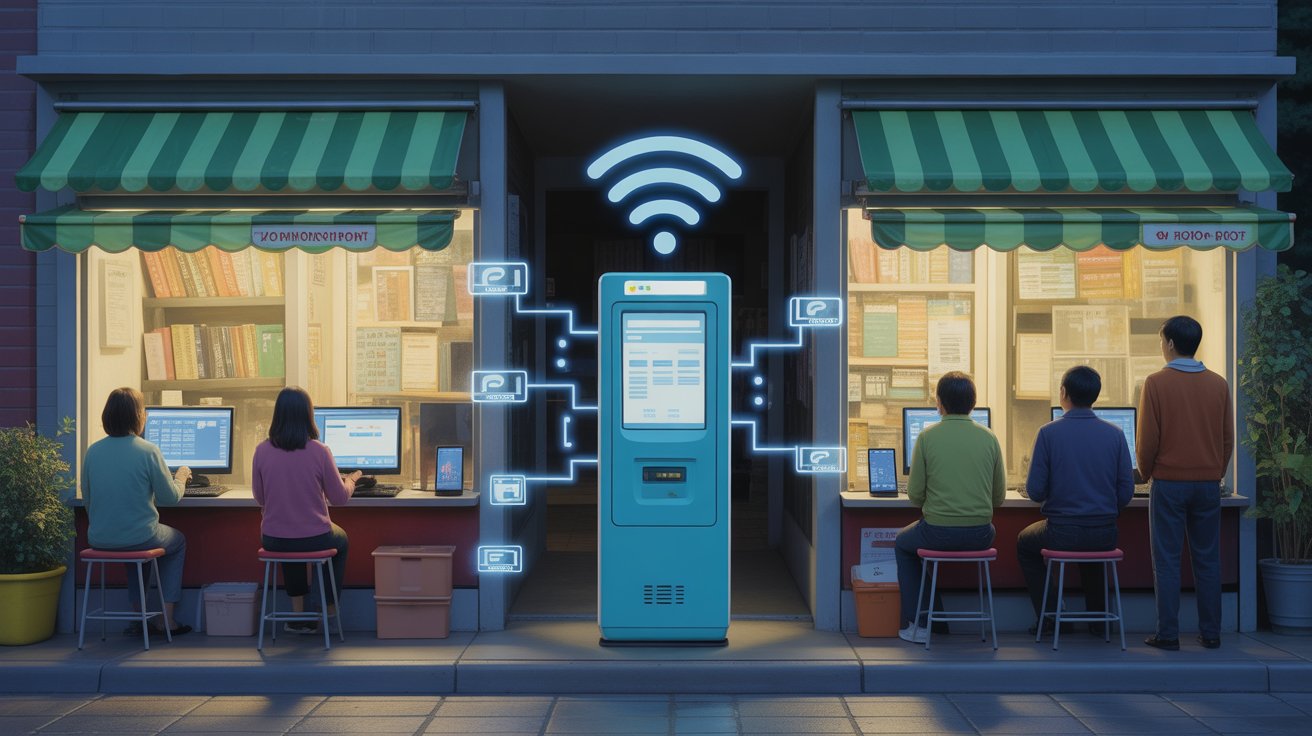
The coin-internet system known as pasonet (or Pisonet/PisoInternet) remains a cornerstone of grassroots digital innovation. Launched in 2008 by Julius Peralta and Al Ian Noblejas in Pasig City, it enabled users to access the internet for just one Philippine peso (≈ US$0.02) per short session. This simple yet powerful model made online connectivity realistic for low-income households during an era when traditional broadband was often unaffordable.
In 2026, with internet penetration reaching 83.8% and approximately 98 million users online in the Philippines (per DataReportal’s Digital 2026 report), significant gaps persist—particularly in rural and low-income areas where cost and infrastructure challenges continue. Pasonet’s legacy thrives through its evolution into Piso WiFi vending machines and hybrid hotspots, delivering flexible, no-subscription access that complements government initiatives like nearly 19,000 free public WiFi sites.
Here are the 7 – ways this technology continues to shape inclusive digital access.
1. Pioneering Affordable Internet Access for the Underserved
Pasonet removed traditional barriers such as monthly fees and credit checks. Users inserted coins to unlock timed sessions on shared PCs—often 4–7 minutes per peso—providing instant entry to the web.
This approach delivered first-time online experiences to millions in slums, rural communities, and neighborhood shops. It addressed affordability head-on when penetration rates were lower, and similar low-barrier models remain vital where full subscriptions prove costly.
2. Enabling Micro-Payment Connectivity Models
The coin acceptor and timer mechanism automated micro-transactions without complex billing. Operators gained reliable, low-maintenance income while users controlled spending precisely.
This blueprint influenced modern solutions: prepaid data sachets, pay-per-minute charging, and digital wallet integrations. Today’s Piso WiFi units frequently combine coins with GCash or Maya QR codes, enabling seamless, flexible payments for shared connectivity.
3. Building Community Internet Infrastructure
Pasonet booths commonly appeared in local sari-sari stores, transforming everyday shops into shared digital hubs. A single unit could serve dozens of daily users, creating accessible community resources with minimal upfront investment.
Entrepreneurs earned consistent side income (historically ₱300–800 per day per unit during peaks), fueling organic expansion. This grassroots model paved the way for community WiFi programs and public hotspot deployments in underserved zones.
4. Accelerating Digital Literacy Growth
Low-cost access fostered practical experience with browsers, email, search tools, and early social platforms like Friendster and Facebook. Countless Filipinos developed core skills—typing, research, digital communication—through repeated sessions.
This hands-on foundation supported growth in BPO, freelancing, and tech entrepreneurship. In areas lacking home internet, such systems remain essential for building long-term digital competence.
5. Creating Small Business Opportunities
Initial setup costs stayed modest (roughly ₱15,000–30,000), generating steady passive revenue for operators. Many scaled by adding units or complementary services like printing and mobile loading.
In 2026, modern Piso WiFi vending machines (often plug-and-play, some coin-free via cloud dashboards) continue this path. Rural operators monetize excess bandwidth, supporting micro-enterprises amid ongoing economic needs.
6. Evolving Public WiFi and Hybrid Connectivity Solutions
Pasonet inspired Piso WiFi (popularized around 2015 by AGN Networks), transitioning to wireless hotspots using routers, Raspberry Pi hardware, and captive portals. Users connect phones for small fees via coins or apps.
Current 2026 features include:
- Remote operator monitoring apps
- Solar-powered off-grid setups
- Hybrid coin/QR/e-wallet payments
- No-vendo passive sharing of home connections
These advancements maintain affordability while offering faster speeds and greater coverage, working alongside government free WiFi networks.
7. Influencing Future Connectivity Models in Emerging Markets
Pasonet demonstrated that affordable hardware can drive widespread inclusion. Its principles—instant pay-per-use, community scaling, barrier-free entry—guide global efforts to close digital divides.
In the Philippines, where millions remain offline (primarily rural or low-income), policies like Konektadong Pinoy promote community networks. Internationally, analogous models appear in Africa and Latin America. Emerging trends feature AI-driven bandwidth allocation, blockchain micro-payments, and 5G/6G integration for sustainable equity.
How Pasonet Works: Core Technical Mechanism
Hardware Setup A basic PC or single-board computer (e.g., Raspberry Pi in newer versions) links to a coin acceptor and relay timer for session control.
Software Setup Windows with deep-freeze or reset tools clears changes after each use; custom timer software or firmware manages timing. Modern WiFi versions employ captive portals for login and access.
Access Control Coins initiate timed unlocks; sessions auto-terminate upon expiry. Contemporary systems incorporate encryption, content filters, and remote management.
Benefits and Limitations at a Glance
Benefits
- Zero entry barriers — Coins or QR only, no contracts
- Entrepreneur empowerment — Low-cost startup, passive income
- Skill development — Practical digital exposure
- Gap reduction — Bridges urban-rural and income divides
Limitations
- Shared bandwidth may slow during high demand
- Early versions had basic security (greatly improved today)
- Usage declined somewhat with affordable mobile data growth
Pasonet vs. Modern Alternatives Comparison
| Feature | Classic Pasonet | Modern Piso WiFi (2026) | Home Broadband | Mobile Data Plans |
|---|---|---|---|---|
| Cost | ₱1 per 4–7 min | ₱1–5 per session | Monthly ₱1,000+ | Prepaid bundles |
| Setup Barrier | Very low (coins only) | Low (coins/QR/app) | High (installation) | Medium (phone + signal) |
| Speed | Shared 1–5 Mbps | Shared 50–300 Mbps | Dedicated 50–500 Mbps | Variable 4G/5G |
| Accessibility | Universal | Universal | Credit/contract needed | Signal-dependent |
| Digital Divide Impact | High | Very High | Medium | Medium-High |
Is Pasonet Safe and Reliable Today?
Early shared PCs carried virus risks; 2026 Piso WiFi upgrades include session encryption, age-appropriate filters, and cloud monitoring for operators. Reliability approaches 99% with regular upkeep. For sensitive activities, pair personal devices with VPNs.
Author Bio
Written by a digital infrastructure analyst with over 10 years researching Southeast Asian community connectivity solutions. Insights stem from field observations, industry reports, and global inclusion studies.
Sources & References
- DataReportal: Digital 2026: The Philippines
- AGN Networks: How Piso WiFi Transformed Internet Access (2025)
- World Bank: Unlocking the Philippines’ Digital Transformation
- Wikipedia: Pisonet (historical context)
FAQ
What is pasonet in technology? Pasonet is a coin-operated mini-internet café system originating in the Philippines in 2008, delivering timed access for ₱1 per session to make connectivity affordable for low-income users.
How does pasonet work? Users insert coins to activate a timer that unlocks a PC or WiFi hotspot. Sessions end automatically. Modern Piso WiFi versions use routers and digital payments for wireless connectivity.
Is pasonet safe or reliable? Current versions feature encryption and remote monitoring. Early shared devices posed virus risks—stick to personal devices for sensitive tasks.
Who should use pasonet-style tech? Students, rural residents, micro-entrepreneurs, and individuals in expensive-internet zones gain the most from its low-cost flexibility.
What are the latest updates for 2026? Piso WiFi includes cloud dashboards, solar power, hybrid payments, and passive sharing options—maintaining affordability alongside expanding 5G coverage.
How did pasonet impact the digital divide? It offered millions initial access, enhanced skills, and sparked scalable networks that continue reducing rural and income-based connectivity gaps.
Will pasonet-style models continue? Yes—they evolve into AI-optimized, sustainable hotspots as policies advance inclusive access in emerging markets.
Conclusion
Pasonet’s seven powerful impacts—from pioneering affordability to guiding future models—highlight how targeted, simple innovation can foster broad inclusion. In 2026, with 98 million online yet persistent underserved pockets, its pay-per-use heritage lives on in Piso WiFi and community-driven solutions.
Check out a nearby Piso WiFi spot, or consider launching your own micro-hotspot. Lasting digital progress occurs when connectivity becomes truly accessible—one peso, one session, one step toward equity.
Share this content:




Post Comment