Why Weak PLG Supplies Kill SaaS Growth—and How Smart Teams Fix It
Introduction to PLG Supplies in Today’s Tech World
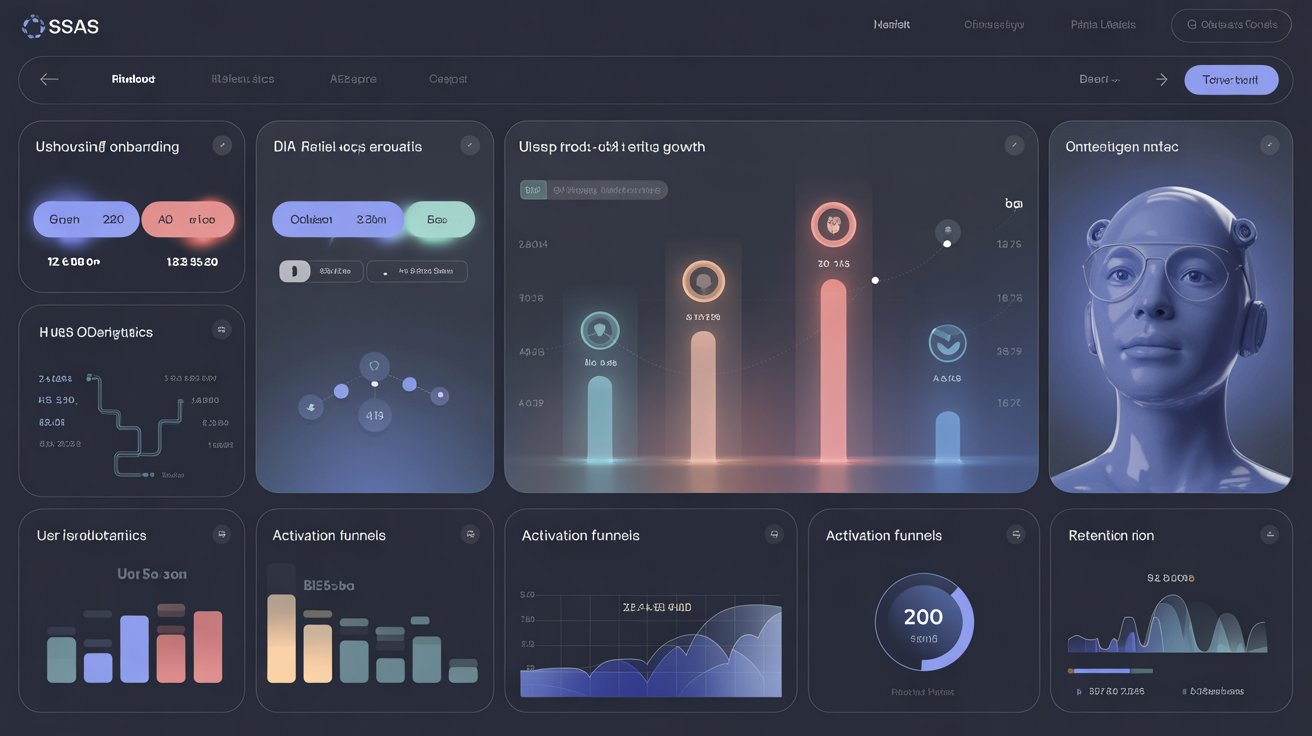
PLG supplies form the essential toolkit for product-led growth (PLG) strategies that dominate modern SaaS and tech companies. These digital resources—primarily software platforms—allow products to independently attract users, demonstrate value quickly, retain them longer, and drive organic expansion.
As of March 2026, with median B2B SaaS customer acquisition costs (CAC) reaching around $2 spent for every $1 of new ARR and growth rates stabilizing at ~26% median, efficient self-serve models have become non-negotiable for sustainable scaling. PLG supplies address this by shifting focus from sales-heavy outreach to in-product experiences that deliver fast value.
Whether you’re building the next collaboration tool or scaling an AI-powered platform, mastering these SaaS growth tools can dramatically improve unit economics and user satisfaction.
Expert Perspective: Having followed SaaS evolution closely, it’s clear that companies blending strong product value with intelligent PLG supplies consistently outperform peers in retention and efficiency.
Core Technology Behind PLG Supplies
Product-led growth software integrates several advanced technologies:
- Event-based analytics engines processing millions of user actions daily.
- Machine learning models for behavior prediction and segmentation.
- No-code builders enabling rapid creation of personalized flows.
- API ecosystems connecting tools across stacks (CRM, billing, support).
In 2026, standout innovations include AI agents that dynamically adjust onboarding based on user intent and real-time usage signals. This moves beyond static guides to truly adaptive experiences.
These technologies prioritize in-app moments over external campaigns, aligning with user expectations for seamless, low-friction digital interactions.
Standout Features of Top-Tier PLG Supplies
Leading tools for product-led growth deliver these capabilities:
- Granular Behavioral Tracking — Capture every click, hover, and hesitation.
- AI-Driven Personalization — Auto-generate tailored paths and recommendations.
- Contextual In-App Guidance — Tooltips, checklists, and modals triggered by events.
- Built-in Experimentation — Run A/B tests on onboarding or messaging without devs.
- Feedback Loops — NPS surveys and sentiment analysis tied to usage.
- Expansion Analytics — Identify upsell opportunities from feature adoption.
Platforms like Amplitude (behavioral insights), Userpilot (onboarding automation), and Pendo (product analytics + feedback) exemplify this powerful combination.
Key Insight: AI integration turns these supplies from descriptive to prescriptive, helping teams anticipate needs before users even realize them.
Step-by-Step: How PLG Supplies Drive Growth
Effective product-led growth tools operate through a repeatable, data-fueled cycle:
- Attract & Convert — Use heatmaps and session insights (e.g., Hotjar) to refine entry points.
- Accelerate Activation — Guide users to core value with interactive tours (Chameleon or Userflow).
- Collect Rich Data — SDKs feed events into analytics engines like Mixpanel for deep segmentation.
- Personalize Engagement — Trigger smart nudges or messages via Intercom based on patterns.
- Optimize Conversion — Highlight upgrade prompts when usage hits high-value thresholds.
- Monitor & Retain — Track health scores; automate re-engagement for at-risk users.
- Iterate Relentlessly — Analyze cohorts and experiment to refine every stage.
This loop creates compounding effects: better activation leads to stronger retention, which fuels expansion revenue.
Practical Applications Across Industries in 2026
PLG supplies power real success stories:
- Creative & Design — Canva leverages generous free access + AI features for massive viral adoption.
- Productivity & Collaboration — Notion and Slack encourage team invites and template sharing.
- Developer Tools — Platforms like Vercel or Supabase use self-serve sandboxes for quick experimentation.
- Fintech & Consumer Apps — Robinhood delivers instant trading utility to build habit and trust.
In EdTech (e.g., Duolingo’s streak analytics) and remote tools (Zoom’s usage-triggered upsells), these supplies solve acquisition friction and churn by front-loading value.
Major Benefits for Modern Tech Teams
Implementing robust PLG supplies yields clear advantages:
- Significant CAC Efficiency — Product-led models often achieve 40-50% lower CAC compared to traditional sales-led approaches, especially in self-serve segments.
- Stronger Retention & Expansion — Top performers reach 110-130%+ Net Revenue Retention (NRR), with expansion frequently driving 40%+ of new ARR.
- Faster Time-to-Value — Users hit “aha” moments quicker, improving activation rates.
- Scalable Operations — Growth becomes less headcount-dependent.
- Data Empowerment — Teams make faster, evidence-based decisions.
In today’s high-CAC environment (median ratios around $2:1 for new ARR), these efficiencies separate thriving companies from those struggling.
Realistic Limitations to Consider
Challenges persist:
- Data & Privacy Overhead — Extensive tracking demands strict compliance (GDPR, CCPA).
- Integration Effort — Stitching tools together requires engineering time initially.
- Core Product Reliance — No tool can compensate for poor underlying value.
- Not Universal Fit — Complex enterprise sales often need hybrid (product + sales) approaches.
Start small, prioritize user consent, and choose interoperable platforms to minimize issues.
Important Note: Balance automation with genuine human elements to avoid alienating users.
PLG Supplies vs. Traditional Growth Methods
Looking Ahead: The Evolution of PLG Supplies
By late 2020s, anticipate:
- Predictive AI that anticipates churn or expansion before signals appear.
- Deeper integration with emerging tech like decentralized protocols.
- Vertical-specific supplies tailored to niches (healthtech, fintech).
- Sustainability tracking embedded in analytics.
AI-native companies already show faster growth; PLG supplies will continue fueling this edge.
FAQ Section
What exactly are PLG supplies?
PLG supplies are specialized software tools enabling product-led growth—letting the product itself acquire, activate, retain, and expand users through self-serve experiences, analytics, and automation.
How do these product-led growth tools function?
They track user behavior in real-time, personalize guidance with AI, automate key moments, and optimize based on data loops to shorten time-to-value and boost conversions.
Are PLG supplies secure and dependable?
Yes—established vendors (Amplitude, Mixpanel, Pendo) provide enterprise-grade security, compliance certifications, and high uptime (typically 99.9%+). Review policies and SLAs carefully.
Which teams benefit most from PLG supplies?
SaaS startups, product teams, and companies targeting self-serve or low-touch models—especially those focused on reducing CAC and increasing organic/expansion revenue.
What are current trends and upcoming developments?
In 2026, emphasis is on AI personalization, hybrid PLG-sales motions, and predictive features. Tools increasingly support usage-based pricing and proactive retention.
What key challenges do PLG supplies address?
They tackle expensive acquisition, slow onboarding, high churn, and limited expansion by prioritizing fast value delivery and data-informed improvements.
Are there frequent misconceptions?
Yes—one is that PLG means zero sales involvement; hybrids often perform best in B2B. Another is assuming tools alone fix weak products—strong fit remains foundational.
Final Thoughts: Make PLG Supplies Your Growth Engine
PLG supplies have matured into indispensable infrastructure for tech companies facing rising costs and demanding users. By harnessing analytics, intelligent onboarding, and automation, these product-led growth tools deliver lower CAC (often 40–50% reductions in self-serve scenarios), higher NRR (110–130%+ for leaders), and scalable, user-centric expansion.
As AI continues reshaping experiences, early integration of these supplies positions teams for outsized advantage. Audit your current stack, pilot a high-impact tool (Amplitude for insights or Userpilot for flows), and track activation + retention metrics closely.
Which PLG supply will you implement first to accelerate your product’s natural growth?



Post Comment