AI & Automation
AI automation, AI in business automation, AI-driven automation, AI-powered systems, artificial intelligence automation, automated decision making, automation technology, digital transformation AI, intelligent automation, machine learning automation, novabiztechnology.com, smart automation solutions
novabiztech
0 Comments
What Is AI Automation? How Intelligent Automation Is Transforming Modern Technology
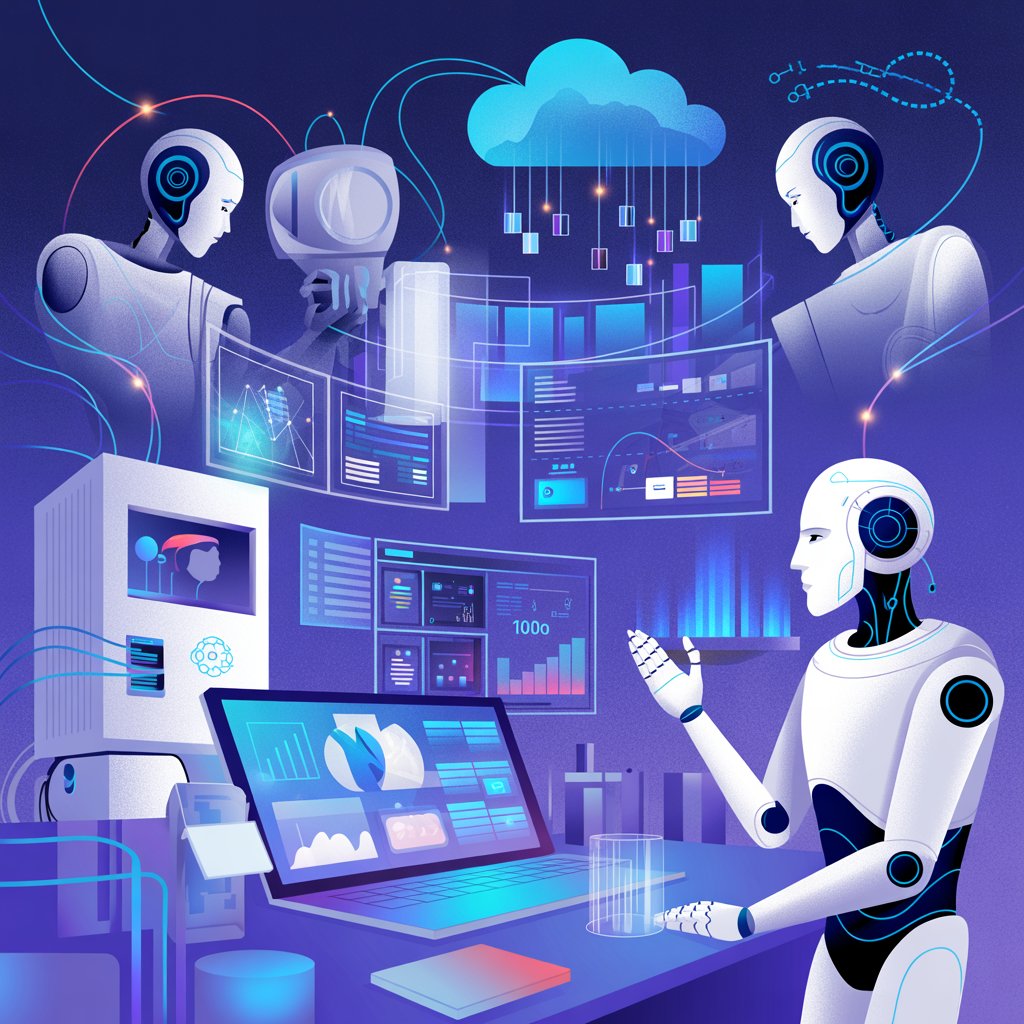
Introduction: What Is AI Automation and Why It Matters Now
What is AI automation?
AI automation is the combination of artificial intelligence and automation technologies to create systems that can think, learn, decide, and act with minimal human involvement.
Unlike traditional automation—which follows fixed, rule-based instructions—AI automation adapts, improves, and makes decisions based on data. This makes it one of the most powerful technological shifts of the modern digital era.
In today’s world of rapid innovation, AI automation is no longer experimental. It is already reshaping:
-
Software development
-
Business operations
-
Healthcare systems
-
Marketing and content workflows
-
Manufacturing and logistics
-
Customer experience platforms
From smart chatbots to self-optimizing supply chains, AI automation has become the engine behind modern digital transformation.
This article explains what AI automation is, how it works, why it exists, and how people and businesses are using it today—with a clear, future-ready perspective.
What Is AI Automation? (Technology Overview)
What Is AI Automation, It refers to systems that use artificial intelligence technologies—such as machine learning, natural language processing, and computer vision—to automate tasks that traditionally required human intelligence.
In simple terms:
AI automation = Automation + Intelligence
Traditional automation executes predefined steps.
AI automation understands context, learns from data, and improves over time.
Key Characteristics of AI Automation
-
Learns from historical and real-time data
-
Makes predictions or decisions
-
Adapts to new inputs without reprogramming
-
Handles unstructured information (text, images, voice)
-
Scales across digital systems
This shift moves automation from static execution to dynamic intelligence.
Why AI Automation Exists (The Problem It Solves)
Modern digital environments generate massive volumes of data and require faster decision-making than humans alone can provide.
AI automation exists to solve problems such as:
-
Human error in repetitive processes
-
Slow decision cycles
-
High operational costs
-
Inability to scale manual workflows
-
Information overload
Real-World Pressure Points AI Automation Addresses
-
Businesses running 24/7 global operations
-
Customers expecting instant responses
-
Systems processing millions of data points per second
-
Competitive markets requiring constant optimization
AI automation enables systems to operate continuously, intelligently, and efficiently.
Core Technologies Behind AI Automation
AI automation is not a single technology—it is a stack of intelligent systems working together.
1. Machine Learning (ML)
Machine learning allows systems to:
-
Detect patterns in data
-
Improve performance over time
-
Make predictions without explicit programming
Used in forecasting, recommendations, fraud detection, and optimization.
2. Natural Language Processing (NLP)
NLP enables machines to understand and generate human language.
Examples include:
-
Chatbots and virtual assistants
-
Voice recognition systems
-
Sentiment analysis tools
-
AI writing assistants
3. Computer Vision
Computer vision allows machines to interpret images and video.
Used in:
-
Facial recognition
-
Medical imaging
-
Autonomous vehicles
-
Quality control in manufacturing
4. Robotic Process Automation (RPA)
RPA handles structured, repetitive digital tasks such as:
-
Data entry
-
Invoice processing
-
System integrations
When combined with AI, RPA becomes intelligent automation.
5. Predictive Analytics
AI automation uses predictive models to:
-
Anticipate outcomes
-
Optimize processes
-
Prevent failures
This is critical in finance, healthcare, and logistics.
How AI Automation Works (Step-by-Step)
Understanding how AI automation works makes its value clearer.
Step 1: Data Collection
AI automation systems collect data from:
-
User interactions
-
Sensors
-
Software platforms
-
Databases
-
APIs
Step 2: Data Processing and Learning
AI models analyze data to:
-
Identify patterns
-
Train algorithms
-
Build predictive models
This learning phase can be continuous.
Step 3: Decision-Making
Based on insights, the system:
-
Chooses actions
-
Predicts outcomes
-
Adjusts behavior
Unlike rule-based systems, decisions evolve.
Step 4: Automated Execution
The system performs tasks such as:
-
Triggering workflows
-
Responding to users
-
Adjusting system parameters
-
Optimizing resources
Step 5: Feedback and Optimization
Results are fed back into the model, allowing:
-
Self-improvement
-
Error correction
-
Increased accuracy over time
This feedback loop is what makes AI automation powerful.
AI Automation vs Traditional Automation
| Feature | Traditional Automation | AI Automation |
|---|---|---|
| Decision-making | Rule-based | Data-driven |
| Adaptability | Low | High |
| Learning capability | None | Continuous |
| Data handling | Structured only | Structured + unstructured |
| Scalability | Limited | Highly scalable |
| Human dependency | High | Minimal |
Key Difference:
Traditional automation follows instructions.
AI automation understands outcomes.
Real-World Applications of AI Automation
AI automation is already embedded in everyday digital experiences.
1. Business Operations
-
Automated customer support
-
AI-driven CRM systems
-
Intelligent workflow orchestration
-
Predictive sales forecasting
2. Healthcare Technology
-
Automated diagnostics
-
Patient monitoring systems
-
Drug discovery automation
-
Medical image analysis
3. Marketing and Content Systems
-
AI-powered content generation
-
Personalized recommendations
-
Automated ad optimization
-
Customer behavior analysis
4. Manufacturing and Industry 4.0
-
Predictive maintenance
-
Robotic assembly lines
-
Quality inspection using vision AI
-
Smart inventory systems
5. Finance and Banking
-
Fraud detection
-
Automated trading systems
-
Risk assessment
-
Customer onboarding automation
6. Software Development
-
Code generation
-
Automated testing
-
Bug detection
-
Deployment optimization
Benefits of AI Automation
AI automation delivers both technical and strategic advantages.
Key Benefits
-
Higher efficiency – systems run continuously
-
Lower costs – reduced manual labor
-
Improved accuracy – fewer human errors
-
Scalability – handles growth effortlessly
-
Better decision-making – data-driven insights
-
Faster response times – real-time execution
Organizations using AI automation gain a competitive edge in speed, quality, and innovation.
Limitations and Challenges of AI Automation
Despite its power, AI automation is not flawless.
Common Limitations
-
High initial setup costs
-
Dependence on data quality
-
Bias in AI models
-
Ethical and transparency concerns
-
Security risks
-
Skill gaps in implementation
Important Warning
AI automation is not a replacement for human judgment—it is a tool to enhance it.
Responsible design and governance are essential.
Is AI Automation Safe and Reliable?
AI automation is generally safe when:
-
Proper data governance is applied
-
Models are audited regularly
-
Human oversight exists
-
Security measures are enforced
Reliability Factors
-
Quality of training data
-
Model transparency
-
Monitoring and logging systems
-
Regular updates
Poorly implemented AI automation can create risks—but well-designed systems are more reliable than manual processes.
Who Should Use AI Automation?
AI automation is valuable for:
-
Startups scaling operations
-
Enterprises managing complexity
-
Developers building intelligent systems
-
Marketers optimizing performance
-
Healthcare providers improving outcomes
-
Manufacturers pursuing efficiency
If your workflow involves repetition, data, or decision-making, AI automation is relevant.
How AI Automation Is Shaping the Digital Future
AI automation is evolving beyond task execution into autonomous systems.
Emerging Trends
-
Self-managing digital platforms
-
Autonomous business processes
-
AI agents collaborating with humans
-
Cross-system intelligence
-
Hyper-personalized user experiences
In the future, AI automation will become invisible infrastructure—working behind the scenes of every digital interaction.
Common Misconceptions About AI Automation
-
❌ “AI automation eliminates all jobs”
-
❌ “It works without human input”
-
❌ “It’s only for big companies”
Reality Check
AI automation changes jobs, creates new roles, and augments human capability rather than replacing it.
FAQs About What Is AI Automation
1. What is AI automation in technology?
AI automation is the use of artificial intelligence to automate tasks that require learning, decision-making, and adaptation.
2. How does AI automation work?
It collects data, learns patterns, makes decisions, executes tasks automatically, and improves through feedback.
3. Is AI automation safe to use?
Yes, when designed responsibly with security, transparency, and human oversight.
4. Who should use AI automation?
Businesses, developers, marketers, healthcare providers, and anyone managing complex or repetitive digital workflows.
5. What problems does AI automation solve?
It reduces costs, increases efficiency, improves accuracy, and enables scalable intelligent systems.
6. How is AI automation different from traditional automation?
Traditional automation follows rules. AI automation learns, adapts, and improves using data.
7. What is the future of AI automation?
The future includes autonomous systems, AI agents, and fully intelligent digital ecosystems.
Conclusion: Why AI Automation Is a Defining Technology
What is AI automation?
It is the fusion of intelligence and execution—the technology that allows digital systems to think, act, and improve on their own.
AI automation is no longer optional. It is becoming the foundation of modern software, digital business, and technological innovation.
As data grows and systems become more complex, AI automation will define:
-
How businesses operate
-
How services scale
-
How decisions are made
-
How humans collaborate with machines
Next Step for Tech Users:
Start small, automate intelligently, and focus on systems that learn—not just systems that run.
AI automation isn’t just the future.
It’s already here—and it’s only getting smarter.




Post Comment