Kellogg Innovation Network: Pioneering Tech-Driven Innovation 2026
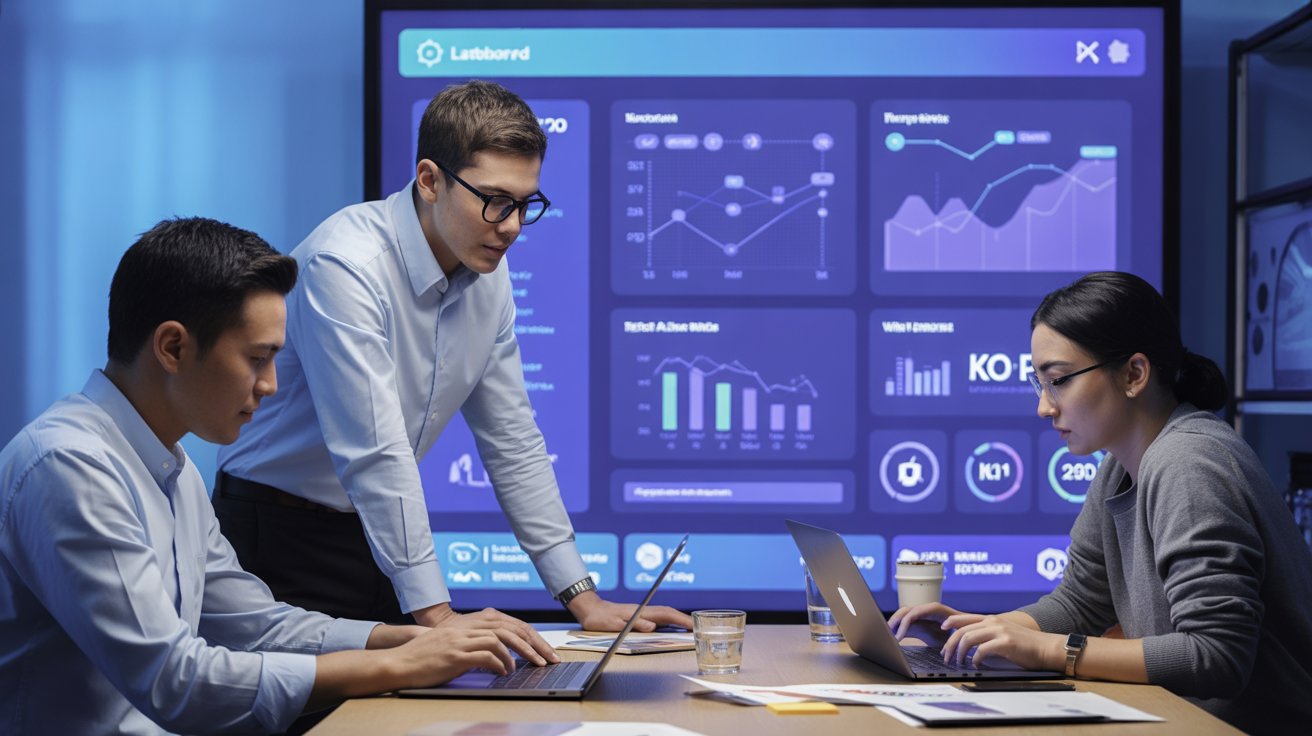
The Kellogg Innovation Network (KIN) represents a pioneering effort in fostering global, cross-sector innovation through trusted collaboration. Launched in 2003 by the Kellogg School of Management at Northwestern University, KIN was co-founded by Robert C. Wolcott, a clinical professor of innovation and entrepreneurship at Kellogg (now with ongoing affiliations including as chair of related initiatives). The platform brought together senior leaders from business, government, academia, nonprofits, the arts, and beyond to address complex challenges and drive purposeful, innovation-led progress.
Over time, KIN evolved into an independent global connective now operating primarily as The World Innovation Network (TWIN Global). This transition allowed broader scale while preserving the original emphasis on building deep relationships and turning dialogue into meaningful action.
Today, TWIN Global—still led by Wolcott—continues this mission with nearly 3,000 participants from over 30 countries, focusing on foresight, emerging technologies, and human-centered advancement in a tech-accelerated world.
From a technology and modern-innovation standpoint, KIN/TWIN stands out by integrating insights from data-driven tools and AI to better understand and accelerate breakthroughs. It aligns closely with Kellogg’s related efforts, such as the Northwestern Innovation Institute (NI Institute), launched in 2025 with a transformative $25 million gift from the Future Wanxiang Foundation (via Northwestern University trustee Pin Ni). The NI Institute uses big data analytics and artificial intelligence to map innovation patterns across science, technology, and business—offering predictive models that help leaders identify opportunities and guide investments.
What is the Kellogg Innovation Network?
At its inception, KIN served as an invitation-only forum where executives, policymakers, researchers, and other thought leaders could engage in candid, long-term discussions about innovation. Unlike conventional conferences focused on short-term networking, KIN emphasized co-creation—forming working groups (often called Catalysts) to develop frameworks and pilots for real-world application.
Robert C. Wolcott described the value of such sustained efforts in corporate innovation contexts: “A lot of innovation initiatives in the past have died early deaths after three or four years because people said, ‘Times are tough…’” (from a 2014 Kellogg Insight interview reflecting on scaling innovation). This mindset carried into KIN’s design: build resilience and continuity.
As digital acceleration reshaped industries in the 2010s and beyond, the network increasingly incorporated tech perspectives—exploring AI’s role in foresight, human-machine partnerships, and proximity-based systems (e.g., technologies that reduce distance in manufacturing, creativity, and community).
The shift to TWIN Global expanded access while retaining exclusivity for high-impact gatherings. TWIN now hosts annual summits (limited to around 400 delegates) and smaller dialogues, such as the 2025 Twin Dialogue event in St. Pete, Florida, themed around proximity and future manufacturing.
Why it matters in technology today: In an era of AI disruption, supply-chain fragility, and sustainability demands, isolated R&D often fails. KIN/TWIN provides a trusted ecosystem for cross-sector leaders to anticipate shifts, test ethical tech applications, and co-develop strategies that leverage digital systems responsibly.
History and Evolution
KIN began in 2003 as Kellogg responded to globalization and early digital changes. Wolcott and collaborators built it around the idea that true breakthroughs require diverse viewpoints and sustained relationships.
Key phases:
- 2003–2010s: Annual global summits and catalyst projects, including industry-focused efforts like sustainable mining partnerships.
- Mid-2010s onward: Gradual independence, leading to the formal establishment of TWIN Global to scale globally.
- 2025–present: TWIN continues convenings (e.g., 2025 proximity-themed events), while Kellogg launched the NI Institute to provide data-backed innovation intelligence.
Parallel Kellogg centers like the Center for Research in Technology & Innovation (CRTI) (founded 2001) and the newer NI Institute complement this legacy by blending academic rigor with practical tech application.
How Does the Network Operate?
The core mechanism remains collaborative and action-oriented:
- Challenge Selection — Leaders identify systemic issues, often informed by NI Institute analytics on innovation patterns.
- Convening — Invitation-only summits and dialogues enable deep exchange among diverse stakeholders.
- Co-Creation — Working groups prototype solutions, incorporating modern tools like AI for validation and foresight.
- Piloting & Scaling — Ideas move to real-world testing, with ongoing feedback.
- Dissemination — Insights influence strategies, policies, and broader networks.
TWIN Global enhances this with digital platforms for year-round engagement and in-person events focused on foresight. This differs from traditional networks by prioritizing trusted relationships and long-term impact over transactional interactions.
Key Features and Programs
- Annual Summits & Dialogues — Limited-attendance gatherings (e.g., TWIN Global summit for ~400 delegates) on themes like proximity, human-machine synergy, and emerging tech.
- Catalyst Initiatives — Themed projects addressing industry challenges through collaboration.
- Cross-Sector Connectivity — Blends business, government, academia, arts, and defense perspectives.
- Alignment with NI Institute — Access to AI/big-data tools for mapping and predicting innovation.
Real-World Applications and Modern Use Cases
Early KIN catalysts influenced sustainable industry models (e.g., mining partnerships emphasizing ethical development). TWIN events have explored proximity technologies—reducing physical and conceptual distances via AI, automation, and community-focused design.
Leaders apply these insights to:
- Build resilient supply chains with data-driven foresight.
- Develop human-AI collaboration strategies.
- Advance ethical frameworks for emerging tech.
Businesses gain competitive edges by anticipating disruptions and forging unlikely alliances.
Benefits of Engaging
- Strategic foresight into tech trends.
- High-trust partnerships leading to joint ventures.
- Guidance on responsible innovation.
- Enhanced ability to navigate digital transformation.
For senior executives and innovators, it accelerates adaptation in fast-moving fields.
Limitations and Challenges
- Exclusivity limits broader access.
- Transition to TWIN means some original KIN branding is less prominent.
- High-level participation demands time and commitment.
Reliability draws from Northwestern’s academic foundation and Wolcott’s long track record.
Comparisons to Similar Networks
| Network | Primary Focus | Tech Depth | Membership | Key Differentiator |
|---|---|---|---|---|
| Kellogg Innovation Network / TWIN Global | Cross-sector sustainable innovation & foresight | High (AI/big data via NI Institute partners) | Invitation-only, ~3,000 global leaders | Ethical, relationship-driven collaboration with academic roots |
| World Economic Forum | Global policy & economic issues | Moderate | Fee-based leaders | Broader geopolitical emphasis |
| TED Conferences | Idea dissemination | Low to moderate | Public/open events | Inspirational rather than action-focused |
| MIT Innovation Initiatives | Academic R&D & tech commercialization | Very high | Academic-centric | Less cross-sector policy integration |
Future Potential
With AI and human-machine partnerships accelerating, TWIN (building on KIN foundations) will likely deepen focus on predictive intelligence via the NI Institute—exploring breakthroughs in sustainability, proximity tech, and ethical automation. Ongoing events keep the community at the forefront of responsible digital advancement.
FAQ Section
What is the Kellogg Innovation Network in technology? Founded in 2003 by Robert C. Wolcott at Northwestern’s Kellogg School, it evolved into TWIN Global—a platform connecting leaders to advance innovation through collaboration, now enhanced by AI/big-data tools from the NI Institute.
How does the Kellogg Innovation Network work? Via invitation-only summits, dialogues, and catalyst groups that ideate, prototype, and scale tech-integrated solutions for global challenges.
Is the Kellogg Innovation Network safe or reliable? Yes—rooted in Northwestern University’s credibility, with a track record of ethical, high-impact work under Wolcott’s leadership.
Who should use the Kellogg Innovation Network / TWIN? Senior executives, innovators, policymakers, and academics seeking deep, cross-sector partnerships on technology and foresight.
What are the latest updates or future developments? KIN transitioned to TWIN Global (ongoing summits like 2025 Twin Dialogue); Kellogg’s NI Institute (2025 launch) now provides AI-driven innovation mapping and prizes (e.g., Northwestern Innovation Prize for Human-Machine Partnership).
Common problems or misconceptions? Misconception: It’s still fully branded as KIN—now primarily TWIN. Access remains exclusive, but influence extends broadly.
How is it different from older solutions? It emphasizes trusted, long-term relationships and actionable outcomes with modern tech integration, unlike siloed or short-term networks.
Conclusion
The Kellogg Innovation Network, co-founded by Robert C. Wolcott at Northwestern University’s Kellogg School, laid the groundwork for a powerful model of collaborative innovation that lives on through The World Innovation Network (TWIN Global). By connecting diverse leaders and leveraging tools like AI-driven analytics from the NI Institute, it equips participants to navigate technological change ethically and effectively.
For tech leaders, executives, and innovators, TWIN offers unmatched strategic depth and relationship-building opportunities. Visit twinglobal.org or kellogg.northwestern.edu to explore current events and resources—positioning yourself at the intersection of ideas, technology, and global impact.




Post Comment