Fanisco: Boost Enterprise Efficiency 40%+ with AI in 2026

In 2026, enterprises face mounting pressure to adopt AI that delivers measurable outcomes rather than hype. Fanisco (branded at times as Fanisko) emerges as a practical digital transformation platform focused on blending generative AI, immersive experiences, and data-driven insights. This guide breaks down its technology, real-world fit, value drivers, trade-offs, and long-term potential—helping decision-makers evaluate whether it aligns with their goals.
Core Concept: What Fanisco Actually Delivers
Fanisco functions as an enterprise AI platform that reimagines operations through advanced AI techniques combined with expert consulting. It targets organizations seeking to modernize without building everything from scratch.
Main pillars include:
- Generative AI for creating content, visuals, videos, and code from prompts
- Machine learning for forecasting trends and behaviors
- Extended reality (AR/VR) modules tailored to business use cases
- Secure data handling that supports compliance in sensitive industries
Many companies struggle with tool sprawl—one system for analytics, another for content, yet another for customer interfaces. This intelligent automation solution unifies key functions, reducing complexity while keeping proprietary data under control.
Quick insight: The platform shines when creativity (GenAI), foresight (predictive models), and engagement (immersive tech) must work together seamlessly.
Architectural Flow in Simple Terms
- Secure data intake from business systems (CRM, ERP, sensors)
- AI processing: generation, analysis, prediction
- Output delivery: dashboards, apps, AR/VR interfaces
- Ongoing refinement via feedback loops
This structure allows phased adoption—start small (e.g., content automation), then scale to full immersive or predictive workflows.
Key Capabilities That Matter in 2026
Here are the platform’s strongest features, tied to common enterprise needs:
- Intelligent Automation Solution Automates routine tasks like report drafting, email personalization, workflow routing, and initial candidate screening.
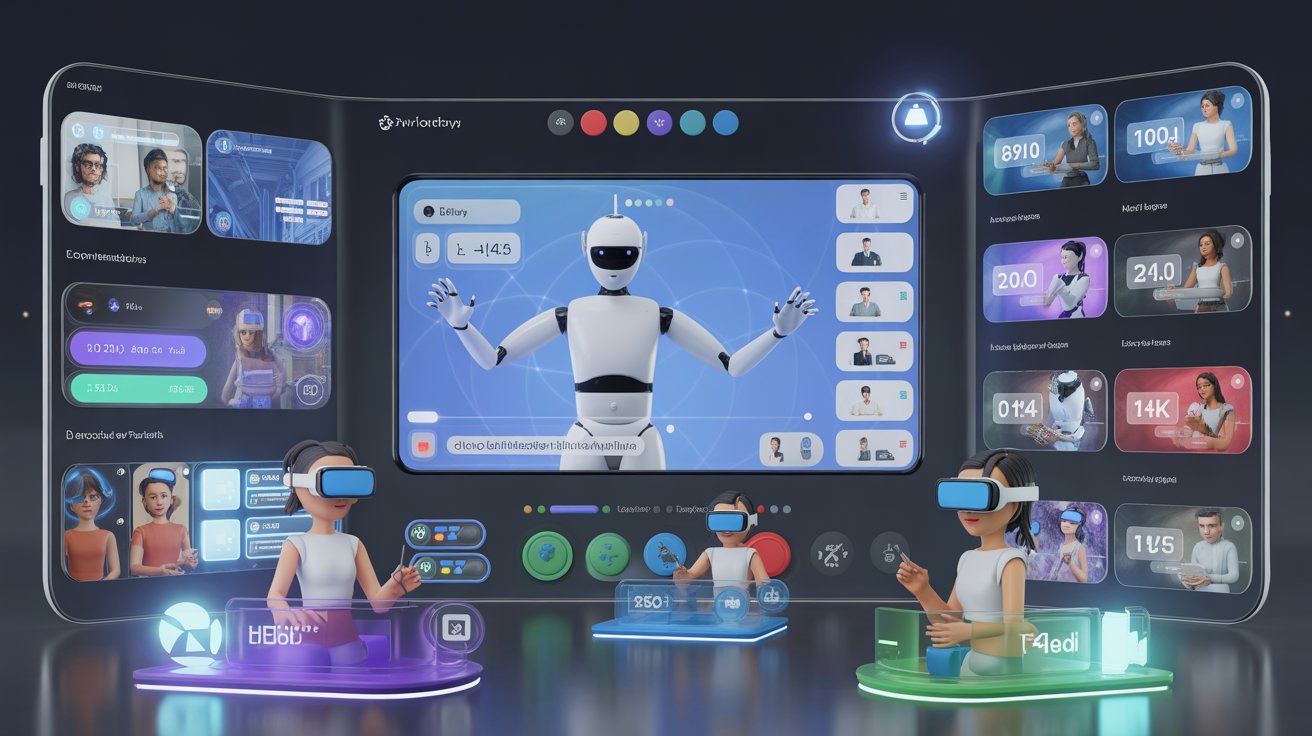
- Immersive AR/VR Business Tools Enables virtual showrooms, remote expert guidance, gamified employee training, and interactive customer demos.
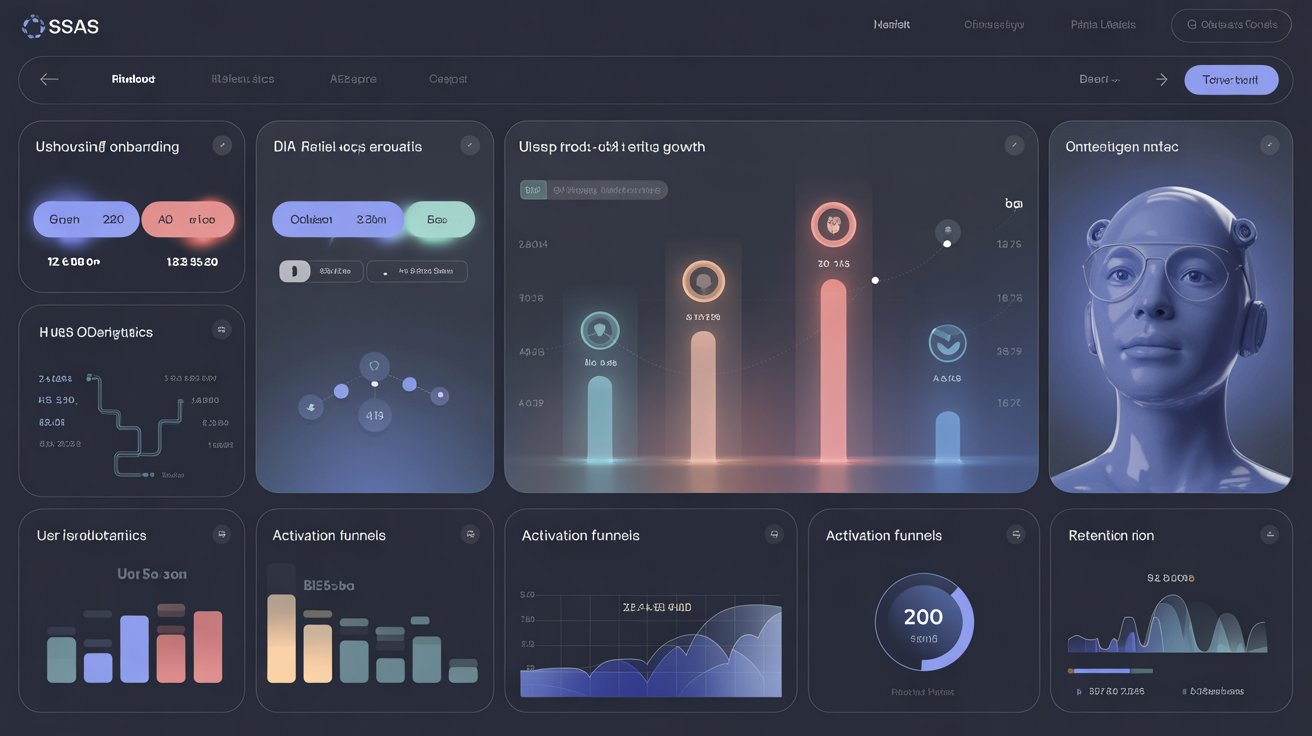
- Predictive Analytics Software Processes historical and live data to forecast demand, customer churn, equipment failure, or market changes.
- Built-in Governance & Security Role-based controls, encryption, audit trails, and threat monitoring—essential for regulated sectors.
- User-Friendly Creation Layer Lets non-technical teams produce high-quality assets via simple prompts, cutting external costs.
These capabilities integrate tightly, enabling cross-departmental use (e.g., predictive insights powering personalized AR experiences).
Highlighted advantage: Industry-specific tuning (retail visualization, sports fan interaction, operational forecasting) plus hands-on implementation support sets it apart from generic tools.
Practical Industry Applications in 2026
Retail & E-Commerce
Retail teams use AR/VR for virtual fitting rooms and 3D product exploration, often seeing return rates drop noticeably. Predictive features adjust inventory based on local events, weather, and buying patterns. Automation handles product descriptions and campaign variants at speed.
Realistic outcome observed in comparable setups: 20–40% fewer returns; sharper inventory decisions reducing overstock.
Sports, Media & Live Entertainment
Leagues and teams deploy real-time AR overlays during events (stats, replays, virtual fan zones). Generative tools produce customized fan content—highlights, social graphics, interactive challenges—turning viewers into participants.
This approach frequently lifts sponsorship value and repeat engagement metrics.
Manufacturing & Field Operations
Technicians access AR instructions overlaid on equipment; senior experts provide remote annotations in real time. Predictive models schedule proactive maintenance, cutting unplanned downtime.
Typical reported range in similar deployments: 15–45% reduction in downtime during pilots.
Consulting & Professional Services
Firms speed up proposal creation, research summaries, and client deliverables. Immersive previews let prospects experience proposed solutions virtually, shortening decision cycles.
Quantified Value & Realistic ROI Drivers
Organizations using platforms in this category commonly achieve:
- 30–65% time savings on content creation, analysis, and administrative tasks
- Lower external spend on creative agencies and freelance reporting
- Conversion improvements from more engaging, personalized customer touchpoints
- Earlier risk detection through predictive signals and stronger data controls
- Faster team ramp-up via VR-based skill-building simulations
These gains depend heavily on clean data foundations, targeted training, and clear KPIs from day one.
Balanced View: Limitations & Implementation Realities
No solution is perfect. Important considerations include:
- Data Quality Prerequisite — Outputs reflect input quality; fragmented or poor data limits results.
- Organizational Change Needs — Teams used to manual methods require structured support to adopt AI workflows.
- Content Oversight Required — Generative outputs can occasionally drift or carry subtle biases without review.
- Upfront Investment — Licensing, integration, customization, and training represent real costs—most suitable for mid-to-large organizations with visible ROI paths.
- Long-Term Dependency — Deep customization can raise switching costs down the road.
Practical mitigation tips: Begin with narrow pilots, enforce hybrid human-AI review processes, establish governance policies early, and conduct periodic third-party assessments.
Side-by-Side Comparison: Where It Fits
| Aspect | Legacy / Manual Approaches | General-Purpose GenAI (e.g., enterprise editions of public models) | Purpose-Built Platforms like Fanisco |
|---|---|---|---|
| Industry Depth & Tailoring | Low | Medium | High (retail, sports, operations) |
| Native Immersive AR/VR | Rare | Limited | Purpose-built & workflow-ready |
| Enterprise Governance | Inconsistent | Improving but variable | Strong, built-in controls |
| Predictive + Generative Blend | Usually separate | Primarily generative | Unified & seamless |
| Guided Implementation | DIY or external consultants | Mostly self-serve docs | High-touch consulting included |
| Typical Time to Value | 12–24+ months | 3–9 months | 4–12 months (phased rollout) |
Future Outlook: 2026–2030 Evolution
Fanisco sits at the convergence of key trends:
- Agentic AI expansion — systems that autonomously handle multi-step business processes
- Edge-enabled XR — low-latency AR/VR experiences over 5G/6G networks
- Sustainability-focused AI — optimizing energy and resource use in operations
- Audit-ready outputs — growing demand in regulated industries
Looking ahead, expect advancements in multi-modal generation (text + image + 3D + action), digital twin integrations for virtual enterprise replicas, and tighter ethical/responsible AI frameworks.
Organizations should monitor progress in model explainability, compute efficiency, and open-standard compatibility.
FAQ – Straight Answers to Common Questions
What is Fanisco at its core? An enterprise AI platform combining generative creation, predictive forecasting, immersive AR/VR business tools, and intelligent automation with consulting support.
How does it integrate into everyday work? Data enters securely → AI generates/analyzes/predicts → results feed into tools and workflows → performance improves over time via feedback.
Is it secure enough for serious enterprise use? Yes, when properly set up—focus on encryption, access controls, auditability, and compliance features helps meet demanding standards.
Which organizations see the biggest fit? Mid-to-large companies in customer-centric or operationally complex fields (retail, media/sports, manufacturing, consulting) wanting accelerated AI without full internal development.
What enhancements are on the horizon? Likely agentic capabilities, multi-modal outputs, sustainability analytics, and deeper ecosystem partnerships.
Biggest misconceptions? Many assume it’s just a language model interface. In practice, the AR/VR depth, predictive layer, and industry tuning make it much broader.
How does it compare to free/public AI tools? Far superior in governance, customization depth, integration, and guided rollout—though public options work for casual or lightweight needs.
Wrapping Up: Actionable Takeaways for 2026
Fanisco represents a maturing category of digital transformation platforms that prioritize practical outcomes over experimental features. It tackles genuine challenges in efficiency, customer engagement, and insight generation—provided the organization invests in data readiness and thoughtful change management.
For leaders navigating AI adoption today, the smartest move is targeted evaluation: map your highest-pain processes against these capabilities and run a small, measurable pilot. Platforms that combine creativity, prediction, immersion, and support—like this one—are positioned to deliver lasting advantage in the years ahead.
Author Bio:
Jordan Lee is an enterprise AI strategist and consultant specializing in generative AI, AR/VR business tools, and digital transformation. Jordan helps organizations optimize workflows, boost efficiency, and implement AI-driven solutions across industries.


Post Comment