AI & Automation
AI engineering education, automation engineering programs, biomedical engineering Zaragoza, Campus Rio Ebro Zaragoza, centro politecnico superior, digital engineering education, EINA Zaragoza, engineering innovation Europe, engineering schools Spain, industrial engineering Spain, renewable energy engineering Spain, smart manufacturing research, Spanish technology universities, University of Zaragoza engineering
novabiztech
0 Comments
Centro Politecnico Superior: AI & Innovation Guide 2026
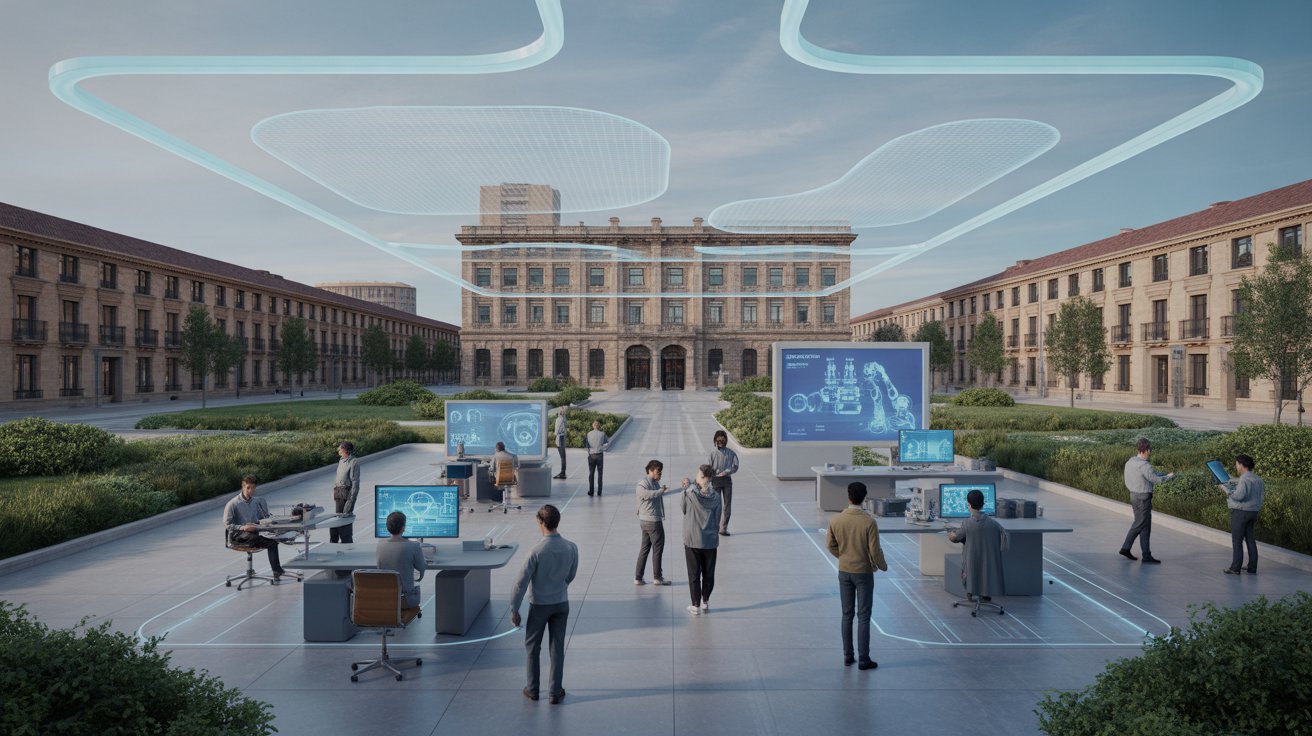
Introduction to Centro Politecnico Superior in the Modern Tech Landscape
The centro politecnico superior has long represented excellence in engineering education within Spain’s higher education system. As part of the University of Zaragoza, this institution—now fully integrated as the Escuela de Ingeniería y Arquitectura (EINA)—serves as a vital driver of technological progress. Located on the Campus Río Ebro in Zaragoza, it focuses on blending traditional engineering principles with emerging digital tools like artificial intelligence, automation systems, and sustainable technologies.
In an era defined by rapid digital transformation, EINA equips students, researchers, and industry partners to address challenges in smart manufacturing, renewable energy integration, and AI-driven decision-making. This evolution from its original Centro Politécnico Superior (CPS) roots ensures relevance in today’s innovation economy, where practical skills in software, hardware, and interdisciplinary projects define success.
This guide explores what the institution offers today, how it operates in a tech-forward context, and its practical value for aspiring engineers or businesses seeking cutting-edge talent.
Historical Evolution and Current Identity
Originally established in the 1970s as the centro politecnico superior, the center consolidated advanced technical education in Aragon. It emphasized hands-on engineering disciplines to meet Spain’s industrial needs. By 2011, it merged with related schools to form EINA, creating a unified powerhouse for engineering and architecture.
This transition positioned the institution on the technology campus (Campus Río Ebro), featuring state-of-the-art labs for robotics, digital simulation, and energy systems. Today, EINA offers over 20 degree programs, including bachelor’s and master’s in fields like industrial technologies, biomedical engineering, and renewable energies—directly aligned with digital future demands.
Unlike static traditional faculties, this Zaragoza engineering hub adapts curricula to include AI ethics, data analytics, and automation, ensuring graduates contribute to Industry 4.0 and beyond.
Core Features Driving Technological Innovation
EINA stands out through several key elements that support modern invention and application:
- Specialized Labs and Infrastructure — Facilities include high-performance computing for AI modeling, robotics workshops, and simulation environments for testing autonomous systems.
- Interdisciplinary Programs — Degrees integrate engineering with emerging areas like AI in healthcare or sustainable automation, preparing students for hybrid tech roles.
- Strong Industry Ties — Collaborations with companies in automotive, energy, and tech sectors provide real-world projects, internships, and co-developed research.
These features enable practical innovation. For instance, students apply machine learning to optimize industrial processes, moving beyond theory to deployable solutions.
How the Institution Operates in a Digital Context
The operational model combines rigorous academics with applied research:
- Curriculum Delivery — Foundational courses in mathematics and physics lead to specialized tracks in digital systems, where tools like Python, TensorFlow, and CAD software dominate.
- Project-Based Learning — Teams tackle challenges such as AI-enhanced energy grids or robotic automation, often in partnership with external organizations.
- Research Ecosystem — Faculty secure grants for projects in areas like biomedical tech and hydroinformatics, with recent events like the upcoming HIC2026 conference at EINA highlighting AI in water management and climate resilience.
This mechanism differs from older, lecture-heavy models by prioritizing iteration, prototyping, and ethical tech deployment—making outputs more reliable and industry-ready.
Real-World Applications and Industry Impact
EINA’s work translates directly into modern use cases:
- Renewable Energy and Efficiency — Programs in energías renovables develop smart grid technologies that integrate solar and wind with AI for predictive balancing.
- Biomedical and Assistive Tech — Research contributes to medical device design, including AI-supported rehabilitation and nanomedicine tools.
- Smart Systems and Automation — Graduates design IoT frameworks for urban management or predictive maintenance in manufacturing, reducing downtime and costs.
Businesses benefit by tapping into this talent pool—local firms collaborate on projects that enhance competitiveness through digital tools. In broader terms, the institution supports Spain’s push toward sustainable tech and digital sovereignty.
Key Benefits for Users and Businesses
Engaging with this engineering school delivers clear advantages:
- High Employability — Alumni excel in tech sectors, with strong placement in AI, automation, and engineering roles.
- Innovation Access — Incubators and partnerships foster startups in emerging fields like hydrogen tech or digital twins.
- Global Relevance — European accreditation and collaborations position it for international careers and research networks.
For companies, it means reliable talent and R&D support. Individuals gain skills that solve real problems, from climate adaptation to efficient automation.
Key Takeaway: In a competitive digital landscape, this Zaragoza hub provides trustworthy, forward-looking training that bridges academia and industry.
Limitations to Consider
Challenges include regional location, which may limit some global industry proximity compared to larger cities, and the need for continuous curriculum updates amid fast AI advancements. Admission remains competitive, though preparatory resources help broaden access.
These are offset by online elements, strong funding, and focused regional impact.
Comparison to Similar Institutions
Here’s a clean, SEO-friendly comparison:
| Institution | Primary Focus Areas | Key Strengths | Notable Limitations |
|---|---|---|---|
| EINA (formerly Centro Politecnico Superior) | AI, Automation, Renewable Energy, Biomedical Engineering | Strong industry partnerships, practical projects, affordable European education | Regional location in Zaragoza |
| Polytechnic University of Madrid | Broad Engineering Disciplines | Large-scale research, urban advantages | Less emphasis on emerging interdisciplinary tech |
| ETH Zurich | Advanced Tech & Research | World-class labs, innovation funding | More theoretical, higher international competition |
| MIT (USA) | Cutting-Edge AI & Innovation | Global prestige, extensive resources | Significantly higher costs |
EINA excels in applied, cost-effective education tailored to European tech markets.
Future Potential and Emerging Trends
Looking to 2026 and beyond, the institution is well-positioned for growth. Hosting events like the International Conference on Hydroinformatics (HIC2026) signals leadership in AI-driven environmental modeling and digital twins for water systems. Expanding research in quantum-inspired computing, advanced robotics, and climate-resilient tech will further its impact.
As digital transformation accelerates, expect greater emphasis on human-AI collaboration, sustainable automation, and ethical innovation—areas where EINA already leads.
FAQ Section
What is centro politecnico superior in technology?
It refers to the former name of EINA, a premier engineering and architecture school at the University of Zaragoza, specializing in AI, automation, and digital innovation for modern applications.
How does centro politecnico superior (EINA) work?
Through integrated degree programs, hands-on labs, and industry-linked research, it combines theory with practical projects in digital systems and emerging tech.
Is centro politecnico superior safe or reliable?
Yes—programs are fully accredited by Spanish and European standards, with research following ethical guidelines in AI and engineering.
Who should use or study at centro politecnico superior?
Aspiring engineers interested in AI, automation, renewables, or biomedical tech; businesses seeking skilled talent or R&D partners.
What are the latest updates or future developments?
Recent highlights include hosting HIC2026 on hydroinformatics with AI focus, plus ongoing advancements in energy efficiency and biomedical devices.
Where is centro politecnico superior located?
On the Campus Río Ebro (María de Luna, 3, 50018 Zaragoza, Spain), in the Actur district’s technology hub.
How is it different from traditional engineering schools?
It prioritizes interdisciplinary digital integration, real-world projects, and industry collaboration over purely theoretical approaches.
Conclusion: The Enduring Value of Centro Politecnico Superior
In essence, the centro politecnico superior—through its evolution into EINA—stands as a reliable force in technological advancement. It delivers impactful education in AI, automation, and sustainable engineering, fosters meaningful industry collaborations, and drives innovation that addresses global challenges like energy transition and smart systems.
As we move deeper into the digital era, institutions like this one highlight the power of adaptive, practical learning. For tech enthusiasts, professionals, or businesses, exploring EINA’s offerings—whether through programs, research partnerships, or events—represents a strategic step toward shaping tomorrow’s innovations. Check related topics on AI education, automation technologies, or engineering careers for more insights into building a future-ready skill set.
Authority Reference Example
According to the University of Zaragoza, the engineering faculty known today as Escuela de Ingeniería y Arquitectura (EINA) continues the academic legacy of the centro politecnico superior by advancing research in areas such as artificial intelligence, renewable energy systems, and industrial automation.




Post Comment