Ava Nickel: Sustainable Awaruite Mining Powering EV, AI & Clean Energy 2026
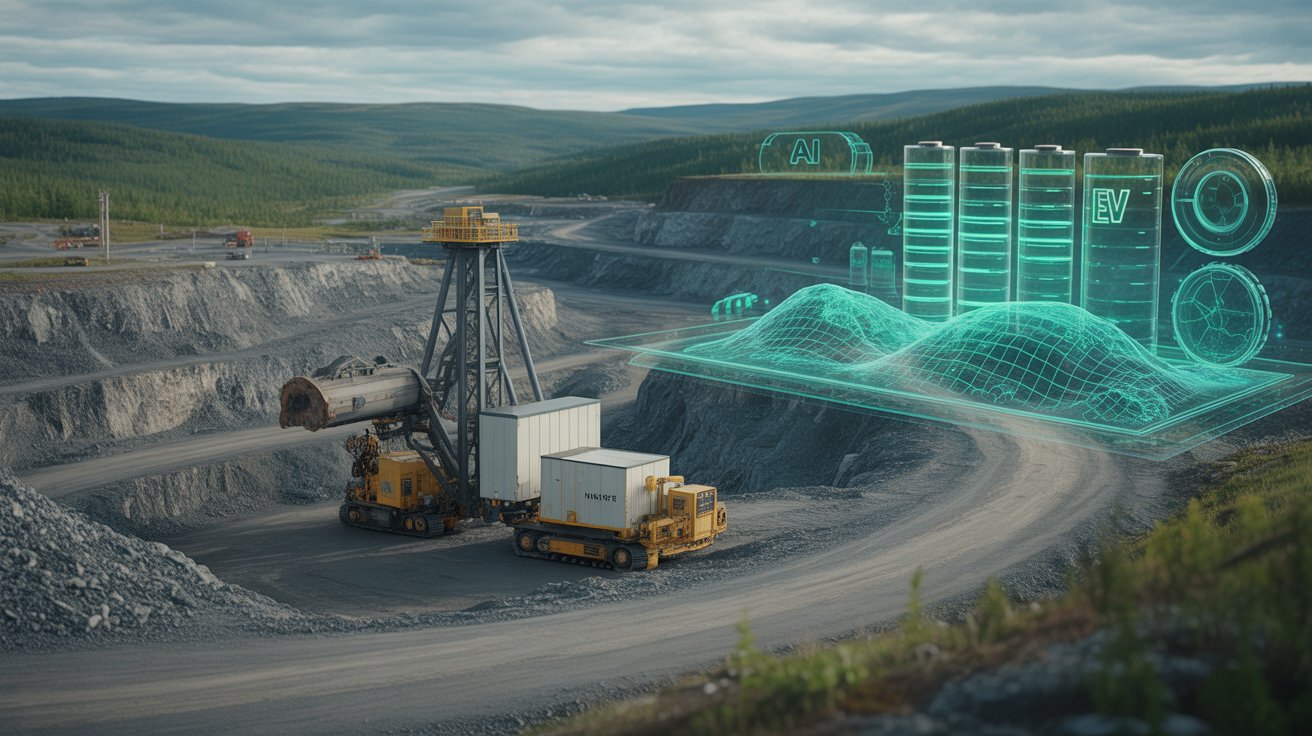
Introduction to Ava Nickel in the Tech Landscape
Ava Nickel, linked to First Atlantic Nickel Corp (TSXV: FAN, OTCQB: FANCF, FSE: P21), leads in sustainable exploration of critical metals. The company targets awaruite—a naturally occurring nickel-iron-cobalt alloy—vital for electric vehicle (EV) batteries, AI hardware, and renewable energy storage. In today’s digital future, secure, low-emission supply chains are essential, and Ava Nickel delivers high-purity nickel via simpler, environmentally friendlier methods.
Nickel enhances lithium-ion batteries for better energy density, longer EV ranges, and reliable data centers. First Atlantic Nickel Corp’s Pipestone XL Project in Newfoundland focuses on awaruite deposits within a 30-km ultramafic complex, enabling processing without energy-intensive smelting. This aligns with tech sustainability goals, incorporating AI in exploration to minimize impact. Ava Nickel bridges mining and modern innovation, building resilient digital systems.
The Origins and Evolution of Ava Nickel
First Atlantic Nickel Corp has shifted focus to North American nickel amid rising clean energy needs. The company renamed its Atlantic Nickel Project to Pipestone XL in 2025, securing 100% ownership of the 30-km Pipestone Ophiolite Ultramafic Complex in Newfoundland.
This addresses global supply vulnerabilities, as noted in policy discussions on critical minerals. Traditional nickel processing often involves high emissions, but awaruite allows magnetic separation and flotation for lower electricity use and reduced emissions relative to conventional methods.
Recent developments include a $2.61 million no-warrant flow-through placement in December 2025 to fund drilling, and a $16 million two-stage earn-in agreement in 2026 for another project, while prioritizing Pipestone XL.
In tech, this supports battery advancements, with industry forecasts indicating substantial growth in battery-grade nickel demand through 2030.
How Ava Nickel Works: A Deep Dive into Its Mechanism
Ava Nickel‘s process combines geology and technology for efficient, low-impact extraction:
- Exploration: AI analytics, drone surveys, and geophysical modeling map awaruite zones at Pipestone XL.
- Magnetic Separation: Awaruite’s magnetic nature enables low-energy concentration, rejecting up to 90% of non-valuable material without chemicals.
- Flotation and Processing: Neutral pH flotation with standard reagents recovers nickel, bypassing smelting.
- Integration: Traceability via blockchain meets ethical standards for AI and tech supply chains.
Recent Phase 2X drilling at RPM Zone increased strike length by 50% to over 1.2 km and width to over 800 m, with all holes positive for magnetically recoverable awaruite.
This mechanism aids digital futures by enabling advanced batteries and automation with cleaner nickel.
Key Features of Ava Nickel in Modern Technology
Awaurite from Ava Nickel provides distinct advantages:
- Low Carbon Footprint: Independent assessments of comparable awaruite projects suggest significantly lower emissions compared to conventional smelting methods, due to simplified processing and avoidance of pyrometallurgy.
- High Purity: Around 77% nickel content suits battery cathodes.
- Energy Efficiency: Magnetic separation cuts energy needs versus traditional smelting.
- Versatility: Fits EV batteries, renewables, and AI hardware alloys.
Bold Takeaway: These traits make Ava Nickel a sustainable contributor to tech progress.
Real-World Applications and Use Cases
Ava Nickel’s nickel supports key tech areas.
EV Batteries benefit from high-density cathodes amid growing demand.
Renewable Storage enhances grid batteries for solar and wind.
AI and Data Centers use durable alloys in hardware.
Portable Devices gain improved battery performance in smartphones and IoT.
Adoption addresses supply challenges projected through 2030.
Industry Examples: Ava Nickel in Action
Awaruite projects, like those from FPX Nickel, show low-emission potential through similar processing.
EV manufacturers using nickel-rich batteries drive demand for suppliers like First Atlantic Nickel.
These examples highlight Ava Nickel’s place in clean tech.
Benefits of Implementing Ava Nickel
- Emission Reductions: Comparable awaruite projects indicate substantially lower CO2 than traditional methods.
- Cost Savings: Simpler processing reduces energy requirements.
- Supply Security: North American base reduces global risks.
Table: Benefits Comparison
| Aspect | Traditional Mining | Ava Nickel Approach |
|---|---|---|
| CO2 Emissions | Higher (smelting/HPAL) | Significantly lower (magnetic/flotation) |
| Energy Use | High | Lower (simplified methods) |
| Supply Security | Global volatility | Domestic focus |
| Tech Integration | Complex | Battery-optimized |
Limitations and Challenges of Ava Nickel
As an exploration-stage project, it faces deposit variability risks, market price fluctuations, and scaling investment needs.
Warning: Regulatory approvals and drilling timelines may cause delays.
Comparisons: Ava Nickel vs. Traditional and Alternative Approaches
Vs. Sulfide Smelting: Avoids high emissions and energy use.
Vs. Laterite HPAL: Offers simpler, less impactful methods.
Ava Nickel focuses on awaruite deposits, a niche also explored by companies such as FPX Nickel.
Table: Quick Comparison
| Method | Focus | Strength | Weakness |
|---|---|---|---|
| Sulfide Smelting | High-volume | Established | High emissions |
| Laterite HPAL | Tropical ores | For low-grade | Environmental impact |
| Ava Nickel | Awaruite | Sustainable | Development stage |
| Bioleaching | Microbial | Low energy | Slower |
The Future Potential of Ava Nickel
Industry forecasts point to substantial growth in battery-grade nickel demand through 2030, driven by EV and renewable expansion. Ava Nickel could contribute via Pipestone XL advancements, including ongoing drilling and metallurgical tests.
Innovations in flotation and separation may further improve efficiency. This positions Ava Nickel to support domestic clean nickel supply for AI, EVs, and automation.
FAQ Section
What is Ava Nickel in technology?
Ava Nickel connects to First Atlantic Nickel Corp, advancing awaruite for sustainable tech applications like EV batteries and AI hardware.
How does Ava Nickel work?
It employs magnetic separation and flotation on awaruite deposits, aided by AI exploration for low-emission nickel production.
Is Ava Nickel safe or reliable?
Low-impact methods promote environmental safety; it offers reliable ethical sourcing for tech chains.
Who should use Ava Nickel?
Battery producers, EV companies, and tech firms pursuing sustainable nickel.
What are the latest updates or future developments in Ava Nickel?
RPM Zone expanded by 50% to over 1.2 km strike; ongoing drilling and metallurgical updates expected.
What problems does Ava Nickel solve?
It mitigates high-emission mining and supply shortages for critical tech metals.
Common misconceptions about Ava Nickel?
Myth: All nickel mining is highly polluting; reality: Awaruite processing enables significantly lower emissions.
Conclusion: Embracing Ava Nickel for a Tech-Driven Tomorrow
Ava Nickel, through First Atlantic Nickel Corp, advances sustainable critical mineral innovation, powering EVs, AI, and renewables with low-impact awaruite processing. Its approach reduces emissions and strengthens supply security.
As digital trends prioritize greener materials, Ava Nickel exemplifies efficient, ethical extraction. Tech professionals and businesses should explore sustainable sourcing—visit fanickel.com for details. How might such innovations influence your next tech project?
Author Bio: Compiled by a tech and mining industry analyst specializing in critical minerals. Content draws from company releases and industry reports for accuracy.




Post Comment