Business Technology
accelerometers and gyroscopes navigation, aerospace navigation systems, AI navigation systems, autonomous vehicle navigation system, drone navigation technology, GPS denied navigation systems, inertial measurement unit IMU, inertial navigation system, inertial navigation system explained, INS navigation technology, INS technology applications, INS vs GPS navigation, MEMS inertial sensors, modern navigation technology, quantum navigation technology
novabiztech
0 Comments
Advanced Inertial Navigation System : Smart Navigation Without GPS 2026
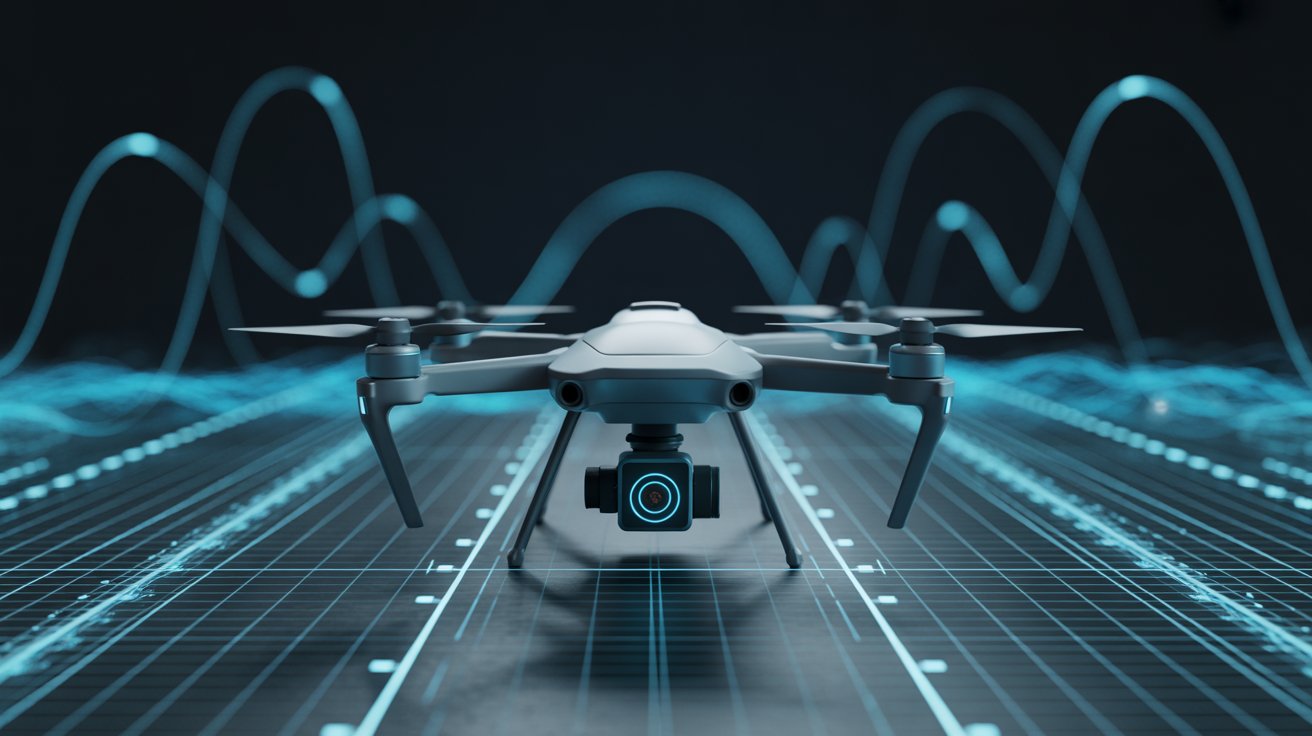
Inertial navigation system (INS) technology stands as a cornerstone of today’s innovation-driven world, powering reliable positioning in environments where GPS falters. As digital systems advance toward full autonomy, INS navigation technology delivers self-contained, high-precision tracking of position, velocity, and orientation using only internal sensors. This makes it essential for autonomous vehicles, drones, submarines, and space missions—areas where signal loss or jamming poses real risks. In 2026, with rising concerns over GPS vulnerabilities, inertial navigation system technology is more relevant than ever, blending hardware precision with AI-enhanced software for unbreakable navigation.
What is an Inertial Navigation System? Core Technology Explained
An inertial navigation system (INS) is an autonomous electronic device that computes an object’s location, speed, and direction by measuring acceleration and rotation from a known starting point. Unlike satellite-dependent GNSS, INS navigation technology relies on the physics of inertia—no external references needed after initialization.
Originating from military applications in the 1940s-1950s (e.g., early missile guidance), modern inertial navigation systems have miniaturized thanks to MEMS advancements, making them accessible for consumer and industrial use. Today, they integrate with AI, automation, and IoT, supporting the digital future where reliable positioning underpins everything from smart cities to interplanetary exploration.
The primary appeal? INS navigation systems operate in GPS-denied zones—tunnels, underwater, jammed battlefields, or deep space—ensuring continuity when other tools fail.
How Does an Inertial Navigation System Work?
INS navigation technology operates on dead-reckoning principles, continuously integrating sensor data to update position.
It begins with initialization: an initial position (often from GNSS), velocity, and attitude. Sensors then detect changes:
- Accelerometers measure linear acceleration (force) along three axes.
- Gyroscopes track angular rotation rates.
Double integration of acceleration yields position; single integration gives velocity. Gyro data maintains orientation, correcting for Earth’s rotation and gravity via algorithms.
Modern systems use Kalman filters (or AI-enhanced variants) to fuse data and minimize errors like sensor bias or noise. High-end inertial navigation systems achieve update rates of 100-1000 Hz for real-time control.
Essential Components in Modern INS
- Inertial Measurement Unit (IMU): Combines accelerometers and gyroscopes; often MEMS-based for size/cost.
- Accelerometers: Detect linear motion; quartz or MEMS types offer high sensitivity.
- Gyroscopes: Ring Laser Gyroscopes (RLGs) or Fiber Optic Gyroscopes (FOGs) provide low-drift performance (e.g., bias <0.01°/hour in premium units).
- Processing Unit: Runs error-correction software.
- Hybrid Aids: GNSS, magnetometers, or barometers for fusion.
For example, Honeywell’s HGuide n580 uses dual-antenna GNSS fusion for robust output, even in challenging conditions like valleys or wind.
Key Features of Contemporary Inertial Navigation Systems
Today’s INS navigation systems emphasize:
- Ultra-low drift via advanced gyro tech (e.g., FOGs in aerospace).
- Compact, lightweight designs (MEMS units <10g for drones).
- AI/ML integration for predictive error correction.
- Low power (e.g., 5-50W) for battery devices.
- Built-in GNSS for hybrid accuracy.
These features enable seamless use in dynamic, high-stakes scenarios.
Benefits of Inertial Navigation System Technology Today
Inertial navigation systems excel where reliability trumps dependency:
- GPS-Denied Resilience: Critical for defense, submarines, or urban autonomy.
- High-Frequency Updates: Supports fast maneuvers in robotics/drones.
- Autonomous Operation: No infrastructure reliance.
- Enhanced Safety: In autonomous vehicles, bridges signal gaps.
Honeywell systems, for instance, deliver precise aerial surveying with minimal error in rugged environments. Businesses gain efficiency—e.g., precise agriculture via NovAtel SPAN reduces input waste.
Key Takeaway: INS navigation technology future-proofs mobility in an uncertain signal landscape.
Limitations and Real-World Challenges
No system is perfect:
- Cumulative Drift: Errors grow over time (e.g., low-grade MEMS drift meters in minutes without aids).
- Initialization Needs: Poor starting data amplifies issues.
- Environmental Sensitivity: Vibration or temperature affects low-cost units.
- Higher Cost for Precision: Tactical-grade >$10,000.
Hybrids and AI mitigate most, but pure standalone use suits short missions.
Inertial Navigation System vs. GPS: Detailed Comparison
| Aspect | Inertial Navigation System (INS) | GPS / GNSS |
|---|---|---|
| Signal Dependency | None after init; fully autonomous | Requires satellite visibility |
| Short-Term Accuracy | Excellent (cm-level with aids) | Good (1-5m typical) |
| Long-Term Drift | Accumulates without corrections | Stable if locked |
| Update Rate | 100-1000 Hz | 1-10 Hz |
| Best Environments | Denied/jammed (underwater, tunnels, space) | Open sky |
| Vulnerability | Internal sensor errors | Jamming/spoofing |
| Typical Cost | Higher for high-precision | Low for consumer |
| Primary Use Cases | Military, autonomous vehicles, drones | Everyday mapping, smartphones |
Hybrids dominate modern applications.
Real-World Applications and Industry Examples
- Aerospace/Drones: Honeywell HGuide n580 enables accurate mapping in GNSS-challenged areas.
- Autonomous Vehicles: Bridges tunnels; Point One fusions achieve cm-level.
- Defense: Missile/sub guidance in contested zones.
- Marine: Submarines use FOG-based INS.
- Space: Legacy in Apollo; modern for satellites. Alt text: Inertial navigation system in drone applications for precise flight controlAlt text: Inertial navigation system technology enabling autonomous vehicle navigation in urban settings
Future Potential: Quantum and AI-Driven Advancements
Inertial navigation system technology evolves rapidly. Market forecasts (e.g., IMARC Group) project growth from ~USD 12.1 billion in 2024 to USD 19.7 billion by 2033 at ~5.28% CAGR, driven by autonomy and defense.
Quantum sensing breakthroughs in 2025-2026 promise game-changers: Q-CTRL’s Ironstone Opal offers 50x better accuracy than traditional backups; CPI’s HARLEQUIN integrates quantum accelerometers for maritime use. Lockheed Martin collaborations advance GPS-independent systems.
AI refines drift correction—machine learning reduces errors by up to 58% in denied ops. Miniaturization and fusion will expand to wearables and swarms.
FAQ Section
What is an inertial navigation system in technology?
An INS (inertial navigation system) is a self-reliant device using accelerometers and gyroscopes to track position, velocity, and orientation without external signals.
How does an inertial navigation system work?
It integrates acceleration and rotation data from an initial fix, using algorithms like Kalman filters to compute updates while correcting for known errors.
Is inertial navigation system technology safe and reliable?
Highly reliable in denied environments; military-grade meets rigorous standards. Drift is managed via hybrids—safe for critical apps when fused properly.
Who should use inertial navigation systems?
Aerospace engineers, defense contractors, autonomous vehicle developers, drone operators, and robotics firms needing robust positioning.
What are the latest developments in INS technology (2025-2026)?
Quantum sensors (e.g., Q-CTRL, Lockheed) for ultra-precision; AI for smarter fusion; market growth ~5-9% CAGR per reports like IMARC and Fortune Business Insights.
Common misconceptions about inertial navigation systems?
Myth: It’s obsolete—actually hybrid/quantum versions lead innovation. Issue: Unlimited standalone accuracy—needs periodic aiding for long durations.
How does INS differ from traditional navigation methods?
Unlike compasses or stars (manual, limited), INS navigation technology is digital, continuous, and autonomous—ideal for high-speed, modern automation.
Conclusion
Inertial navigation system (INS) technology remains pivotal for precision in our digital, autonomous future. From core sensor mechanics to quantum leaps and AI enhancements, it solves critical challenges in reliability and independence. Updated market insights confirm steady growth, fueled by defense, autonomy, and emerging quantum innovations.
For developers or businesses exploring INS navigation technology, start with hybrid solutions from leaders like Honeywell—test in denied scenarios to unlock full potential. What’s your next step in adopting this transformative tech? Share in the comments!
Author Bio Alex Morgan is a technology writer who explores modern innovations such as AI, robotics, and advanced navigation systems. He simplifies complex tech topics to help readers understand how emerging technologies shape the future.




Post Comment