RadiEM: Advancing Wireless Underwater Data Transmission Technology
Introduction to RadiEM Technology
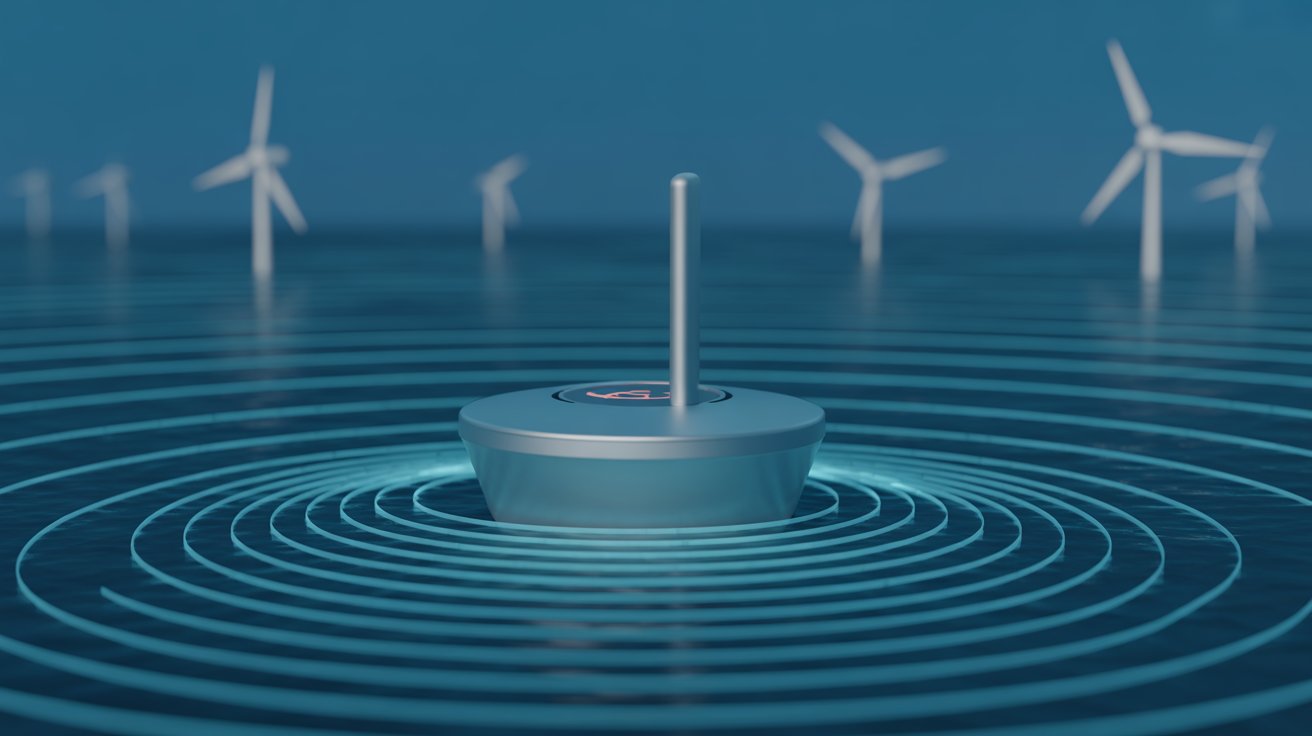
Underwater wireless communication faces persistent technical hurdles due to the physical properties of water, which severely limit radio waves, acoustics, and optics in many scenarios. RadiEM, developed by CSignum, addresses these challenges through electromagnetic field signaling (EMFS). This approach uses low-frequency electromagnetic fields to transmit data reliably through water, across the water-air boundary, and even into ice, soil, or concrete.
The technology supports the expansion of the Internet of Underwater Things (IoUT) by providing a practical alternative to cabled systems or acoustic modems in environments where those options fall short. As industries increasingly rely on real-time sensor data from submerged locations—such as for environmental monitoring, infrastructure inspection, and aquaculture—systems like RadiEM offer a method to integrate subsea devices into broader digital networks without physical connections.
This overview examines the core principles, operational details, practical deployments, strengths and constraints, and potential developments in subsurface wireless communication.
Background on Underwater Wireless Challenges
Conventional underwater communication relies on several established methods, each with trade-offs:
- Acoustic systems transmit sound waves over long distances but suffer from multipath interference, ambient noise, and variable speed of sound due to temperature and salinity gradients.
- Optical methods achieve high data rates in clear water but require direct line-of-sight and perform poorly in turbid conditions.
- Wired connections provide stability but incur high deployment costs, vulnerability to damage, and restrictions on device mobility.
Electromagnetic approaches have historically been limited by rapid signal attenuation in conductive seawater, particularly at higher frequencies. However, low-frequency EMFS, as implemented in RadiEM, mitigates these issues by operating in regimes where fields propagate effectively through conductive media and cross boundaries with minimal reflection.
CSignum, based in Scotland, has focused on this domain since its formation, building on prior work in electromagnetic propagation for challenging environments. The company secured £6 million in Series A funding in April 2025 to expand its EM-2 product line and engineering capabilities.
Technical Operation of RadiEM
RadiEM functions by encoding digital data into low-frequency electromagnetic signals that propagate as fields rather than high-frequency waves.
Key steps include:
- Data Encoding — Sensor information (temperature, pressure, pH, etc.) is processed and modulated onto a carrier suitable for EMFS.
- Field Generation — An antenna creates an electromagnetic field that extends through the surrounding medium.
- Propagation — The field travels bidirectionally, penetrating water, crossing the air-water interface, and reaching receivers up to approximately 200 meters away in typical conditions.
- Reception and Decoding — Surface or nearby units detect the field, demodulate the signal, and forward data via standard interfaces like cellular, satellite, or Wi-Fi.
- Power Management — Low-energy design supports extended deployments, with some configurations lasting years on battery power.
The system operates effectively in both freshwater and saltwater, and its performance remains consistent in the presence of biofouling, turbidity, or acoustic noise—factors that degrade alternatives.
Core Features of the EM-2 Platform
The current RadiEM implementation centers on the EM-2 family, which includes variants tailored to specific needs:
- Bidirectional communication up to 200 meters in many conditions.
- Compatibility with standard environmental sensors (e.g., from partners like Xylem or ANB Sensors).
- Low-power operation for long-term autonomous use.
- Resilience in dynamic environments, including through-ice transmission demonstrated in recent deployments.
- Silent, non-acoustic signaling that avoids interference with marine wildlife.
These characteristics position the technology as a tool for reliable, low-maintenance subsurface data collection.
Practical Applications Today
RadiEM has seen deployment across several sectors:
Water Quality and Environmental Monitoring
In locations like the Port of Horsens (Denmark), the EM-2Q variant transmits real-time parameters such as dissolved oxygen and turbidity from submerged sondes to surface stations. This supports pollution tracking and compliance without frequent manual retrieval.
Maritime and Vessel Inspection
Trials on decommissioned vessels, including access to data from the keel of HMY Britannia in Edinburgh, demonstrated wireless monitoring of hull conditions. This reduces the need for divers or dry-docking, lowering inspection costs and risks.
Offshore Energy and Infrastructure
For wind farms and subsea assets, RadiEM enables strain, corrosion, and current monitoring in biofouled or turbid waters, providing data backhaul without cabling vulnerabilities.
Aquaculture Operations
Fish farms use the system to automate sensor networks across pens, improving feed efficiency and water quality management through continuous data access.
Autonomous Vehicle Support
Initial tests with AUVs and ASVs (e.g., via partners like Ocean Aero) allow data offloading from submerged platforms to surface relays, accelerating recovery processes.
These examples illustrate how the technology integrates into existing workflows to address connectivity gaps.
Advantages Over Legacy Approaches
RadiEM offers several practical benefits:
- Eliminates cabling expenses and failure points.
- Provides consistent performance in noisy or turbid conditions where acoustics struggle.
- Supports boundary-crossing without the reflection losses common in other wireless methods.
- Enables deployments in restricted or sensitive areas due to its low environmental impact.
Industry observations suggest operational efficiencies through reduced maintenance and faster data access, though exact savings vary by deployment scale and environment.
Limitations to Consider
Range remains constrained to around 200 meters in most scenarios, making it unsuitable for very deep or long-distance applications without relays. Signal behavior can vary with medium conductivity, requiring site-specific tuning in extreme cases. For ultra-high data rates (e.g., video streaming), hybrid approaches combining EMFS with other methods may be necessary.
Comparison of Underwater Communication Methods
| Aspect | RadiEM (EMFS) | Acoustic Systems | Optical Systems | Cabled Systems |
|---|---|---|---|---|
| Typical Range | Up to ~200 m | Kilometers | Tens of meters | Unlimited (with cable) |
| Boundary Crossing | Strong (water-air, ice) | Poor (reflection issues) | Line-of-sight only | N/A |
| Performance in Turbid Water | High | Variable | Low | High |
| Noise/Marine Life Impact | None | Potential | None | Physical disruption |
| Deployment Flexibility | High (wireless) | Medium | Low | Low |
| Power Efficiency | High for IoT | Medium | High | Varies |
This highlights RadiEM’s niche in short-to-medium range, boundary-focused scenarios.
Outlook for Subsurface Wireless Systems
With ongoing product refinements and market growth—projected to double from $5.1 billion in 2024 to $10.2 billion by 2032—technologies like RadiEM are likely to see broader adoption. Future enhancements may include mesh networking for extended coverage, higher data throughput, and deeper AI integration for predictive analytics in marine data.
As climate and resource monitoring demands increase, reliable subsurface connectivity will become more critical.
FAQ Section
What is RadiEM in the context of modern technology?
RadiEM refers to CSignum’s wireless modem platform that uses electromagnetic field signaling to transmit data through water and across environmental boundaries, supporting IoT applications in submerged settings.
How does RadiEM achieve data transmission underwater?
It modulates data onto low-frequency electromagnetic fields generated by an antenna, allowing propagation through conductive media and reception at surface units without acoustic or optical limitations.
Is RadiEM reliable in real-world marine conditions?
Deployments in ports, vessels, and offshore sites show consistent performance despite turbidity, biofouling, or noise, with bidirectional ranges up to 200 meters in typical setups.
Which industries benefit most from this technology?
Environmental monitoring, aquaculture, offshore energy, maritime security, and research organizations needing wireless sensor connectivity in water or through barriers.
What recent advancements have occurred with RadiEM?
The EM-2 family expanded in 2024–2025, including through-ice capabilities and water quality variants, backed by 2025 Series A funding for product scaling.
Are there common misconceptions about electromagnetic underwater systems?
A frequent one is assuming all EM methods fail in seawater due to attenuation—low-frequency EMFS is engineered to overcome this for short-to-medium ranges.
How does RadiEM compare to acoustic alternatives?
It excels at boundary crossing and silence, while acoustics offer longer range but face interference; the choice depends on specific range, environment, and data needs.
Conclusion
RadiEM, through CSignum’s EMFS approach, provides a measured advancement in connecting submerged devices to digital systems. By addressing key limitations of traditional methods, it supports more efficient data collection in aquatic and subsurface environments.
For professionals in marine technology, IoT, or environmental sectors, evaluating this type of solution against project requirements could reveal opportunities for improved monitoring and reduced operational complexity. As subsurface networks evolve, such innovations contribute to more connected and data-driven approaches to ocean and resource management.
Author Bio:
Alex Morgan is a technology writer covering marine innovation, electromagnetic communication systems, and industrial IoT advancements. Their work explores how emerging technologies improve monitoring, automation, and digital connectivity across challenging environments.
Share this content:


Post Comment