Claude Edward Elkins Jr: Innovating Rail Tech
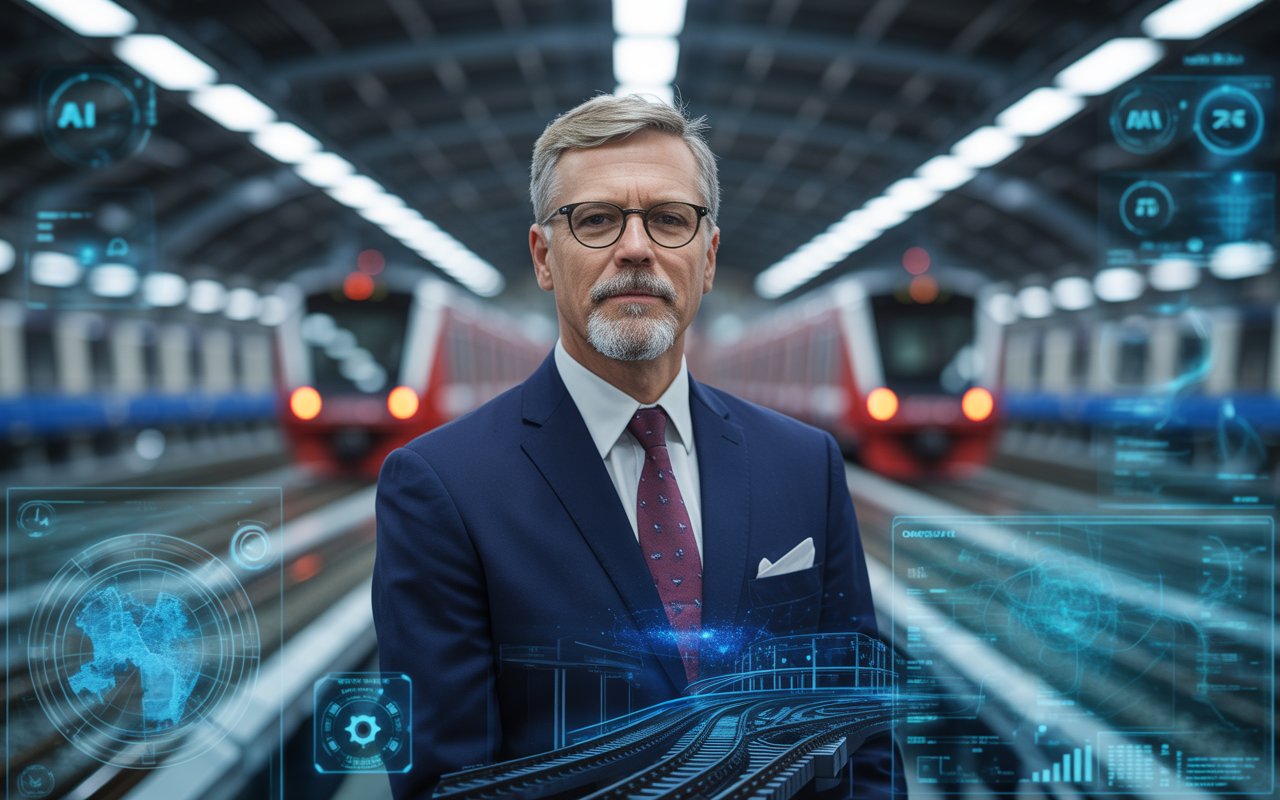
Introduction to Claude Edward Elkins Jr and His Tech-Driven Vision
In the fast-evolving world of transportation technology, few leaders embody the fusion of hands-on experience and forward-thinking innovation quite like Claude Edward Elkins Jr. As the Executive Vice President and Chief Commercial Officer at Norfolk Southern Corporation, Elkins has been instrumental in steering one of America’s largest freight railroads toward a digital future.
His journey from the tracks to the C-suite highlights how traditional industries like rail are embracing AI, automation, and data analytics to solve modern challenges in supply chain management and sustainability.
Claude Edward Elkins Jr’s role isn’t just about managing commercial operations; it’s about reimagining railroads as smart, interconnected systems. In an era where digital transformation is key to competitiveness, Elkins leads initiatives that integrate advanced technologies to optimize freight movement, reduce emissions, and enhance customer experiences. This article dives deep into his contributions, exploring how his leadership is shaping the railroad industry’s digital evolution.
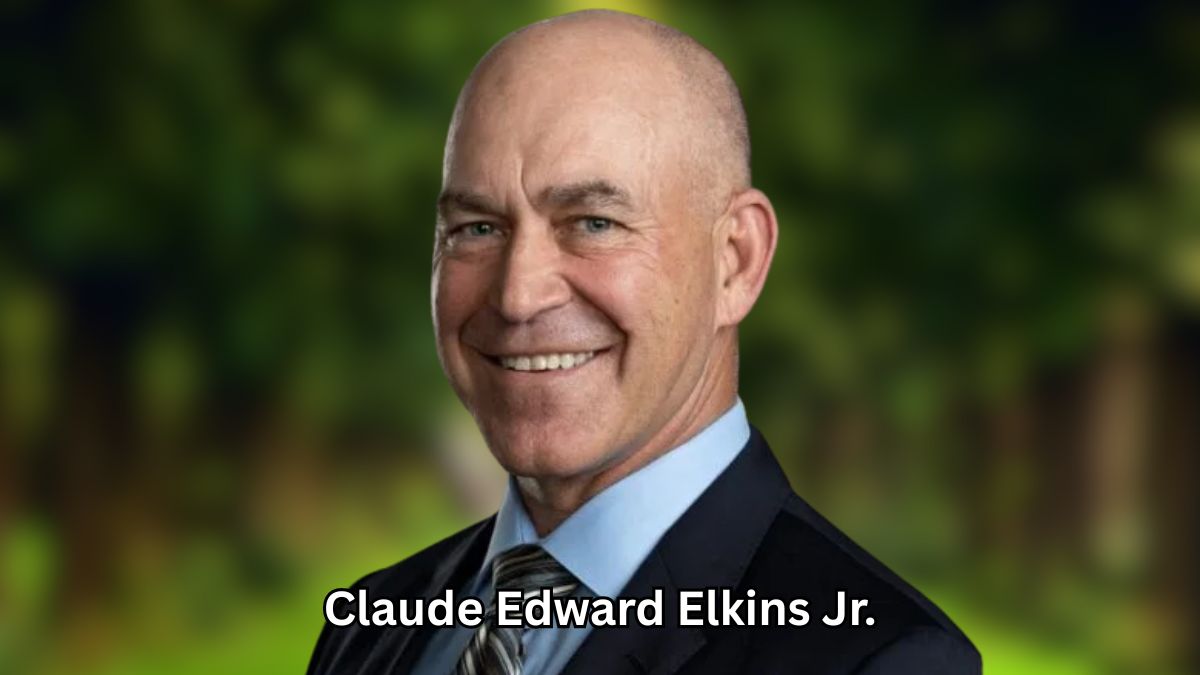
Early Life and Foundations in Resilience and Discipline
Born and raised in Southwest Virginia, Claude Edward Elkins Jr grew up in a region deeply tied to the railroad industry. This environment instilled in him values of hard work and perseverance from an early age. His early life was marked by a strong family emphasis on integrity and community, traits that would later define his professional ethos.
Before entering the corporate world, Elkins served in the United States Marine Corps, where he honed skills in leadership, discipline, and strategic thinking. This military background provided a solid foundation for his career, teaching him the importance of operational precision—skills directly transferable to the high-stakes world of rail logistics.
Transitioning to civilian life, Elkins pursued higher education with purpose. He earned a bachelor’s degree in English from the University of Virginia’s College at Wise, followed by an MBA from Old Dominion University, specializing in Port & Maritime Economics. He further bolstered his expertise with management certificates from prestigious institutions like Harvard Business School, the University of Virginia Darden School of Business, and the University of Tennessee Supply Chain Institute. These educational pursuits equipped him with a blend of humanities insight and technical acumen, allowing him to approach technology not just as tools, but as enablers of human-centered innovation.
In today’s digital landscape, leaders like Elkins demonstrate how diverse backgrounds can fuel tech advancements. His early experiences underscore why railroads need executives who understand both the ground-level operations and the high-level digital strategies that drive modern inventions.
Career Journey: From Brakeman to Tech-Savvy Executive
Claude Edward Elkins Jr’s career at Norfolk Southern began in 1988 as a road brakeman—a physically demanding role involving manual train operations and safety checks. This entry-level position gave him intimate knowledge of railroad mechanics, from coupling cars to ensuring safe freight transport. Over the years, he progressed through roles like conductor, locomotive engineer, and relief yardmaster, building a comprehensive understanding of operational workflows.
By the early 2000s, Elkins shifted to intermodal marketing, where he spent nearly two decades developing customer-focused solutions that integrated rail with trucking and shipping. This period marked his entry into the commercial side, where he began leveraging data for better logistics planning.
Key milestones include:
- 2016: Appointed Group Vice President of Chemicals Marketing, where he optimized supply chains for industrial clients using early digital tools.
- 2018: Promoted to Vice President of Industrial Products, focusing on efficiency in freight for manufacturing sectors.
- 2021: Named Executive Vice President and Chief Commercial Officer, overseeing intermodal, automotive, industrial products, real estate, and customer logistics.
Under his leadership, Norfolk Southern has embraced digital transformation. Elkins drives strategies that embed AI and advanced technologies to balance service, productivity, and growth. His approach emphasizes collaboration, fostering innovative solutions tailored to client needs.
This career arc illustrates a shift from traditional rail operations to a tech-integrated model, where automation and AI are pivotal.
Table: Claude Edward Elkins Jr’s Career Progression
| Year | Role | Key Responsibilities | Tech/Innovation Focus |
|---|---|---|---|
| 1988 | Road Brakeman | Manual train operations and safety | Foundational operational knowledge |
| Early 1990s | Conductor/Locomotive Engineer | Train management and engineering | Hands-on experience with mechanical systems |
| 2000s | Intermodal Marketing | Customer solutions integrating modes of transport | Early data-driven logistics |
| 2016 | Group VP, Chemicals Marketing | Optimizing chemical supply chains | Introduction of analytics for efficiency |
| 2018 | VP, Industrial Products | Industrial freight management | Sustainability through tech-optimized routes |
| 2021-Present | EVP & Chief Commercial Officer | Leading commercial divisions | AI, digital transformation, and innovation strategies |
This table highlights how each step built toward a tech-centric leadership style.
How Claude Edward Elkins Jr Drives Railroad Technology Innovation
At the heart of Claude Edward Elkins Jr’s contributions is his push for technological integration in railroads. Railroads, once seen as relics of the industrial age, are now hubs of digital innovation under leaders like him. Elkins champions AI-powered systems for predictive maintenance, where machine learning algorithms analyze data from sensors on tracks and trains to foresee issues before they occur.
For instance, Norfolk Southern’s AI train inspection portals use computer vision to scan rail cars in real-time, identifying defects with superhuman accuracy. This technology, developed in collaboration with institutions like the Georgia Tech Research Institute, reduces downtime and enhances safety—critical in an industry handling millions of carloads annually.
Elkins also focuses on digital twins—virtual replicas of physical rail networks. These allow simulations of scenarios, optimizing routes for fuel efficiency and reducing carbon emissions by up to 15 million tons yearly. In intermodal logistics, his strategies incorporate IoT devices for real-time tracking, enabling businesses to monitor shipments via apps, much like consumer package tracking.
Why does this exist? Traditional railroads faced inefficiencies from manual processes and unpredictable maintenance. Elkins’s innovations address these by automating workflows, making rail a competitive alternative to trucking in the digital age.

Working Mechanism: AI and Automation in Action
Let’s break down how these technologies work under Elkins’s oversight:
- Data Collection: Sensors on trains and tracks gather terabytes of data on vibration, temperature, and wear.
- AI Analysis: Machine learning models process this data to predict failures. For example, an algorithm might flag a wheel defect days in advance.
- Automation Response: Automated systems adjust train speeds or reroute freight, minimizing disruptions.
- Integration with Supply Chains: APIs connect rail data to customer systems, allowing seamless digital handoffs.
This mechanism solves problems like delays and accidents, making railroads more reliable.
Real-World Applications and Modern Use Cases
Claude Edward Elkins Jr’s tech initiatives have tangible impacts across industries. In automotive, Norfolk Southern originates more traffic than any other Class I railroad, using AI-optimized routes to deliver parts just-in-time, reducing inventory costs for manufacturers like Ford and GM.
In chemicals and industrial products—areas Elkins directly oversaw—automation ensures safe transport of hazardous materials. Predictive analytics prevent spills by monitoring container integrity in real-time.
A key use case is intermodal freight, where rail meets truck and ship. Elkins’s leadership in programs like East Edge double-stack service uses cleared tunnels and digital planning to speed up shipments from Chicago to New England, cutting transit times and emissions.
Businesses use these technologies for sustainable logistics. Rail is 3-4 times more fuel-efficient than trucking, and Elkins’s digital tools amplify this by optimizing loads.
For e-commerce giants, real-time visibility via Norfolk Southern’s platforms mirrors Amazon’s tracking, enabling faster decision-making.
Benefits of Elkins’s Tech-Focused Leadership
The advantages are multifaceted:
- Efficiency Gains: AI reduces maintenance costs by 20-30%, extending asset life.
- Safety Improvements: Digital inspections catch issues early, lowering accident rates.
- Sustainability: Lower emissions align with global green goals, helping clients meet ESG standards.
- Economic Impact: Faster freight boosts supply chains, supporting U.S. manufacturing.
Elkins’s emphasis on people-centered tech ensures these benefits extend to employees, with training programs for digital tools.
Bold Takeaway: Under Claude Edward Elkins Jr, railroads aren’t just moving goods—they’re powering a smarter economy.
Limitations and Challenges in Railroad Digital Transformation
No innovation is without hurdles. Implementing AI requires massive data infrastructure, and railroads like Norfolk Southern face legacy systems that need upgrading. Cybersecurity is a concern, as connected trains could be vulnerable to hacks.
Elkins addresses these by prioritizing resilient tech stacks and partnerships. Cost is another limitation—initial investments in portals and sensors are high, though ROI comes from reduced downtime.
Compared to traditional methods, digital solutions are more reliable but depend on power and connectivity, which can falter in remote areas.
Elkins’s strategy includes phased rollouts, starting with high-traffic corridors.
Comparisons: Modern Rail Tech vs. Traditional Systems
Traditional railroads relied on manual inspections and paper logs, leading to inefficiencies. Modern systems under Elkins use AI for proactive fixes.
| Aspect | Traditional | Modern (Elkins-Led) |
|---|---|---|
| Inspection | Visual, periodic | AI continuous scanning |
| Route Planning | Static maps | Dynamic AI optimization |
| Customer Interaction | Phone/email | Real-time digital portals |
| Sustainability | Higher emissions | Optimized for green efficiency |
| Scalability | Limited by human capacity | Unlimited via automation |
This shift differentiates Norfolk Southern from competitors still lagging in tech adoption.
Future Potential: Elkins’s Vision for Digital Railroads
Looking ahead, Claude Edward Elkins Jr envisions fully autonomous trains, powered by AI and 5G connectivity. Norfolk Southern’s digital transformation will embed exponential technologies like blockchain for secure supply chains and quantum computing for complex optimizations.
With climate change pressing, Elkins pushes for electrified rails and hydrogen-powered locomotives, integrated with smart grids.
His role on boards like the National Association of Manufacturers positions him to influence industry-wide standards.
In a post-2026 world, expect more AI-driven predictive logistics, making rail the backbone of smart cities.
FAQ Section
What is Claude Edward Elkins Jr in technology?
Claude Edward Elkins Jr is a leader in railroad technology, driving AI, automation, and digital transformation at Norfolk Southern to modernize freight logistics.
How does Claude Edward Elkins Jr’s work in tech function?
His initiatives involve AI for predictive maintenance, IoT for tracking, and data analytics for route optimization, turning raw data into actionable insights for efficient operations.
Is Claude Edward Elkins Jr’s tech approach safe and reliable?
Yes, with AI inspections reducing accidents and robust cybersecurity measures, his strategies enhance safety beyond traditional methods.
Who should follow Claude Edward Elkins Jr’s innovations?
Logistics managers, manufacturers, and tech enthusiasts in supply chains—anyone seeking efficient, sustainable freight solutions.
What are the latest updates or future developments under Claude Edward Elkins Jr?
Recent launches include AI train portals; future plans involve autonomous systems and green tech integrations for 2030 sustainability goals.
Common problems or misconceptions about his tech contributions?
A misconception is that rail tech is outdated; Elkins proves it’s cutting-edge. Challenges include high upfront costs, but long-term savings outweigh them.
How is Claude Edward Elkins Jr different from traditional rail leaders?
Unlike predecessors focused on operations, Elkins blends frontline experience with digital expertise, prioritizing innovation over status quo.
Conclusion: Embracing the Digital Rail Revolution with Claude Edward Elkins Jr
Claude Edward Elkins Jr stands as a beacon of innovation in the railroad sector, transforming a historic industry into a pillar of the digital future. His leadership at Norfolk Southern not only solves current logistics pains but anticipates tomorrow’s needs through AI, automation, and sustainable tech.
As we look forward, Elkins’s work hints at a world where railroads seamlessly integrate with smart ecosystems, driving economic growth while minimizing environmental impact. For tech users and businesses, the next step is clear: Explore partnerships with innovative rail providers like Norfolk Southern. What role will you play in this connected future?
Share this content:



Post Comment