Business Technology
agentic ai leadership, ai business strategy, ai entrepreneur skills, data driven founders, digital entrepreneurship 2026, entrepreneurial skills, fintech entrepreneurship, future of entrepreneurship, innovation leadership skills, modern entrepreneurial mindset, startup growth skills, tech startup skills
novabiztech
0 Comments
Entrepreneurial Skills in 2026: 7 Tech-Powered Competencies for Success

In the breakneck pace of 2026, where AI agents handle customer support, quantum simulations accelerate drug discovery, and decentralized networks power global economies, entrepreneurial skills have evolved into something far more powerful than the traditional “hustle and grind” mindset. They’re now the fusion of human ingenuity with technological leverage—the ability to spot opportunities in code, pivot with data, and build empires from silicon and strategy.
Whether you’re a solo founder bootstrapping an AI startup from a laptop in Lahore or a corporate innovator inside a Fortune 500 tech giant, these entrepreneurial skills determine who thrives in the digital future and who gets left behind. This isn’t about generic advice.
It’s about the precise, tech-infused competencies that separate the unicorns from the also-rans in an era where one well-crafted prompt can generate a million-dollar idea, and one missed trend in automation can sink a legacy business.
I’ve spent years advising tech founders, analyzing what makes companies like OpenAI, Perplexity, and emerging Pakistani AI ventures explode in value. The pattern is clear: the most successful entrepreneurs aren’t just smart—they’ve weaponized entrepreneurial skills with modern tools. In this deep dive, we’ll break down exactly what those skills look like today, how they work in practice, why they matter more than ever, and how you can build them to dominate the next decade of innovation.

The Evolution of Entrepreneurial Skills: From Garage Startups to AI-Native Empires
Traditional entrepreneurial skills—things like salesmanship, financial management, and sheer grit—still matter. But in 2026, they’ve been supercharged by technology. What once took a team of 50 now gets done by one founder with the right stack of AI tools.
Think about it: In the early 2000s, launching a tech company meant raising millions for servers and developers. Today, a founder with strong entrepreneurial skills can spin up a fully functional SaaS product using no-code platforms, train custom AI models on consumer data, and go to market with automated funnels—all in weeks, not years.
This shift didn’t happen overnight. It accelerated through the pandemic, exploded with generative AI in 2023-2024, and became table stakes by 2026. According to recent industry reports, startups leveraging AI in their core operations grow 3-5x faster than their non-AI peers. The entrepreneurs winning today aren’t just adapting to tech—they’re thinking like the technology itself: iterative, data-obsessed, and relentlessly scalable.
The result? A new breed of entrepreneurial skills that blend timeless human strengths with cutting-edge digital fluency. These aren’t soft skills anymore. They’re competitive advantages in a world where AI handles the predictable, leaving humans to master the unpredictable.
7 Core Entrepreneurial Skills Every Tech Leader Must Master in 2026
Let’s get practical. Here are the seven entrepreneurial skills that define success in the tech and innovation space right now. Each one comes with real mechanisms, modern examples, and actionable ways to level up.
1. AI Literacy and Human-AI Collaboration
This is the foundational entrepreneurial skill of the decade. It’s not about becoming a machine learning engineer—it’s about speaking fluent AI.
How it works: You learn to craft precise prompts, understand model limitations (like hallucinations or bias), and integrate AI into workflows without blindly trusting outputs. Tools like Claude, Grok, or custom GPTs become your co-pilots for everything from market research to code debugging.
Why it matters today: In 2026, 76% of small businesses use AI in daily operations. Founders who treat AI as an extension of their brain move faster. Those who don’t get outpaced.
Real-world use case: Sarah Chen, founder of a Singapore-based AI content platform, uses custom agents to analyze competitor strategies in real-time. What used to take her team three days now happens in hours. Her entrepreneurial skills in AI collaboration helped her raise a $12M Series A after bootstrapping for 18 months.
How to build it:
- Spend 30 minutes daily practicing advanced prompting techniques.
- Use tools like Perplexity for research and Cursor for code.
- Run “AI audits” on your business processes monthly.
Key takeaway: AI literacy turns you from operator to orchestrator.

2. Radical Adaptability in Volatile Digital Ecosystems
The tech world changes weekly. Adaptability means not just surviving pivots but engineering them proactively.
How it works: You build systems that detect weak signals—using tools like Google Trends AI, social listening platforms, and predictive analytics—then execute changes with minimal friction.
Modern difference from traditional skills: Old-school entrepreneurs adapted after crises. Today’s version anticipates them using real-time data dashboards.
Industry example: When regulatory changes hit crypto in 2025, many founders panicked. But the ones with strong entrepreneurial skills in adaptability, like those at Solana-based DeFi projects, quickly shifted to AI-augmented compliance tools and captured market share.
Practical steps:
- Set up automated alerts for your industry keywords.
- Run quarterly “pre-mortem” exercises with your team.
- Maintain a “pivot playbook” document updated via AI summaries.
This skill solves the problem of obsolescence that kills 90% of startups.
3. Data-Driven Decision Making at Speed
Gut instinct still has a place, but in 2026, it’s backed by dashboards that update every second.
How it works: Entrepreneurs use no-code BI tools (like Tableau AI or Google Looker) to turn raw data into insights. They combine internal metrics with external signals from APIs.
Who should master it: Anyone scaling beyond $1M ARR. Solo founders use it to validate ideas before building.
Comparison to older solutions:
| Aspect | Traditional Approach | 2026 Tech-Enabled Approach |
|---|---|---|
| Decision Cycle | Weeks/months | Hours/days |
| Data Sources | Surveys, spreadsheets | Real-time APIs, AI sentiment analysis |
| Accuracy | 60-70% | 85-95% with human oversight |
| Cost | High (analysts) | Low (AI automation) |
Example: A Pakistani edtech startup used AI to analyze dropout patterns across 50,000 users, then personalized learning paths. Retention jumped 42% in six months.
4. Agile Leadership for Distributed, AI-Augmented Teams
Leading humans and AI agents requires a new leadership style.
How it works: You set clear OKRs, use tools like Notion AI or Linear for async collaboration, and focus on outcomes over hours worked.
Why it’s different: Traditional bosses micromanaged. Modern leaders design systems where AI handles 70% of routine tasks, freeing humans for creative work.
Use case: The founder of a remote-first AI security firm runs a 12-person team across three continents. Weekly “sync rituals” are 15 minutes thanks to AI-generated summaries. Team satisfaction scores are through the roof.
Build it by:
- Practicing “radical candor” in digital channels.
- Learning to delegate to AI (e.g., “Draft this investor update based on Q4 metrics”).
- Measuring leadership by team velocity, not headcount.
5. Tech-Infused Creative Problem-Solving
Creativity meets computation. This entrepreneurial skill involves using AI to generate 100 ideas in minutes, then ruthlessly filtering them.
How it works: Techniques like “AI brainstorming sessions” where you feed problems into models and iterate on outputs.
Real application: Hardware startups now prototype in VR/AR before touching physical materials, cutting development time by 60%.
Future edge: In the age of agentic AI (autonomous systems that act on goals), the best entrepreneurs will be those who ask the right questions.
6. Fintech Fluency and Capital Efficiency
Money moves differently now. Understanding tokenization, revenue-based financing, and AI credit scoring is non-negotiable.
How it works: Entrepreneurs use platforms like Stripe Treasury or DeFi protocols to access capital smarter and faster.
Problem it solves: Traditional venture capital is still gatekept. Tech-savvy founders bypass it with creative funding models.
Example: A climate tech founder in Kenya raised $2.5M through tokenized carbon credits—something impossible five years ago.
7. Ethical Innovation and Sustainable Tech Leadership
In 2026, building responsibly isn’t optional—it’s a moat.
How it works: You embed privacy-by-design, bias audits, and carbon tracking into your product from day one.
Why it matters: Consumers and regulators reward transparent companies. Investors now ask about your AI ethics policy in pitch meetings.
Takeaway: The entrepreneurs winning long-term combine profit with purpose, using tech to solve real human problems.
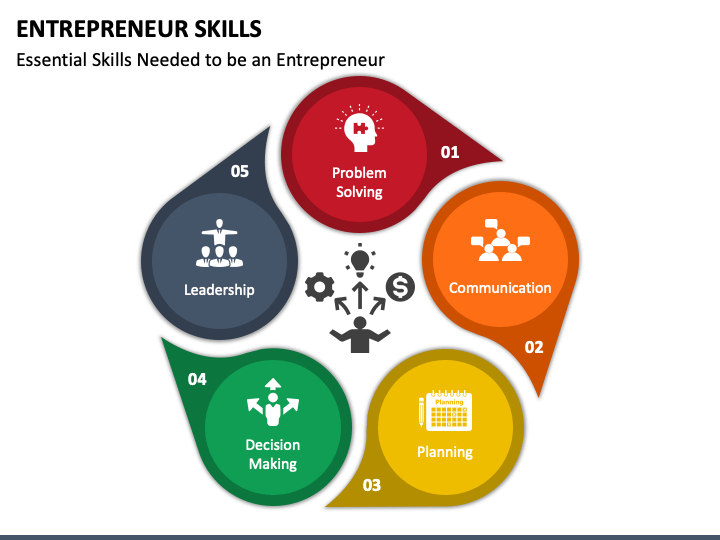
How Technology is Reshaping Entrepreneurial Skills
AI doesn’t replace entrepreneurial skills—it amplifies them.
Automation handles the grunt work: invoice processing, basic coding, content creation. This frees founders to focus on high-leverage activities like vision-setting and relationship-building.
Predictive tools turn uncertainty into calculated risks. A founder can now simulate 1,000 market scenarios overnight.
Collaboration platforms make global teams feel local. Tools like Figma for design, GitHub Copilot for code, and ElevenLabs for voice create seamless workflows.
The net effect? One skilled entrepreneur in 2026 can achieve what took a 20-person team in 2015.
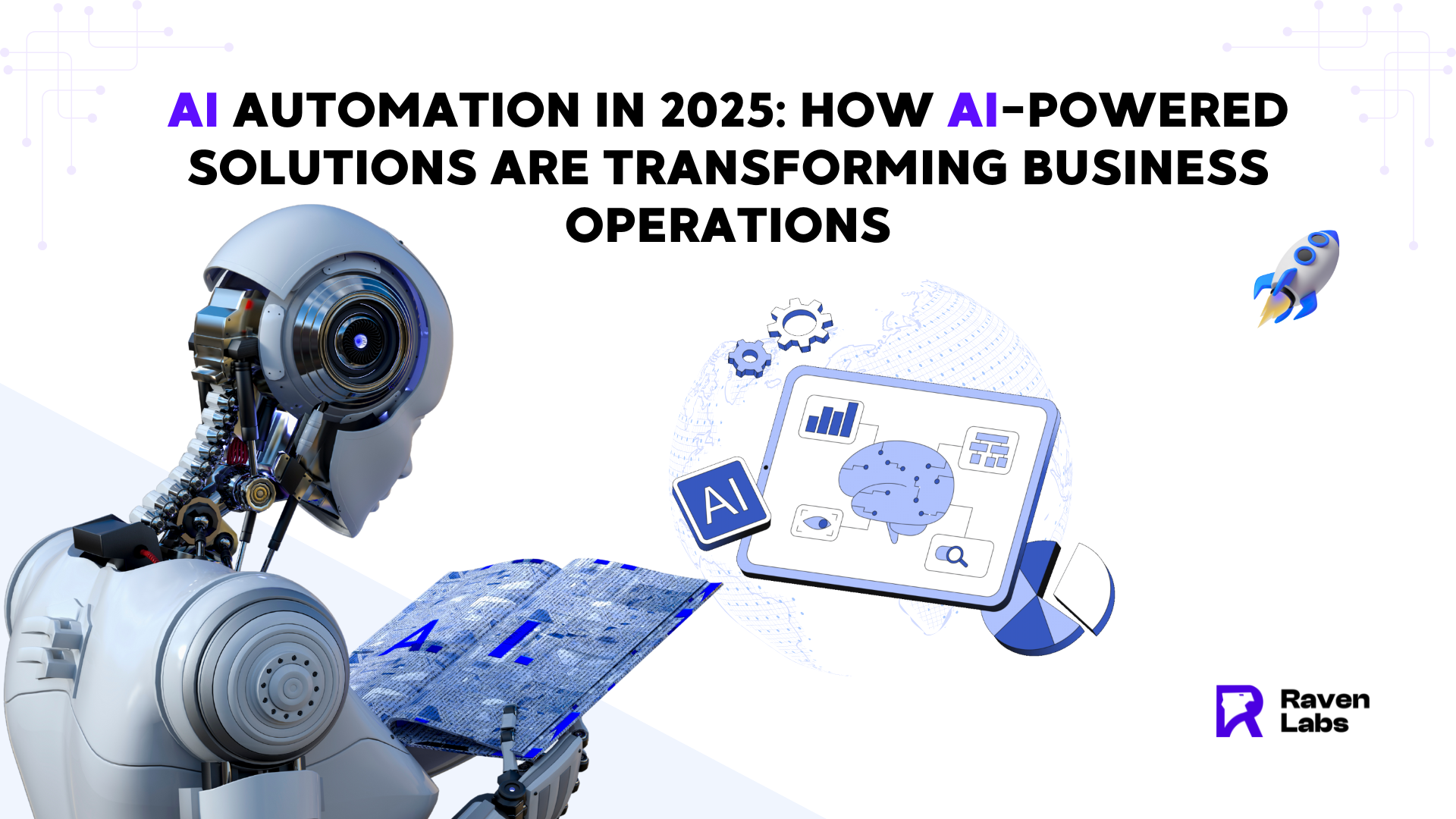
Real-World Applications: Tech Entrepreneurs Crushing It with These Skills
Case Study 1: The Solo AI Founder Alex Rivera started a personalized fitness AI coach in 2024 with zero funding. Using entrepreneurial skills in AI literacy and adaptability, he built the MVP in two weeks with no-code tools and Grok for marketing copy. By 2026, the app has 250,000 users and $4.2M ARR—all while he works 25 hours a week.
Case Study 2: The Enterprise Pivot A traditional manufacturing firm in Germany faced AI disruption. The CEO, leveraging data-driven decision making and agile leadership, retrained 40% of staff as “AI orchestrators.” Revenue grew 180% in 18 months while competitors shrank.
Case Study 3: Emerging Market Innovation In Pakistan, a young founder used fintech fluency to launch a micro-lending platform powered by alternative data (phone usage, social signals). It serves 150,000 users in underserved areas, proving entrepreneurial skills transcend borders.
These aren’t outliers. They’re the new normal for those who invest in the right skills.

Essential Tools to Supercharge Your Entrepreneurial Skills
No more guessing. Here are the 2026 must-haves:
- AI Core: Grok, Claude, Perplexity
- Automation: Zapier, Make.com, SmythOS
- Data & Analytics: Google Analytics 4 + AI, Mixpanel
- Collaboration: Notion AI, Slack + AI bots
- Finance: QuickBooks AI, Ramp for spend intelligence
- Learning: Coursera AI courses, Reforge for growth skills
Start with one tool per skill category and build from there.
Challenges and Limitations of Tech-Enhanced Entrepreneurial Skills
Over-reliance on AI can dull intuition. Always keep a “human veto” in critical decisions.
Ethical pitfalls: Data privacy laws are tightening. Ignorance isn’t an excuse.
Burnout risk: The always-on digital world demands better boundaries.
The solution? Balance tech leverage with human connection and rest.
How to Build These Entrepreneurial Skills in 2026: Your 90-Day Action Plan
Week 1-4: Foundations
- Daily AI practice (30 mins)
- Audit your current tools
Week 5-8: Application
- Launch one micro-project using a new skill
- Join a tech founder community (online or local)
Week 9-12: Refinement
- Get feedback from mentors
- Measure progress with KPIs (e.g., ideas generated, revenue influenced)
Track everything in a Notion dashboard. Consistency beats intensity.
FAQ: Entrepreneurial Skills in the Technology Landscape
What are entrepreneurial skills in technology? They’re the blend of creative problem-solving, leadership, and digital fluency that allows individuals to identify opportunities, build solutions, and scale them using modern tools like AI, automation, and data analytics.
How do entrepreneurial skills work in the digital future? They operate through iterative loops: observe market signals → leverage tech to test hypotheses → analyze results → scale winners. AI accelerates every step.
Are entrepreneurial skills safe and reliable in a tech-driven world? Yes, when paired with ethical practices and human oversight. The biggest risks come from ignoring biases in AI or neglecting team well-being.
Who should develop these entrepreneurial skills? Aspiring founders, corporate innovators, freelancers, and even employees in traditional industries who want to future-proof their careers.
What are the latest updates in entrepreneurial skills for 2026? Focus has shifted to agentic AI (systems that act autonomously), ethical AI governance, and hybrid human-AI team dynamics.
What common misconceptions exist about entrepreneurial skills? Many think they’re innate or only for “tech bros.” In reality, they’re learnable systems anyone can master with deliberate practice.
How can I measure improvement in my entrepreneurial skills? Track metrics like time-to-launch, revenue per team member, idea-to-validation speed, and personal energy levels.
The Road Ahead: Why Mastering Entrepreneurial Skills Matters More Than Ever
The next decade belongs to those who don’t just use technology—but think, lead, and create with it. Entrepreneurial skills in this new era aren’t about working harder. They’re about working smarter, more ethically, and with greater impact.
Whether you’re in a bustling tech hub or building from home, the tools, mindsets, and strategies are accessible right now. Start small. Experiment daily. Stay curious.
The digital future isn’t coming—it’s here. And the entrepreneurs who thrive will be the ones who treated entrepreneurial skills as their ultimate competitive advantage.
What’s one skill you’re committing to level up this month? Drop it in the comments or share your progress. The community of forward-thinking builders is waiting.
Ready to build? Start with one AI tool today and watch how your entrepreneurial skills compound.
Share this content:




Post Comment