AI & Automation
ai innovation platforms, ai transformation platform, capabilisense, capabilisense ai platform, capability sensing technology, digital transformation success, enterprise ai adoption tools, enterprise ai strategy, organizational capability sensing, transformation intelligence systems
novabiztech
0 Comments
Why I’m Building Capabilisense: Solving the Hidden Problem in AI Transformations 2026
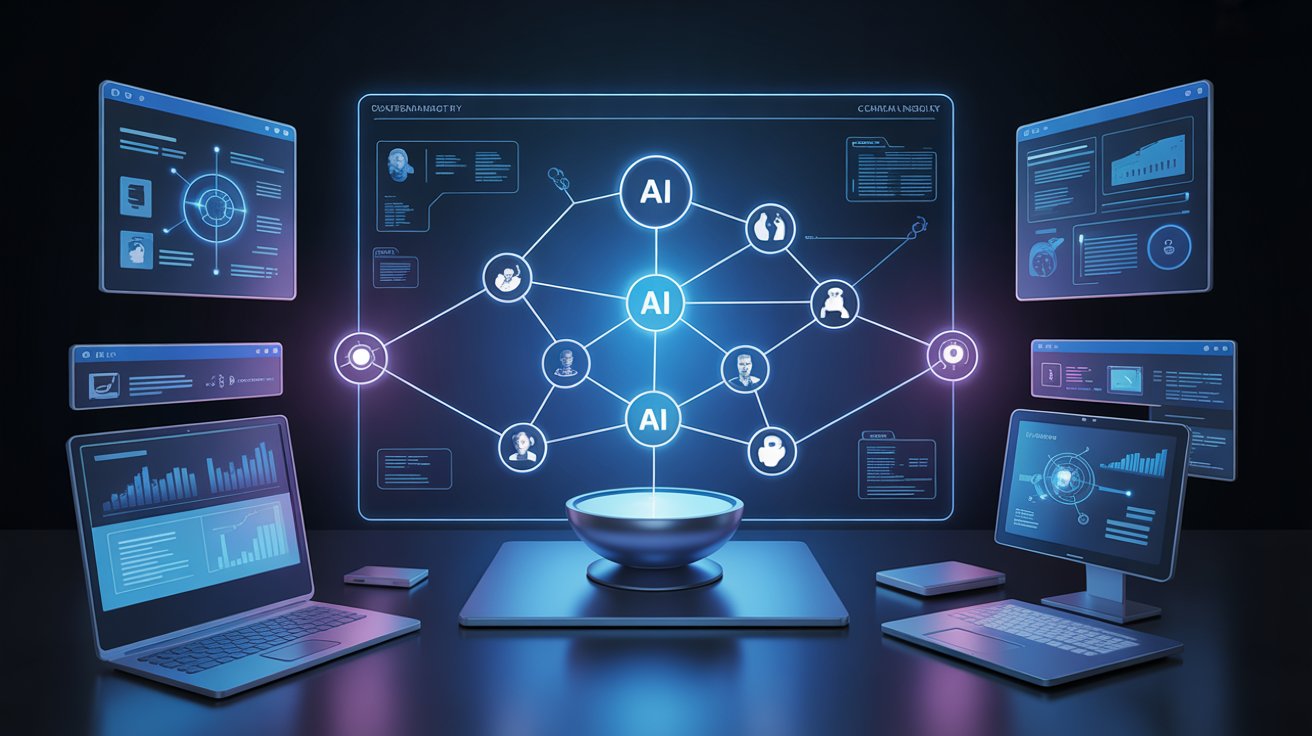
Why I’m building Capabilisense started as a quiet frustration that grew into a mission. After more than two decades leading digital and cloud transformations, I kept witnessing the same heartbreaking pattern: ambitious AI and digital initiatives collapsing despite strong technology and big budgets.
Why I’m building Capabilisense is my response to that pattern. It is an early-stage conceptual AI innovation platform designed to sense organizational capabilities in real time—revealing what teams can actually do today versus what leadership assumes they can do. This isn’t a finished product yet. It’s a living vision I’m actively prototyping as part of my startup journey.
In this article, I share the problem that drove me here, the technology I’m designing, the lessons from my entrepreneurial mindset, and the future I believe Capabilisense can help create.
Why I’m Building Capabilisense: Addressing Digital Transformation Failures
Research from respected firms paints a consistent picture. McKinsey reports that roughly 70% of digital transformation initiatives fail to meet their objectives. Boston Consulting Group (BCG) analyses of hundreds of companies often show success rates hovering around 30-35%. Even more striking, MIT’s 2025 research found that 95% of generative AI pilots fail to deliver measurable business impact.
These aren’t abstract numbers. They represent billions wasted, careers stalled, and innovation delayed. The painful truth? Most failures stem not from bad code or weak tech, but from organizations’ inability to accurately sense their own capabilities before and during change.
That realization became the spark for Capabilisense.
The Problem I Saw in the Digital World
I’ve spent years in boardrooms where executives unveiled bold “AI-first” roadmaps. Teams nodded along. Budgets were approved. Then reality hit: misaligned skills, undocumented processes, quiet cultural resistance, and data that told yesterday’s story.
Common silent killers include:
- Information asymmetry — Leaders see strategy decks; frontline teams live the daily friction.
- Temporal blindness — Documents mix plans, aspirations, and actual progress with no clear distinction.
- Emotional invisibility — Fear, fatigue, and skepticism don’t appear in dashboards yet can kill adoption.
Traditional assessments—long surveys, maturity models in PDFs, or workshop gut-feel—arrive too slowly and too subjectively. By the time gaps surface, projects are already off-track.
Organizational capability sensing remains one of the weakest links in enterprise AI adoption and digital transformation success. Existing frameworks often rely on self-reported data that feels optimistic rather than accurate. This is the core problem Capabilisense aims to solve.
What Capabilisense Is
Capabilisense is my vision for an AI innovation platform that acts as a real-time capability sensor for organizations undergoing transformation.
It ingests existing artifacts—documents, meeting notes, code repositories, policies, and sprint reviews—then builds a dynamic, evidence-based map of what the organization can actually deliver. It highlights gaps, predicts risks, and suggests targeted interventions while keeping humans in the loop.
Right now, Capabilisense exists as an early-stage concept and prototype. I’m building it step by step: refining frameworks, testing with anonymized data, and validating assumptions with trusted peers. It is not a commercial product with paying customers yet, but a deliberate founder-led effort in product development.
The Vision Behind Capabilisense
I believe the future of successful digital transformation lies in making invisible capabilities visible.
Imagine walking into any steering committee meeting with an objective, continuously updated view of your organization’s true readiness. No more surprise delays. No more “we thought we had this covered.”
My digital platform vision is straightforward yet ambitious:
- Living capability graphs that update as work happens
- Agentic AI that surfaces risks early and proposes practical fixes
- Trustworthy insights that respect both data and human context
This aligns with broader future systems thinking: moving from static assessments to dynamic, adaptive intelligence that supports enterprise AI adoption without ignoring organizational realities.
The Technology Powering It
The architecture I’m designing combines several technical building blocks:
Adaptive Maturity Framework (AMF) A machine-readable model that turns traditional maturity assessments into dynamic, directional graphs. Capabilities become nodes with evidence weights, temporal markers, and dependency relationships.
Agentic Data Synthesis Engine Multi-agent workflows that don’t just read documents—they reason over them. For example, the system might note a policy claiming compliance while cross-referencing recent project evidence that shows limited implementation.
Temporal Evidence Layer This distinguishes “what we planned” from “what we actually achieved,” addressing one of the biggest gaps in current capability assessments.
Graph-Native Metrics Instead of simplistic scores, the platform calculates systemic feasibility using graph algorithms to reveal hidden bottlenecks.
I’m prototyping these elements using modern AI techniques—large language models augmented with graph databases and vector search—while prioritizing explainability, privacy, and auditability. The goal is robust intelligence that executives and auditors can trust.
My Journey as a Builder
My startup journey didn’t begin with a flashy pitch deck. It grew from repeated real-world pain.
I’ve led cloud migrations, AI governance initiatives, and large-scale transformations. Each project reinforced the same lesson: technology is rarely the limiting factor. The limiting factor is our inability to see capability clearly and early enough.
The entrepreneurial mindset required to move from observation to action meant stepping away from comfortable advisory roles and into hands-on building again—writing prompts, sketching architectures, and testing early versions myself.
It’s been equal parts humbling and energizing. Some nights the vision feels inevitable. Others, the complexity of making it trustworthy feels overwhelming. That tension is part of the founder experience.
Challenges and Lessons Learned
Building in the AI space brings specific hurdles:
- Explaining the intangible — “Capability sensing” sounds abstract until you see it surface a hidden gap in a real dataset.
- Balancing speed and rigor — Early AI prototypes can look impressive quickly, but building explainable, enterprise-ready systems takes much longer.
- Maintaining humility — No matter how advanced the models, human context and organizational politics remain critical.
Key lessons so far:
- Evidence beats assertion every time.
- Privacy and trust must be designed in from day one.
- The most valuable insights often come from the tension between what documents say and what people experience.
Practical takeaway for readers: Even without Capabilisense, you can start detecting capability gaps today by cross-referencing project documentation against actual deliverables and running lightweight, regular retrospectives focused on evidence rather than opinions.
How Capabilisense Can Change the Future
If successful, this platform could help lower the stubbornly high failure rates in digital transformation and enterprise AI adoption. It won’t eliminate risk, but it can make risk visible and manageable.
Potential impact areas include helping mid-market companies gain enterprise-grade insight affordably, supporting governments in public-sector digital programs, and giving consultants objective data to deliver better outcomes.
What makes it different is the focus on organizational capability sensing as a continuous, evidence-driven process rather than a periodic checkbox exercise.
Who It’s For
Capabilisense is intended for:
- Transformation and change leaders tired of repeated setbacks
- CTOs and CIOs needing objective readiness data before major investments
- Consultants seeking to move beyond subjective assessments
- Ambitious organizations pursuing AI innovation without enterprise-scale budgets
If you’ve ever suspected your organization’s self-view doesn’t match reality, this vision is built for you.
What Comes Next
I’m currently focused on refining the core sensing engine and preparing for closed beta testing with a small group of partners. The roadmap includes alpha validation, framework openness for community input, and eventual broader availability.
Every step forward sharpens the answer to why I’m building Capabilisense.
FAQ
What is Capabilisense? Capabilisense is an early-stage AI innovation platform concept focused on real-time organizational capability sensing to support successful digital transformation.
Why are you building Capabilisense? Why I’m building Capabilisense comes from witnessing high failure rates in transformations and wanting to create better tools for organizational capability sensing and digital transformation success.
Is it a real product? Not yet in commercial form. It remains an early-stage vision and prototype under active development.
What problem does it solve? It addresses the capability gaps and assessment limitations that contribute to 70%+ failure rates in digital and AI initiatives.
Who can use it? Primarily transformation leaders, technology executives, consultants, and organizations focused on improving enterprise AI adoption and digital transformation outcomes.
What makes it different? Its emphasis on dynamic, evidence-based, agentic capability sensing rather than static surveys or generic AI tools.
When will it launch? I’m targeting initial beta access in late 2026, subject to validation and refinement. Development continues.
Conclusion
Why I’m building Capabilisense ultimately comes down to belief: we can do better than accepting high failure rates as inevitable. By combining AI innovation with deep respect for organizational realities, we can create future systems that help humans and institutions reach their potential more reliably.
To every founder, leader, and technologist navigating transformation: the gaps are real, but so is the opportunity to sense them earlier and respond wiser.
The digital future will belong to those who truly understand their own capabilities. Let’s build tools that make that understanding possible.
Author Bio:
JOHAN is a founder and AI strategist with 20+ years in digital transformation. They are building Capabilisense, an AI platform that senses organizational capabilities to help teams succeed in complex enterprise and AI initiatives.
Share this content:


Post Comment